
What each option is
Colorado law defines artificial turf as synthetic materials made to look like natural grass. It needs no mowing or fertilizer, and water only to cool or clean it.
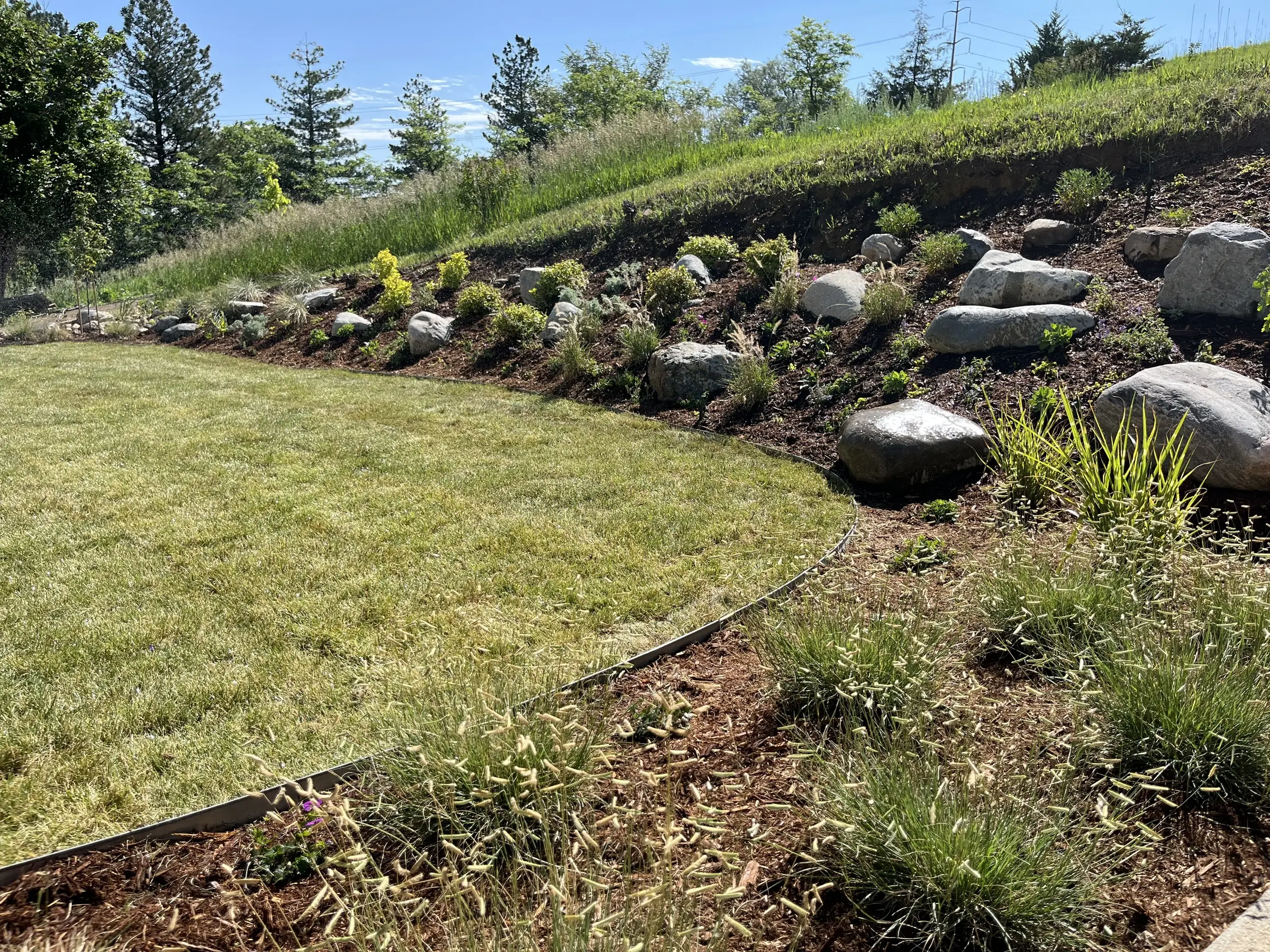
A waterwise lawn is real grass chosen to use less water. CSU's PlantTalk Colorado says Kentucky bluegrass, the most common lawn here, grows best on about 1.5 inches of extra water a week when it is over 85 degrees. CSU Extension says newer buffalograss varieties can stay green on 50 to 75 percent less water than bluegrass. Turf-type tall fescue grows deep roots and needs less water when it is planted in well-prepared soil. Blue grama is a native grass the Colorado Native Plant Society lists as a low-water plant for sun.
Heat and water
Heat is the biggest difference you will feel. A 2025 University of Florida study of California sites found artificial turf can reach 174 degrees on the hottest days, hot enough to burn skin. Natural turf stayed near 102 degrees, because grass cools itself by giving off water. The same study found the artificial sports fields it looked at were watered in summer to keep them usable.
Colorado's legislature has weighed in too. In passing Senate Bill 24-005, it found that artificial turf can make urban heat islands worse and release plastics, microplastics and PFAS chemicals into the environment.
Real grass has its own water cost up front. CSU says starting a buffalograss lawn from seed, sod or plugs takes about as much water as starting bluegrass, and sometimes more. The savings come after it is established. Even then, CSU suggests deep watering about one inch every two to four weeks, depending on rain.
Drainage, pets, upkeep and fire
CSU Extension in Pueblo County notes that runoff can be a problem with artificial turf. Natural grass soaks up water better and helps keep pollutants out of water supplies. It also says artificial turf may last up to 20 years with good care, but can't be recycled when it wears out.
Pets are hard on both. Resource Central says pet waste is difficult to clean off artificial turf. On real grass, dog urine leaves straw-colored spots with dark green edges. CSU's PlantTalk says the salts in the urine cause them, and that water is the only proven fix. It suggests training a dog to use one spot away from the lawn, such as a graveled corner. CSU adds that buffalograss is a poor choice for small lawns with heavy, constant traffic.
Fire is worth asking about if you live near open land. Boulder's landscape manual requires the first 5 feet around new buildings in its wildland-urban interface to have no plants or combustible material. Before you put lawn or artificial turf right against the house, ask your city or fire district what it allows.
State and city rules
Senate Bill 24-005 covers commercial, institutional and industrial property, HOA common areas, street right-of-way, parking lots and medians. From January 1, 2026, cities and counties may not allow new nonfunctional turf, artificial turf or invasive plants there in new development or redevelopment. In 2025, House Bill 25-1113 narrowed the artificial turf part to nonfunctional artificial turf, so turf on playgrounds and sports fields is still allowed. It adds apartment and condo properties with more than 12 units from 2028. It also requires local governments to limit turf in new residential development by 2028. But they may not restrict grass seed or sod that is native, bred for dry conditions or low-water. A single-family home's own yard is not on the state list.
Cities can go further. The City of Boulder's landscape manual says artificial turf is prohibited in all new development unless it is functional artificial turf. The manual applies when a project needs a landscape or irrigation plan, and landscaping installed before March 7, 2026 can be kept. Longmont's landscape code, in effect since January 1, 2026, prohibits nonfunctional turf, including artificial turf, in landscape plans for new development and redevelopment. If you are in an HOA with a detached home, state law says the HOA cannot ban artificial turf in your backyard.
Choosing and planting a waterwise lawn
Start by deciding how much lawn you use. Keep grass where kids play, dogs run or people gather, and turn the rest into planting beds, paths or a patio. Then pick a grass for the spot. CSU says buffalograss needs sun and should not go where there is more than half a day of heavy shade. It wakes up later in spring than bluegrass and turns brown after the first hard fall frost. Turf-type tall fescue is another choice; PlantTalk says it roots deeply and needs less water in well-prepared soil.
Timing matters. CSU's PlantTalk says buffalograss is usually seeded in May or June, and cool-season grasses are easier to start in late summer. Keep the seedbed moist until it sprouts, then water less often and more deeply.
Idlewild's irrigation approach, as its site describes it, is drip for perennials, shrubs and trees, well-tuned sprinklers for turf and a properly programmed timer. Designing the lawn and the beds around it together means each area gets the water it needs, and no more.
Artificial turf compared with a waterwise grass lawn on the Front Range
| Artificial turf | Waterwise lawn (buffalograss, blue grama, tall fescue) | |
|---|---|---|
| Water once in place | None to grow; some to cool or clean | Buffalograss: 50 to 75 percent less than bluegrass |
| Water to get started | None | About as much as a bluegrass lawn, sometimes more |
| Surface heat in sun | Up to 174 degrees in one study | Near 102 degrees in the same study |
| Feel and use | Green all year; can get hot enough to burn skin | Cooler; buffalograss is brown from the first hard frost to mid or late spring |
| Pets | Waste is hard to clean off | Urine spots; water is the only proven fix |
| Drainage | Runoff can be a problem | Soaks up water and filters runoff |
| Life span and disposal | Up to about 20 years; can't be recycled | Living grass; damaged spots can be reseeded or resodded |
| State rules | Limited on non-residential and new-development sites | Local governments may not restrict native or low-water grass seed and sod |
| Upkeep | Cleaning; no mowing or fertilizer | Buffalograss needs less frequent mowing than bluegrass |
Questions
Is artificial turf banned at my house?
Not by state law. The state limits cover commercial sites, HOA common areas, road areas and, from 2028, larger apartment and condo properties. Cities can add their own rules for new development, so check with yours.
Can my HOA stop me from putting in artificial turf?
For a single-family detached home, the HOA cannot ban it in the backyard. It can set design rules and can keep it out of the front yard.
Which grass uses the least water here?
Among common lawn grasses, CSU points to buffalograss, which can stay green on 50 to 75 percent less water than bluegrass once established. It needs full sun and does best below about 6,500 feet.
Will a buffalograss lawn stay green all year?
No. It turns brown after the first hard fall frost and greens up in mid to late spring, later than bluegrass.
Does artificial turf qualify for lawn replacement programs?
Check each program's rules. Resource Central's Lawn Replacement program requires at least half of the new area to be waterwise plants.
Sources 10
- Buffalograss Lawns (CSU Extension)
- 1912 Xeriscape Turf and Alternatives (PlantTalk Colorado, CSU Extension)
- 1516 Seeding Lawn (PlantTalk Colorado, CSU Extension)
- 1503 Dog Spots (PlantTalk Colorado, CSU Extension)
- Artificial Turf, Monetary and Environmental Costs (CSU Extension, Pueblo County)
- Scorching temps from California turf raise questions about artificial turf (University of Florida IFAS, 2025)
- Session Law 2024, Chapter 26 (SB24-005 as signed)
- Session Law 2025, Chapter 221 (HB25-1113 as signed)
- City of Boulder Landscape Manual
- Landscape Regulations (City of Longmont)