







Seasonal maintenance timed to Colorado's year
Idlewild's seasonal maintenance is garden care timed to Colorado's year: spring cleanup and pruning, summer deadheading and irrigation checks, fall cutback, and winter hand-watering in dry spells. We serve Boulder County and nearby towns.
The short version
- Visits
- At the turns of the year
- Spring
- Cleanup, pruning, irrigation on
- Winter
- Hand-watering in dry spells
Visits come at the big turns of a Colorado year, each doing what the season needs.
Prune lilacs and other spring bloomers right after they flower; summer bloomers in early spring.
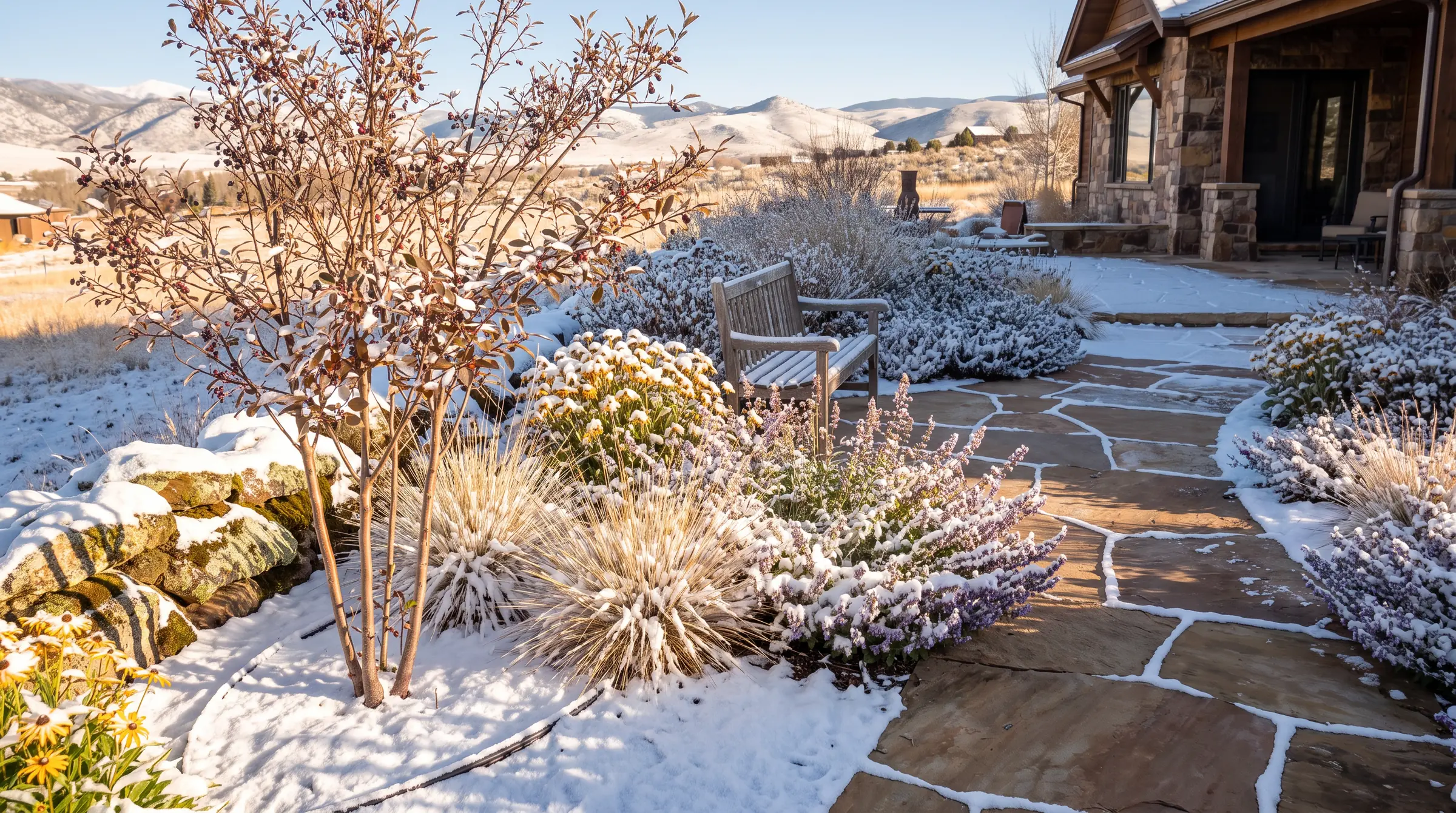
Dry winters kill more plants than cold. Water once or twice a month in long dry spells, above 40 degrees.
One garden, four seasons
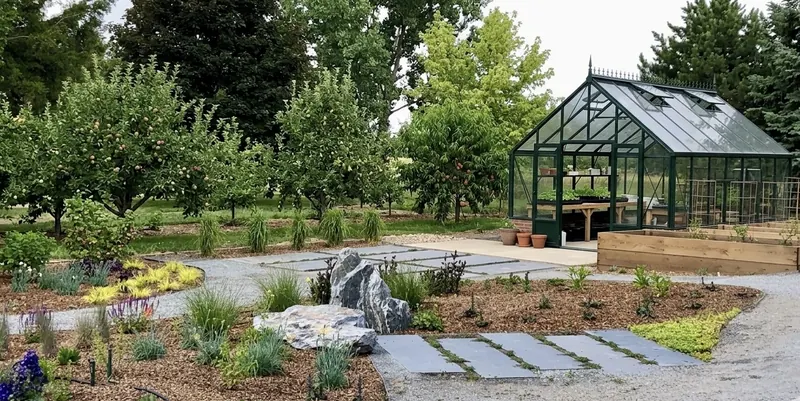
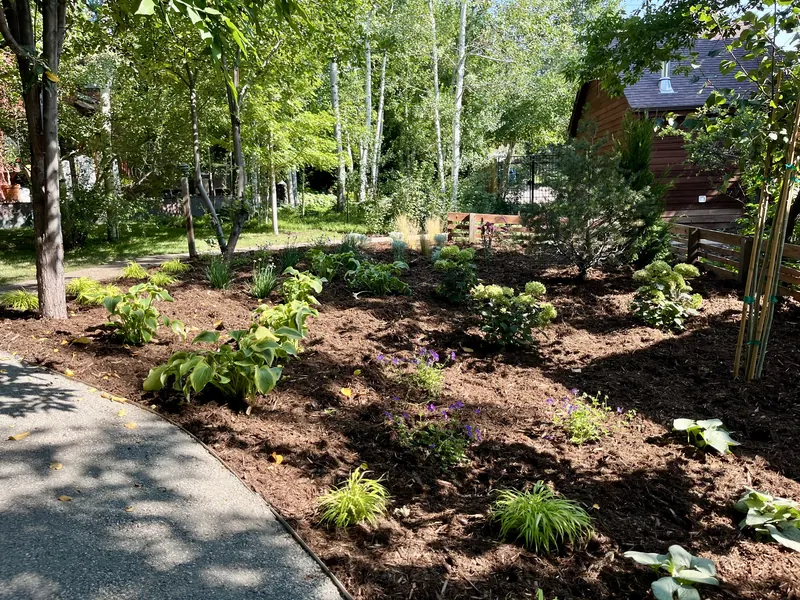
The same garden through a Colorado year, and what a visit does at each turn. Pick a season.
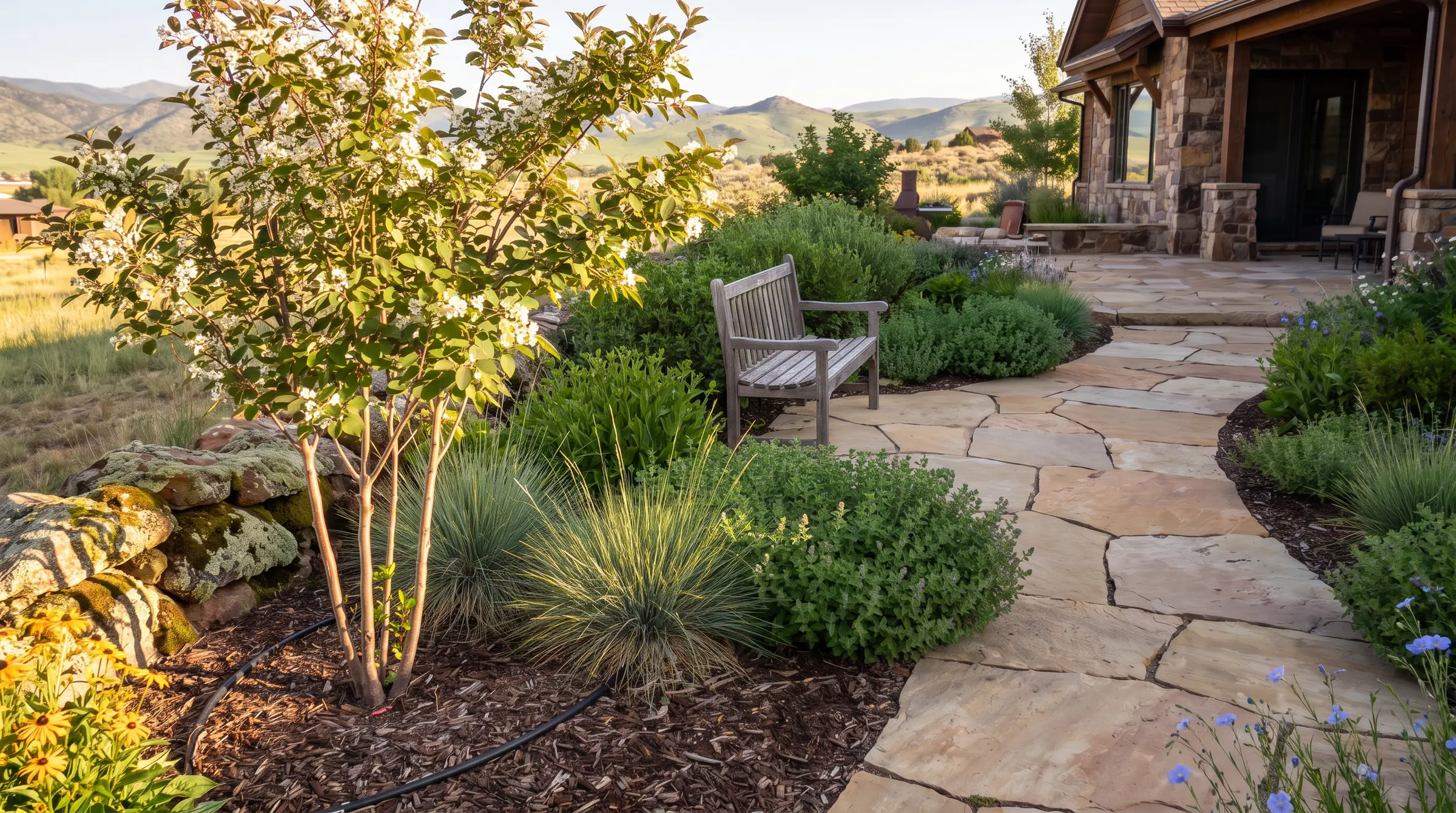
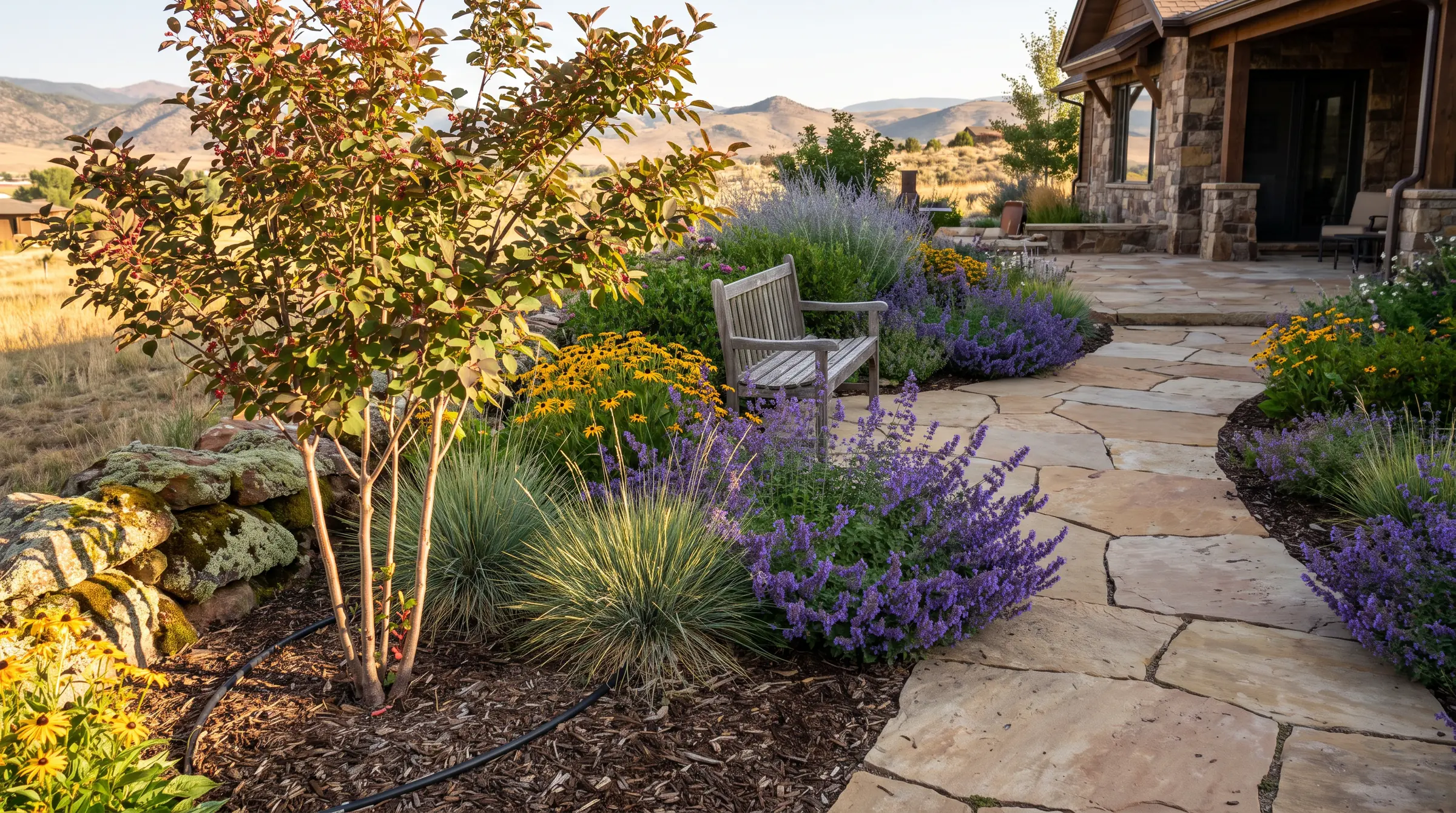
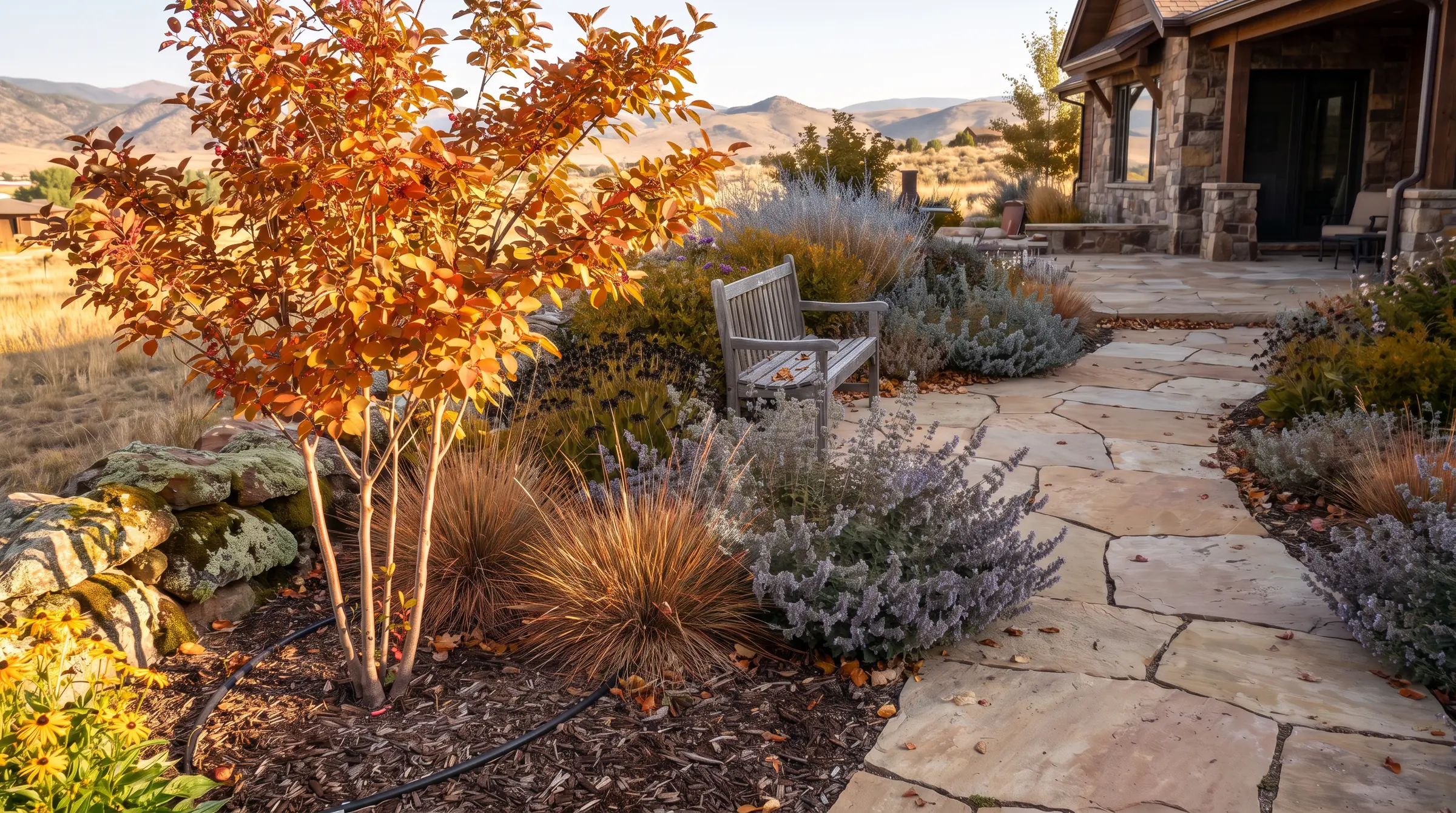
Winter visits
- Hand-water trees, shrubs and perennials in long dry spells, once or twice a month
- Water at midday, when air and soil are above 40 degrees and there is no snow cover
Worth knowing. New plantings, birch and maples, evergreens and south and west sides dry out first.
Spring visits
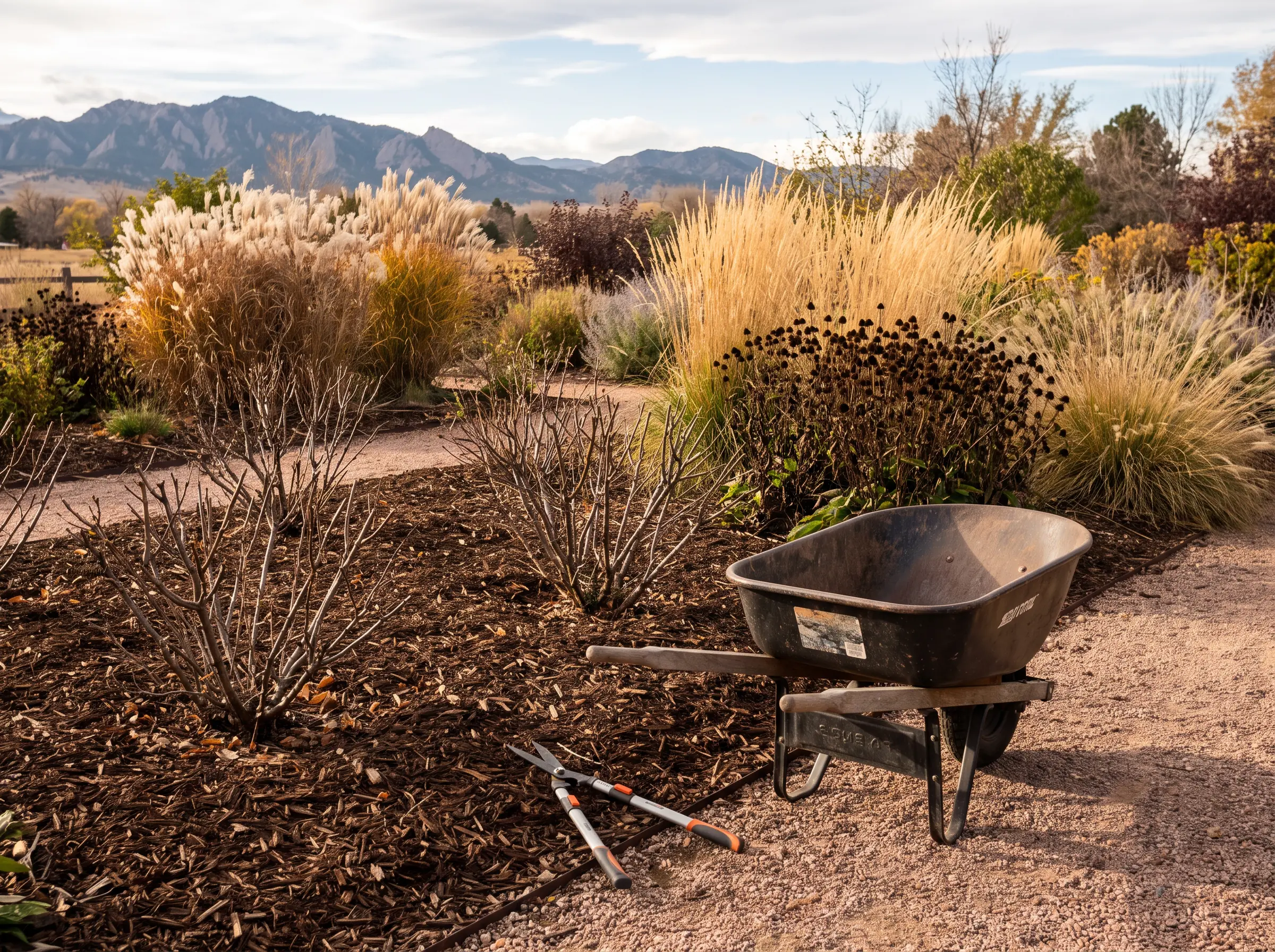
- Clean beds, pull early weeds and give plants room to come up
- Prune summer bloomers such as blue mist spirea and potentilla before growth starts
- Turn on and check the irrigation, then add nutrients
Worth knowing. Lilacs and other spring bloomers wait. Pruning them now cuts off this year's flowers.
Summer visits
- Adjust water for the heat
- Deadhead for a second flush of flowers
- Prune lilacs and spring bloomers right after they finish
- Keep lawn at 2.5 to 3 inches, no more than a third cut at once
Worth knowing. A struggling bed usually means the water, the soil or the spacing needs a change.
Fall visits
- Cut back water as nights cool
- Tend plants for late color
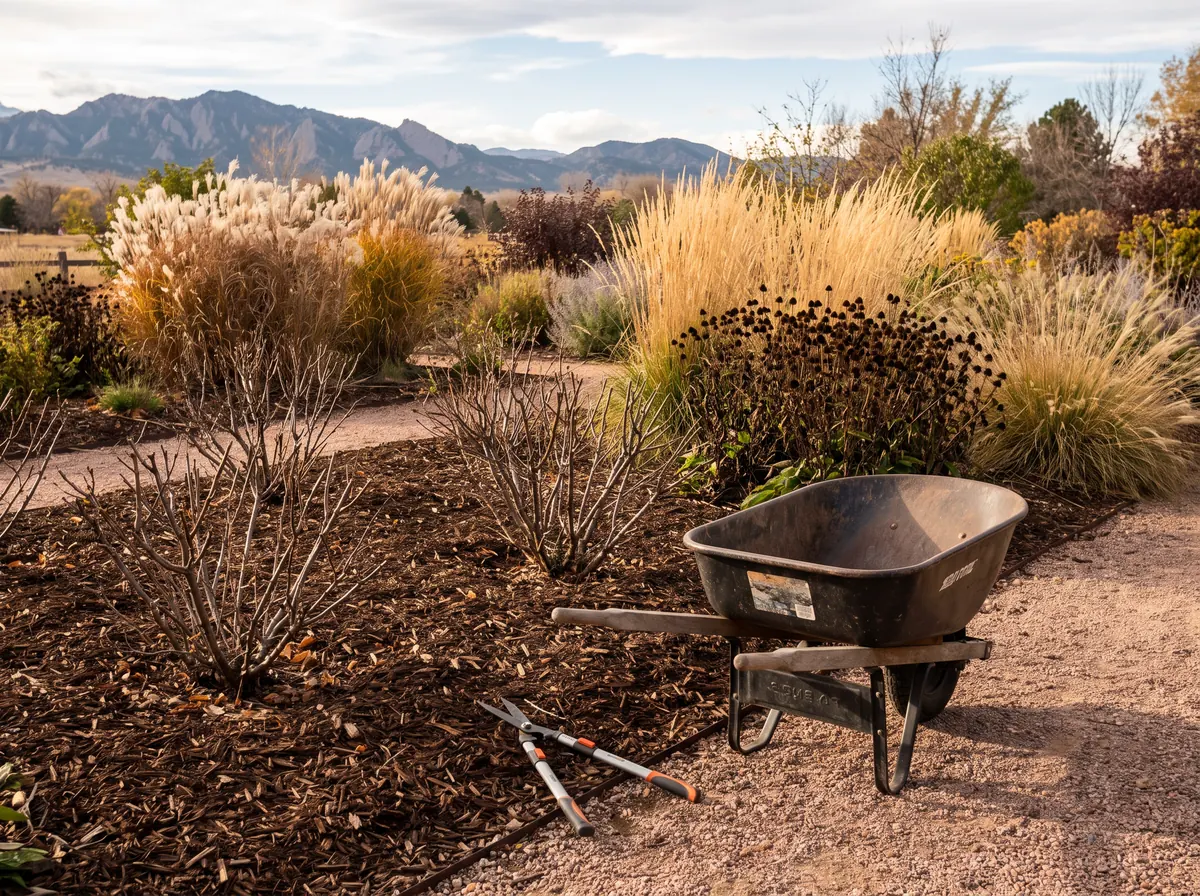
- Cut back or prune the right perennials and shrubs, and manage leaves
- Winterize the sprinklers before the cold
Worth knowing. Leave some seed heads and grasses standing; they hold snow and look good all winter.
The care calendar
What happens when, across a Boulder County year. Timing moves with each year's weather; this is the usual pattern.
Dashed: only in long dry spells, when it is above 40 degrees and there is no snow. This month is marked.
“I am extremely pleased with everything from the design to installation and continuing upkeep.”
Quick answers
Something else? Call (720) 243-9930.
Do you do spring cleanups?
Yes. Spring visits clean the beds, prune where it fits, pull early weeds and give plants room to come up.
Why water a garden in winter?
Colorado winters are often dry, and roots can dry out without snow. CSU Extension suggests watering once or twice a month in dry spells, at midday, when it is above 40 degrees.
When should my lilac be pruned?
Right after it blooms. Lilacs set next year's flower buds in summer, so fall or winter pruning removes next spring's flowers, according to CSU Extension.
Can you winterize my sprinklers?
Yes. Tending sprinklers and winterizing them before cold weather is part of our seasonal care.
Is seasonal maintenance the same as estate management?
No. Seasonal visits care for the garden at the key turns of the year. Estate management adds ongoing oversight of the whole property and coordination with other specialists.
Read the full page: pruning, mulch and winter watering
Visits at the turns of the year
Seasonal maintenance is not the same list repeated every week. We visit at key points in the year and give plants, soil and irrigation what they need for the season ahead.
Good care takes plant knowledge. It means knowing when to prune and when to leave a plant alone, and how to coax a second flush of flowers. It means knowing when to change the watering, and what a struggling bed says about its soil.
Visits also give us a chance to notice change. A zone may need adjusting. A perennial may be outgrowing its space, or the soil may need organic matter. A shrub may now throw the bed off balance. Small issues get handled before they grow. When it fits, we may suggest refreshing a bed or adding seasonal containers.
Spring cleanup to winter watering
Visits are timed around the big turns in a Colorado garden. Fall irrigation work includes winterizing the sprinklers, covered on the irrigation page.
- Spring. clean beds, prune where it fits, pull early weeds, give plants room to come up.
- Start of the growing season. turn on and check the irrigation, weed and deadhead, add nutrients.
- Summer. adjust water for the heat, care for flowering plants, keep beds healthy.
- Fall. cut back water as nights cool, tend plants for late color, begin the move toward dormancy.
- Before winter. cut back or prune the right perennials and shrubs, manage leaves, prepare tender plants for snow and cold.
- Winter. hand-water trees, shrubs and perennials through dry spells.
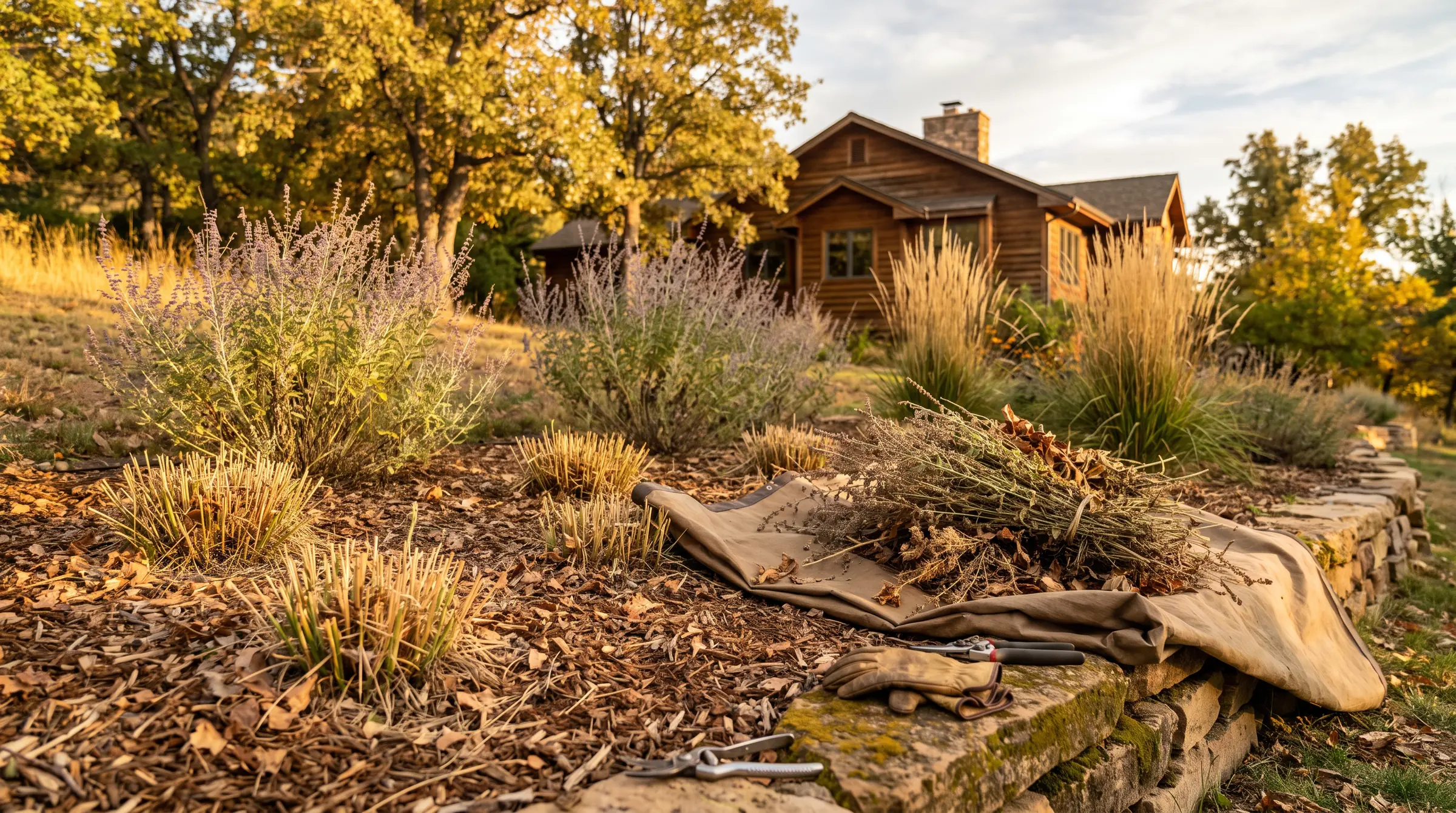
Pruning, mulch and mowing height
Timing matters most with shrubs. CSU Extension notes that spring bloomers such as lilac, forsythia and viburnum set next year's buds the summer before. Prune them right after they bloom. Pruning them in fall or winter cuts off next spring's flowers.
Summer bloomers such as blue mist spirea, potentilla and Annabelle hydrangea flower on new growth. Prune them in early spring, before growth starts.
For many flowering shrubs, CSU suggests taking out about a third of the oldest stems at the base each year. Shearing shrubs into balls does the opposite. Over time it leaves a woody shell with few flowers.
Mulch thins as it breaks down. PlantTalk Colorado suggests about 3 inches to hold back weeds, with less right at the stems. Lawns do best mowed at 2.5 to 3 inches, with no more than a third of the blade cut at once, according to CSU.
Watering through dry winters
Colorado winters can be very dry, and roots dry out when there is no snow. CSU Extension advises watering in long dry spells, about once or twice a month, when the air and soil are above 40 degrees and there is no snow cover. Water at midday so it soaks in before the night freeze.
Most at risk are new plantings, shallow-rooted trees like birch and many maples, evergreens, and plants on south and west sides. For established shrubs in dry months, CSU suggests about 5 gallons a month for small ones and about 18 for large ones.
Lawns can need water too. CSU suggests watering every four to six weeks in long dry spells from late fall to spring, as long as the ground is thawed.
Our winter care can include hand-watering trees, shrubs and perennials through these dry spells, to protect roots until spring.
Start with a visit. A walk around your property comes first. Pick a day and time online, or call.
Sources 5
- CSU Extension: Pruning Flowering Shrubs
- CSU Extension: Fall and Winter Watering of Plants and Trees (fact sheet 7.211)
- CSU Extension: Lawn Care Basics
- PlantTalk Colorado (CSU Extension): Xeriscape Mulches
- CSU Extension: Home Sprinkler Systems, Preparing Your Sprinkler System for Winter (fact sheet 4.719)
Seasonal maintenance usually leads to estate management, irrigation, landscape enhancements and landscape design.
Start with a walk around your property.
We walk the property with you first. Pick a day and time online, or call.