
What are the home ignition zones?
The Colorado State Forest Service, or CSFS, splits the land around a house into three zones. Each one has a different job. Zones are measured from the house, and CSFS says to build them around every structure, including detached garages, sheds and barns.
Zone 1 is about stopping flames and embers from reaching the house. Zone 2 gives a fire less fuel as it gets closer. Zone 3 keeps fire on the ground instead of in the treetops. On steep slopes, CSFS says the outer zone may need to be larger.
- Zone 1: 0 to 5 feet from the house. The most work and the most care.
- Zone 2: 5 to 30 feet. Fuels are thinned and spaced out.
- Zone 3: 30 to 100 feet, on fairly flat ground. Focus on forest health and keeping fire low.
What should go in the first 5 feet?
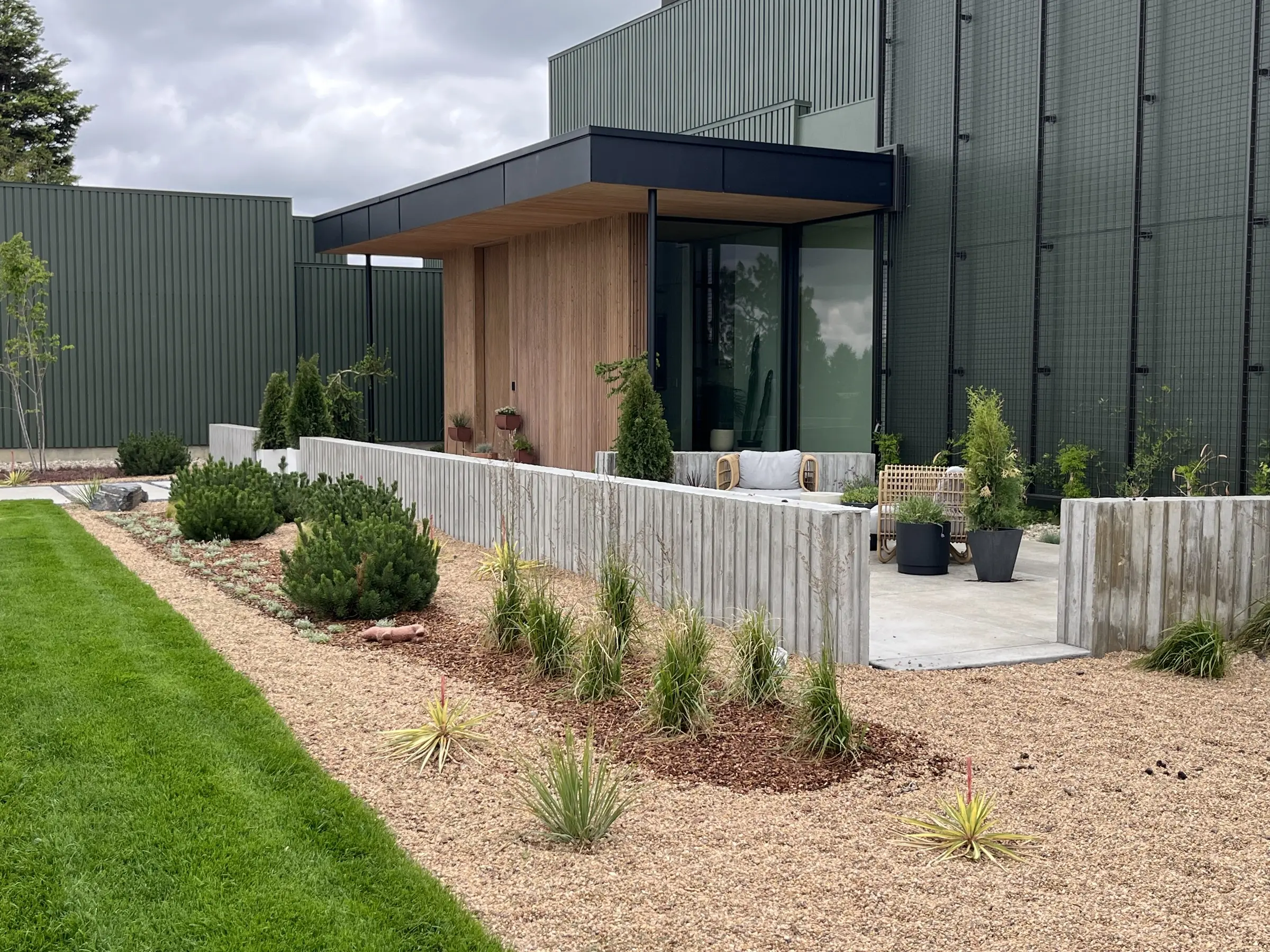
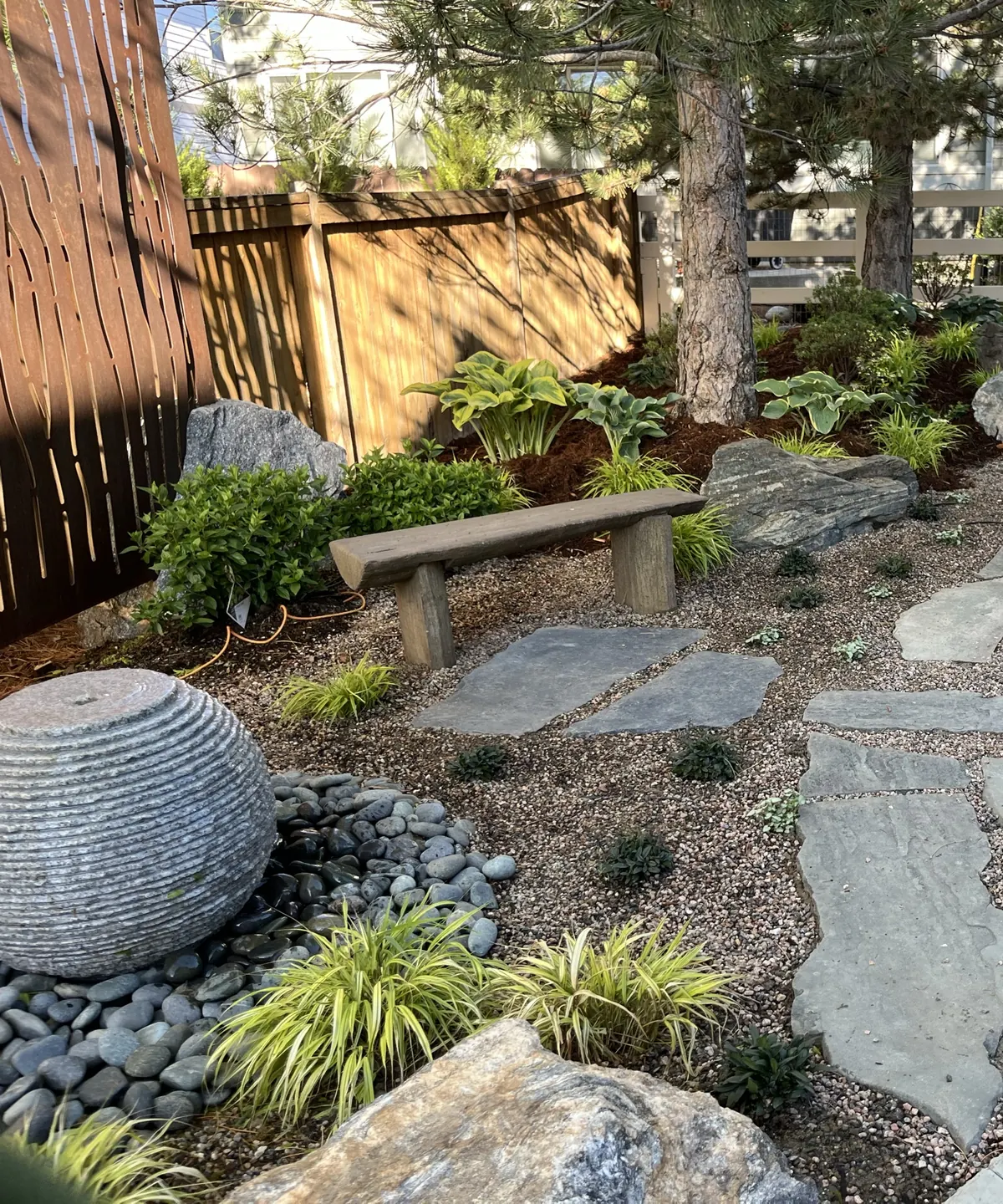
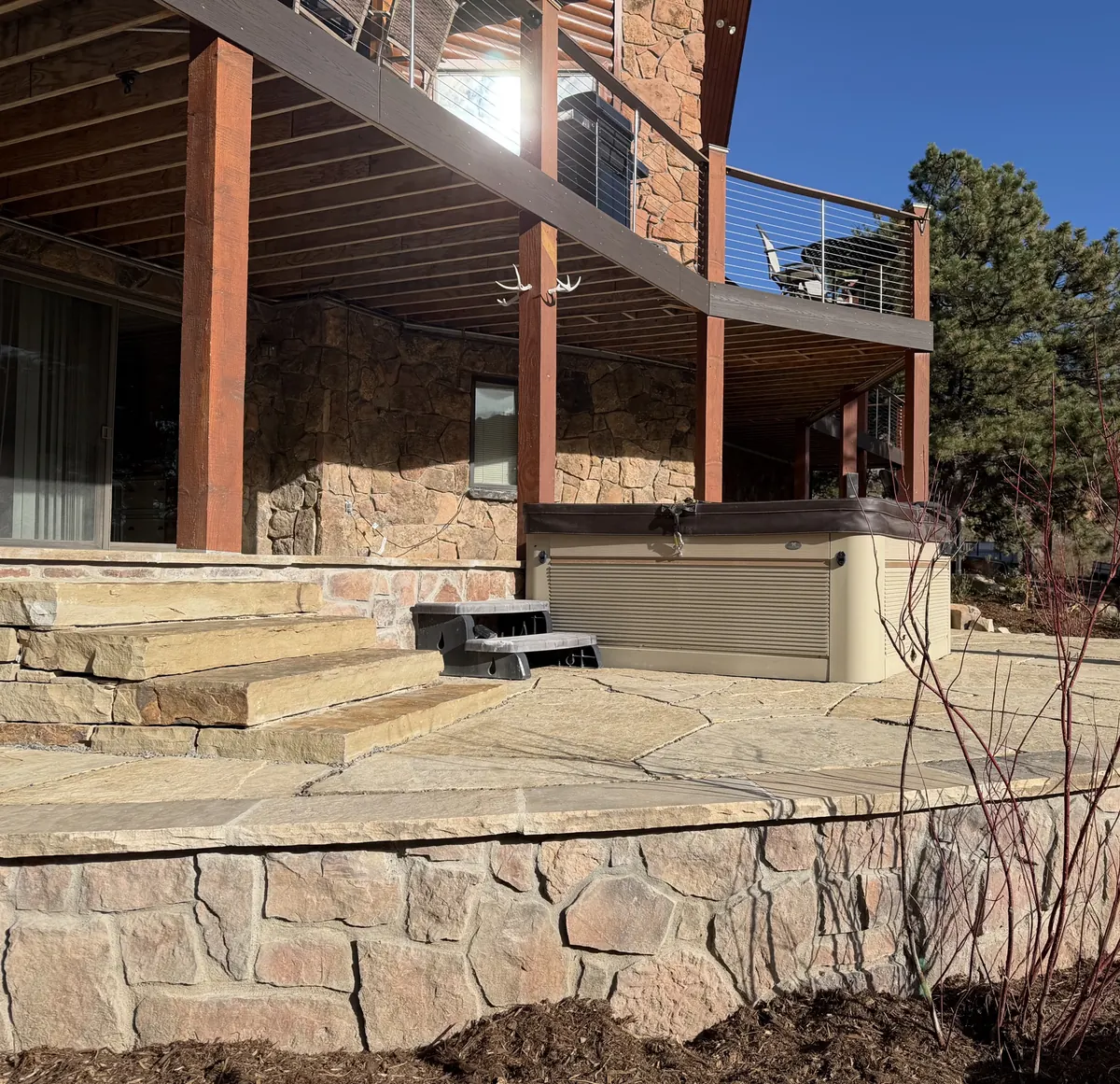
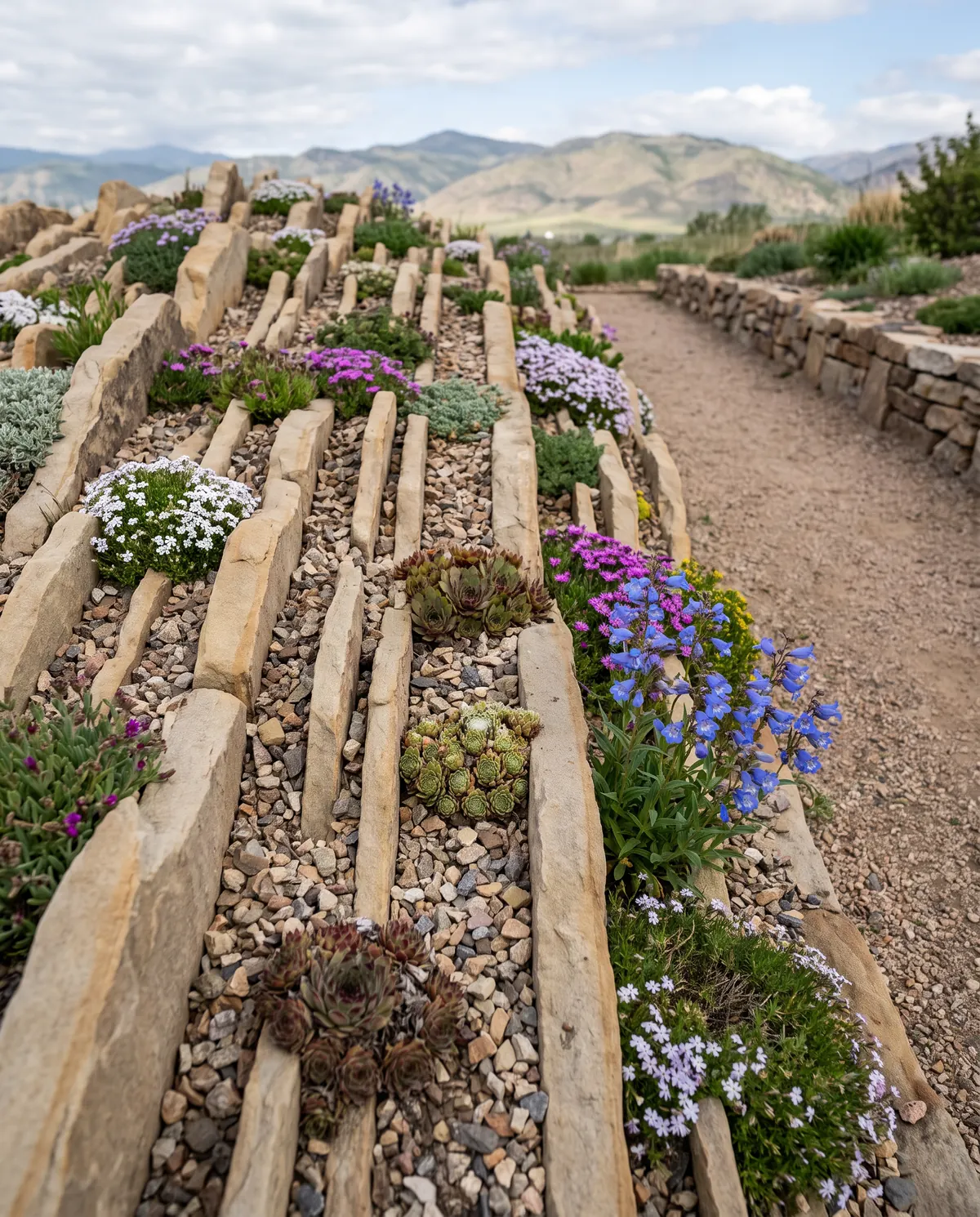
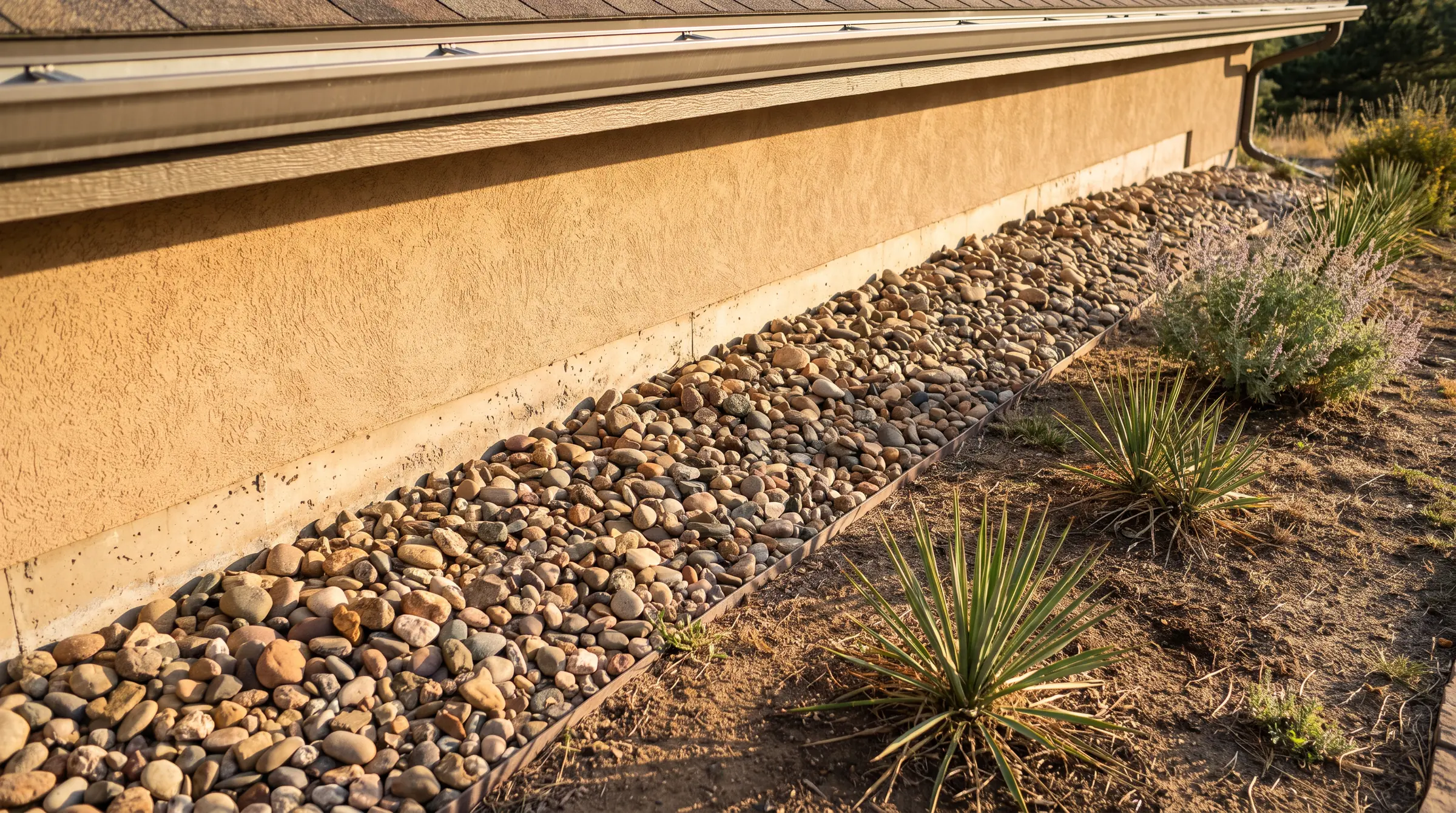
CSFS says to use hard surfaces that do not burn in Zone 1: rock, gravel, sand, cement, bare earth, or stone and concrete pavers. Remove plants that burn, including shrubs, and remove mulch and woody debris. Do not keep firewood here.
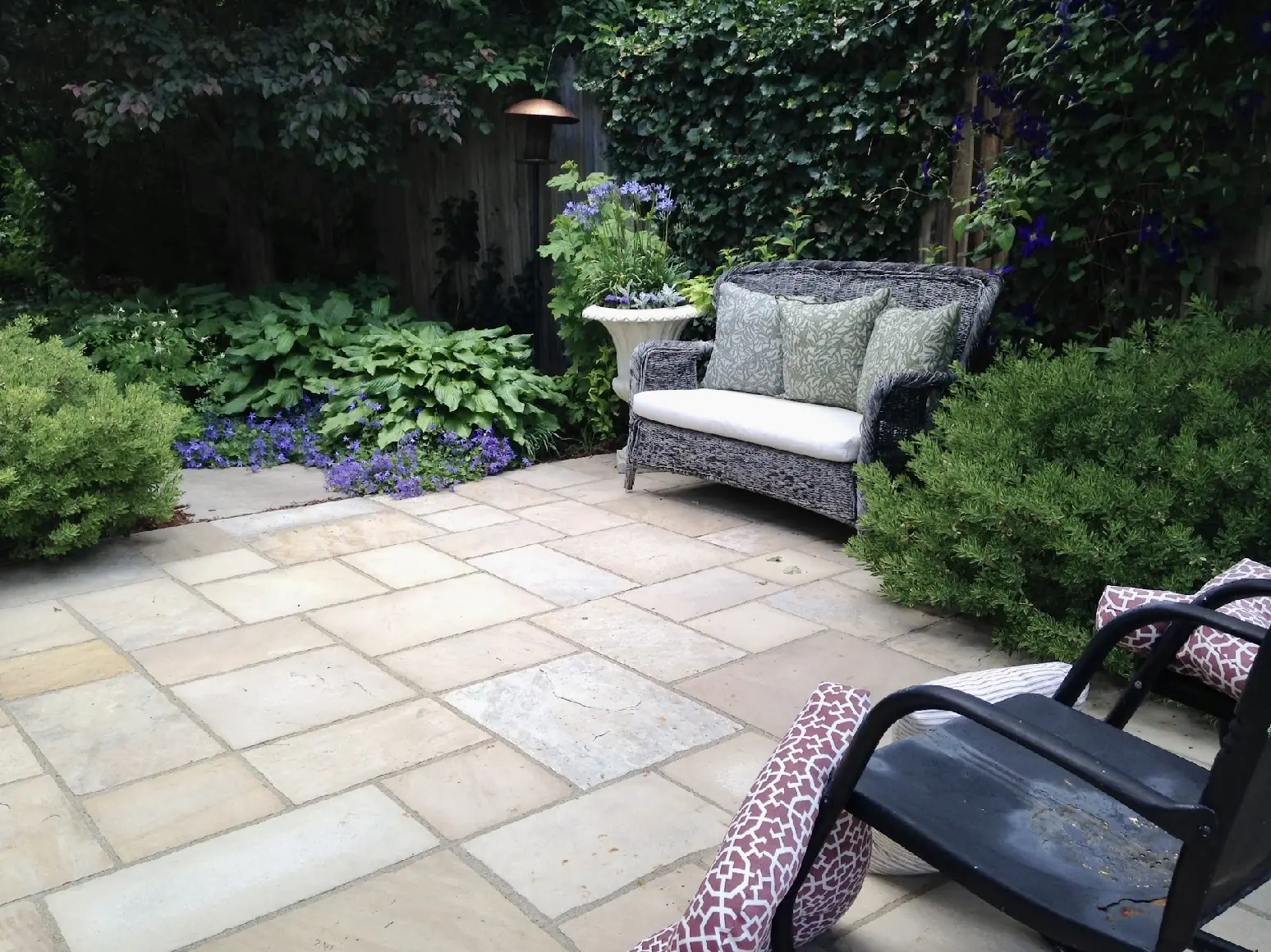
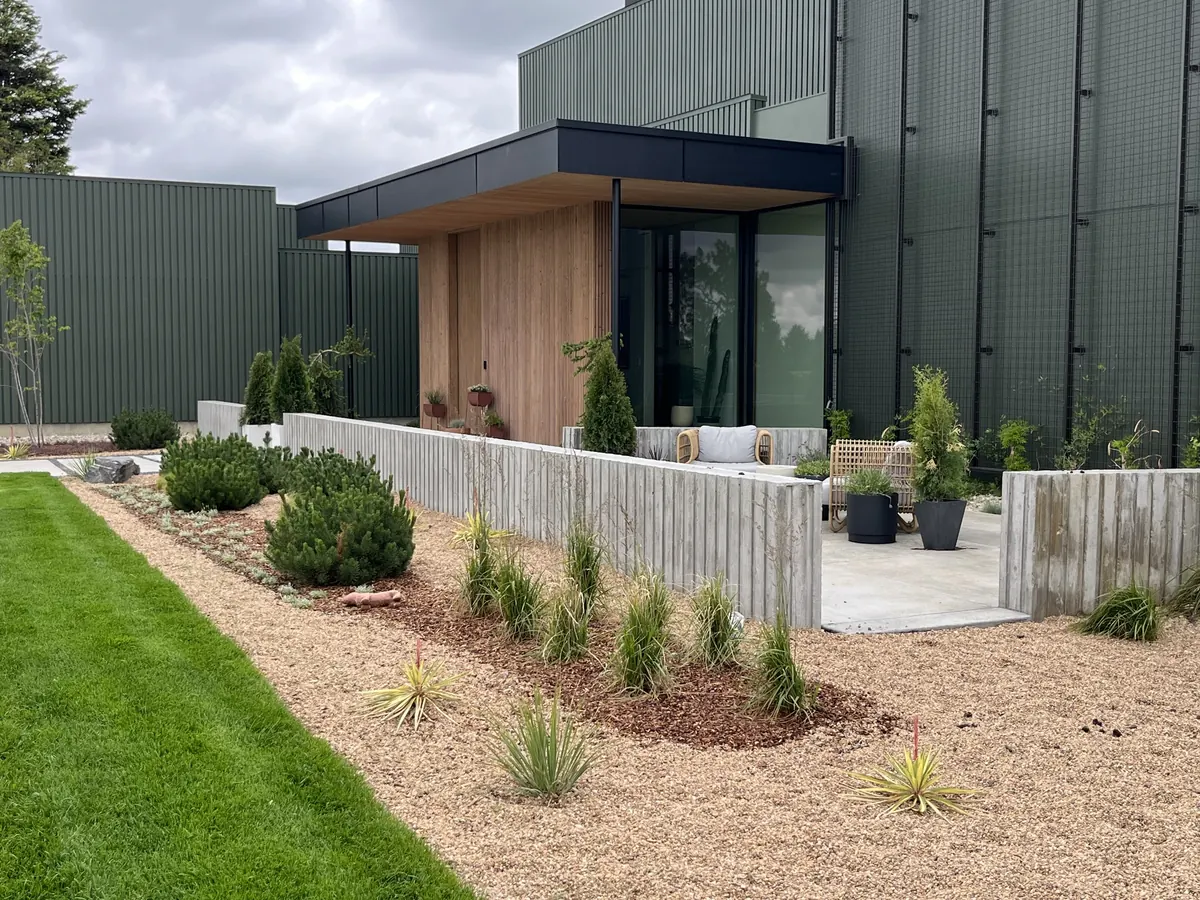
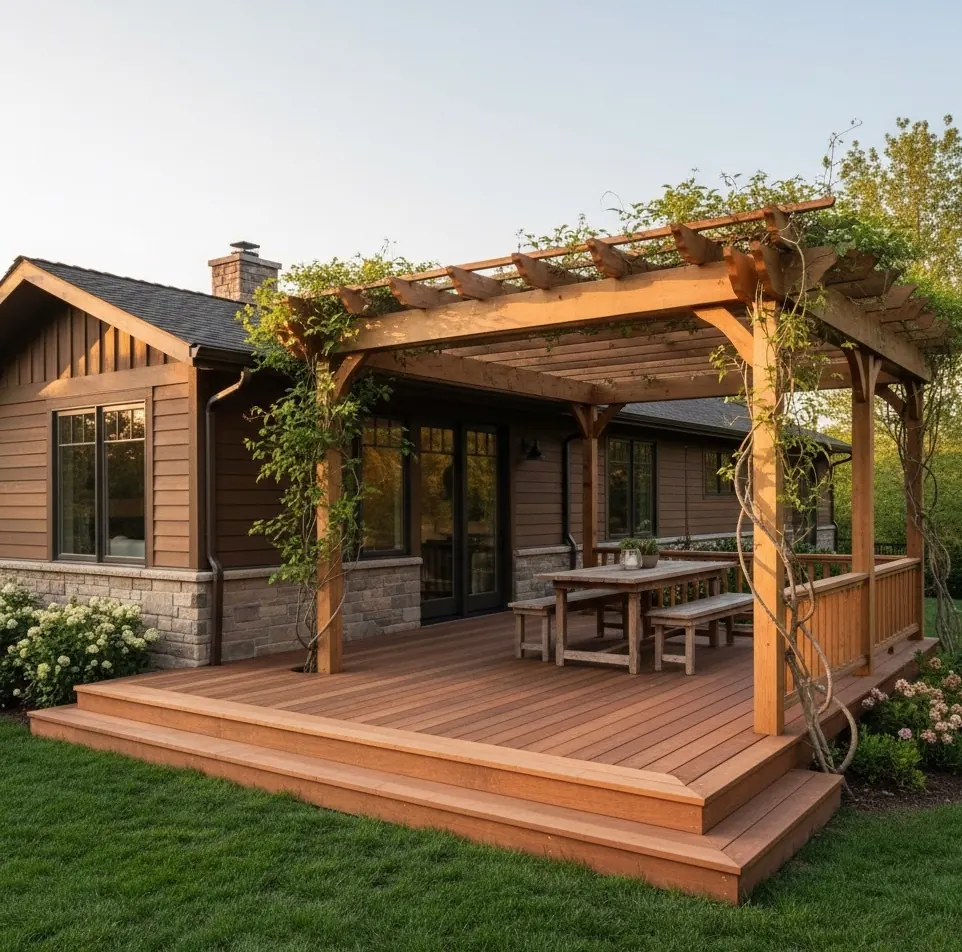
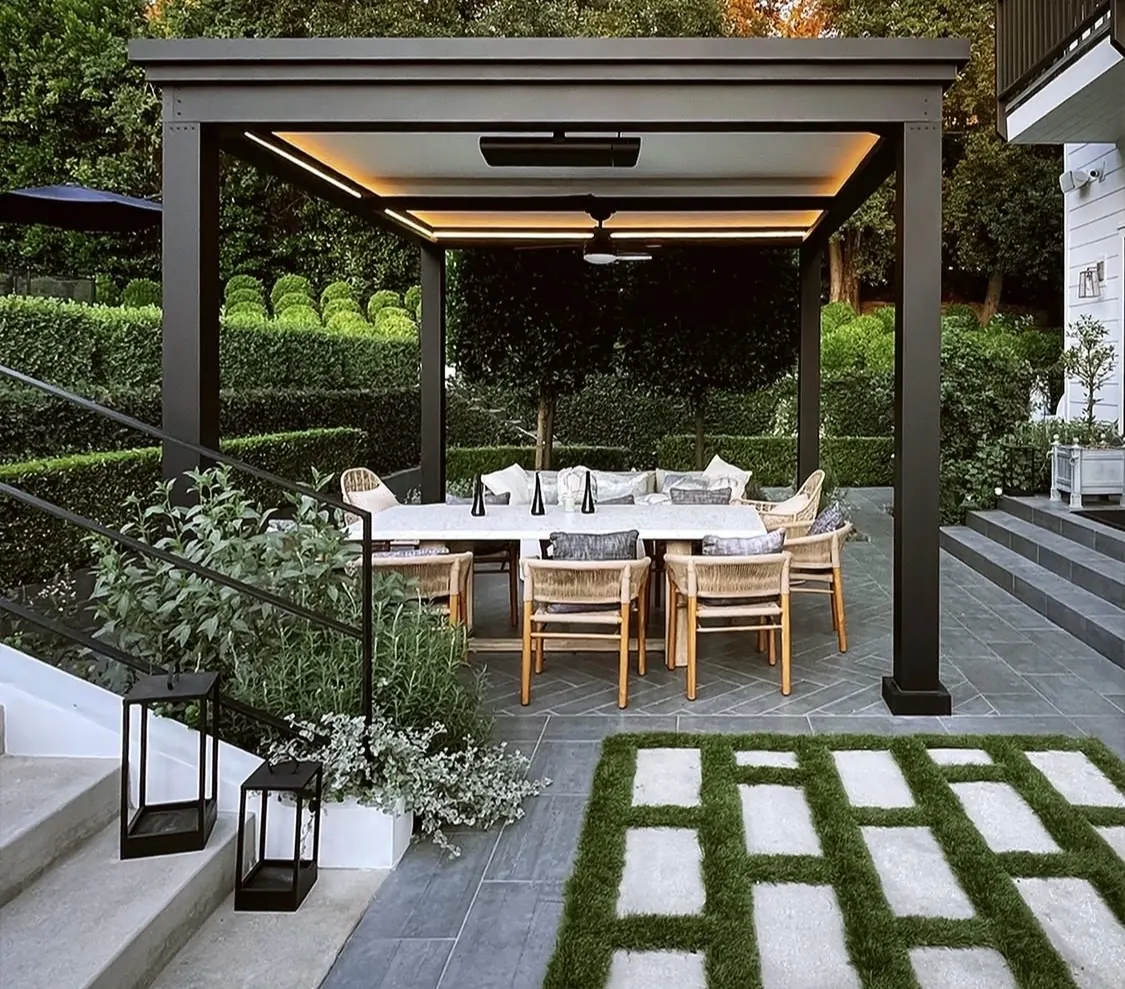
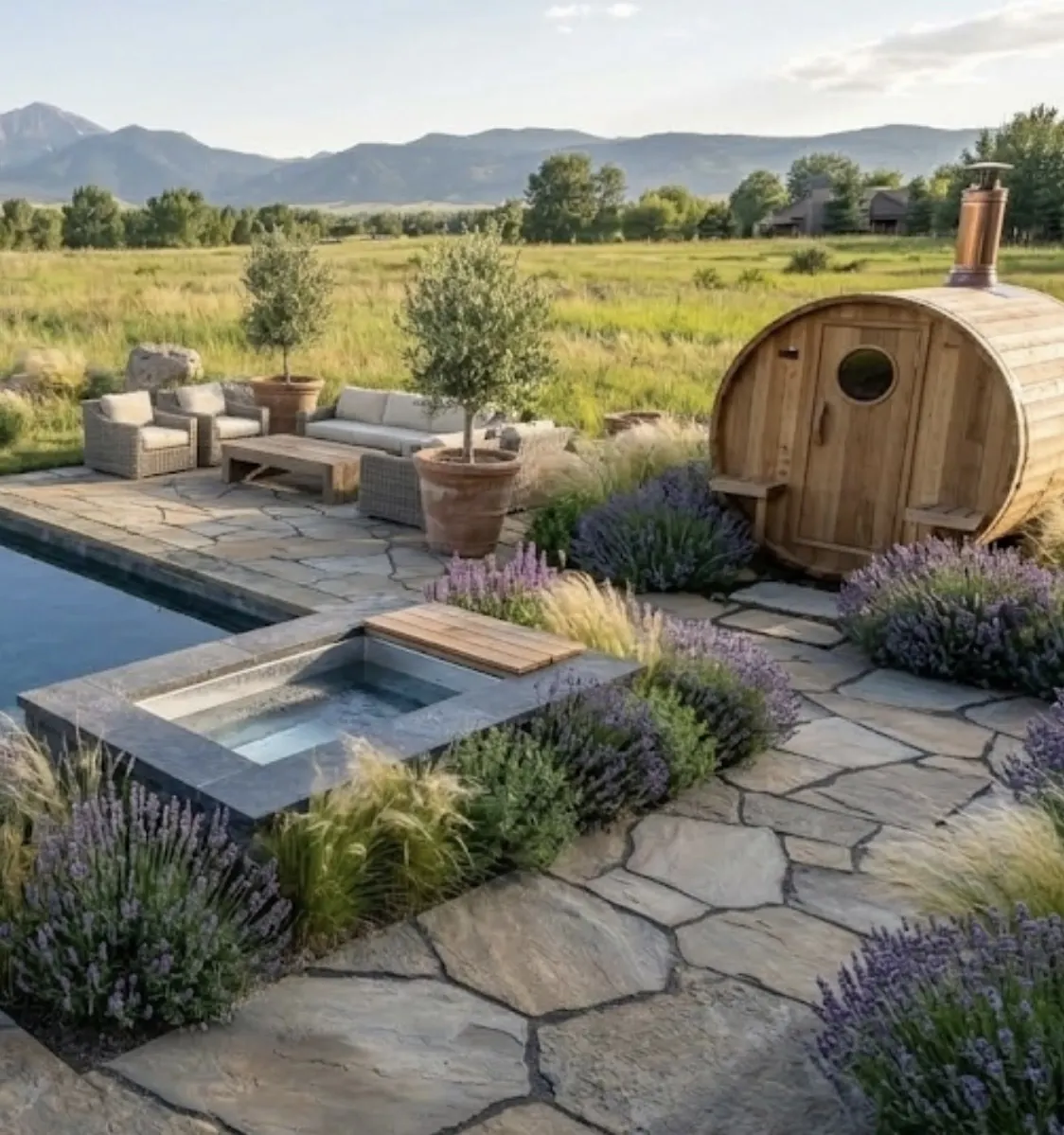
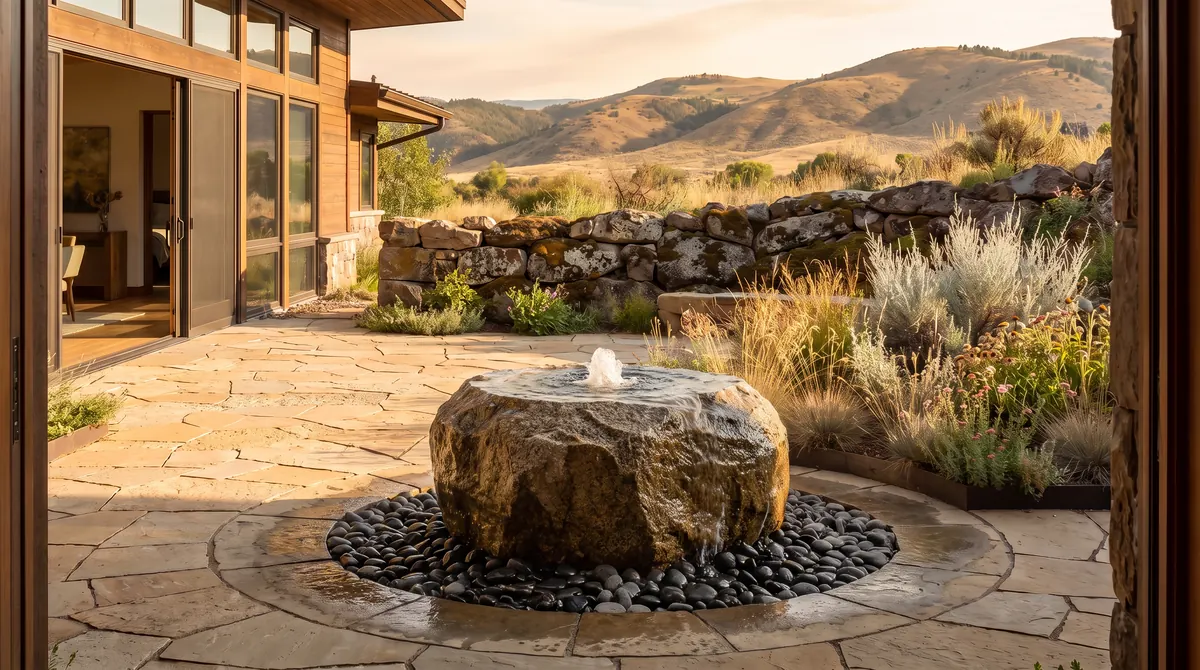
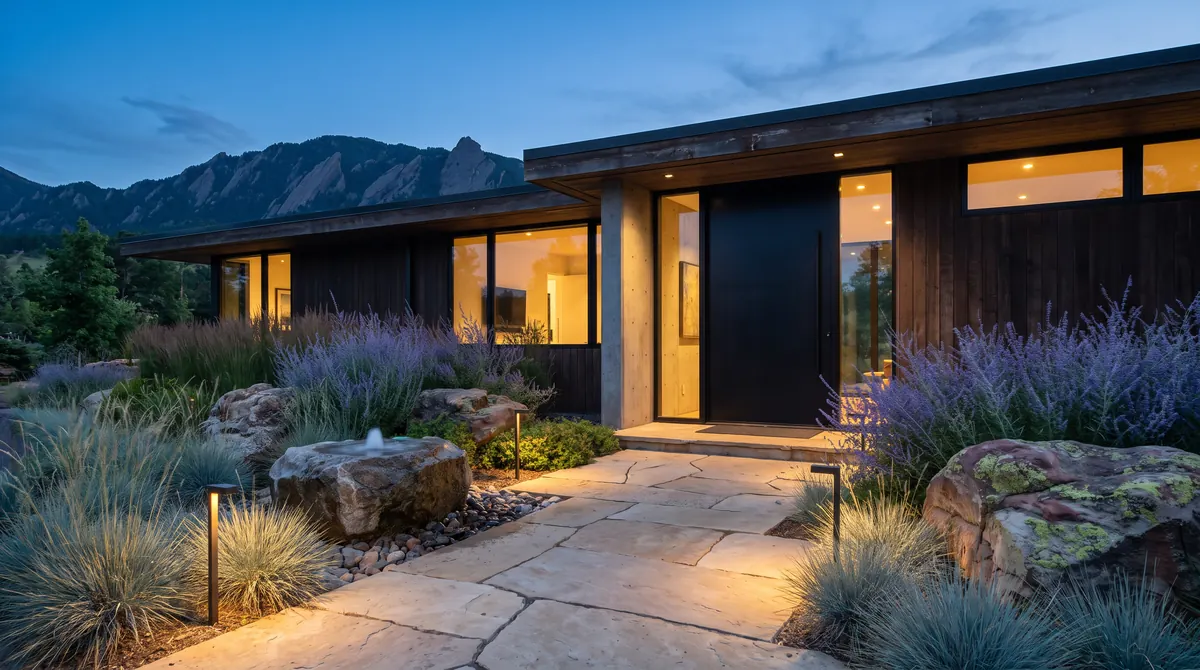
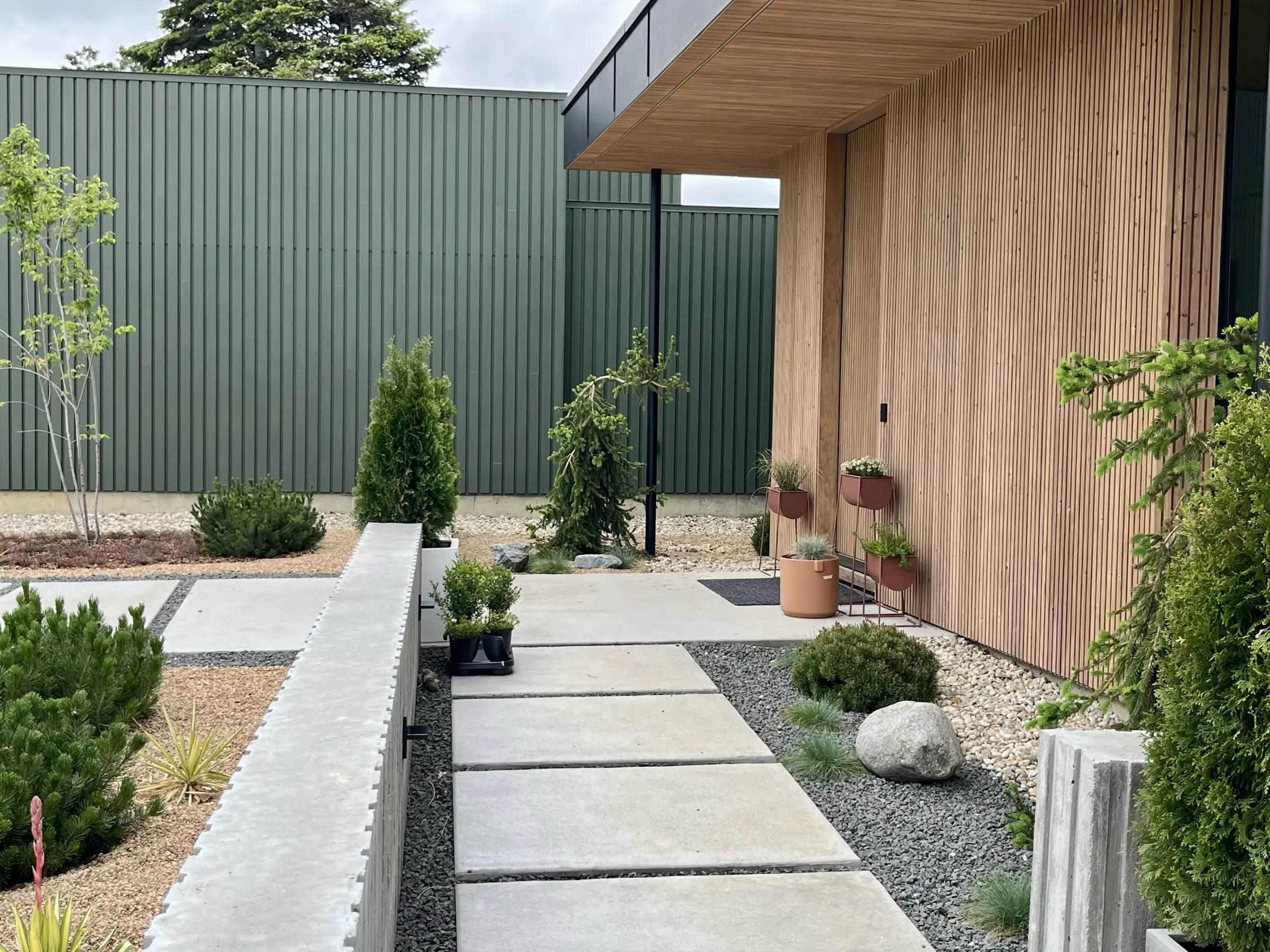
This is where good hardscape design helps the most. A gravel band, a stone path or a patio edge along the house can look planned instead of bare. Wildfire Partners, Boulder County's program, says the first 5 feet ideally hold no plants at all. If you do plant there, use low ground covers that are kept up well.
Firewise work in Zone 1 also touches the house itself. CSFS asks for 6 inches of clear space between the ground and the siding. It also says to replace wood fences and gates within at least 5 feet of the home.
- Rock, gravel, pavers or concrete against the house.
- No shrubs, bark mulch or woody debris.
- No firewood stacked here, and no storage under decks.
- Prune branches that hang over the roof.
- Clear all fuels within 10 feet of the chimney.
- Rake needles and leaves within 5 feet of decks and walls.
How far apart should plants and trees be?
In Zone 2, CSFS asks for at least 10 feet between tree crowns, measured from the tip of one tree's branches to the nearest branch of the next. Small groups of two or three trees can stay if there are 30 feet between groups. Prune lower branches up 6 to 10 feet, or a third of the tree's height, whichever is less. Remove the plants under trees that could carry fire up into them.
Shrubs can stay in Zone 2 if they are not growing under trees. Keep them at least 10 feet from the edge of tree branches. CSFS also gives a rule for shrub groups. Space clumps apart at least 2 1/2 times the shrubs' full-grown height, and keep each clump no wider than twice that height. For shrubs that grow 6 feet tall, that means clumps 15 feet apart and no more than 12 feet across.
Mow grass to 4 inches or less in Zone 2. CSFS says common ground junipers should be removed whenever possible, because they burn hot and hold dry debris underneath. All of these spacings are minimums. On slopes, CSFS says to space plants farther apart and ask a forestry or fire professional.
Which plants burn less?
No plant is fireproof. A CSU and CSFS fact sheet on low-flammability plants rates plants from 0, most flammable, to 10, least flammable. Only plants rated 8, 9 or 10 are recommended within 30 feet of the house. Examples in the sheet include Oenothera speciosa, Oriental poppy and Delosperma, the hardy ice plants.
How a plant is kept up matters as much as which plant it is. CSU points out that well-watered plants burn less easily, and that native plants tend to stay hydrated on less water. Wildfire Partners adds that deciduous trees such as aspen hold more moisture than conifers. Between 5 and 30 feet, it suggests removing junipers and pines and not planting new conifers.
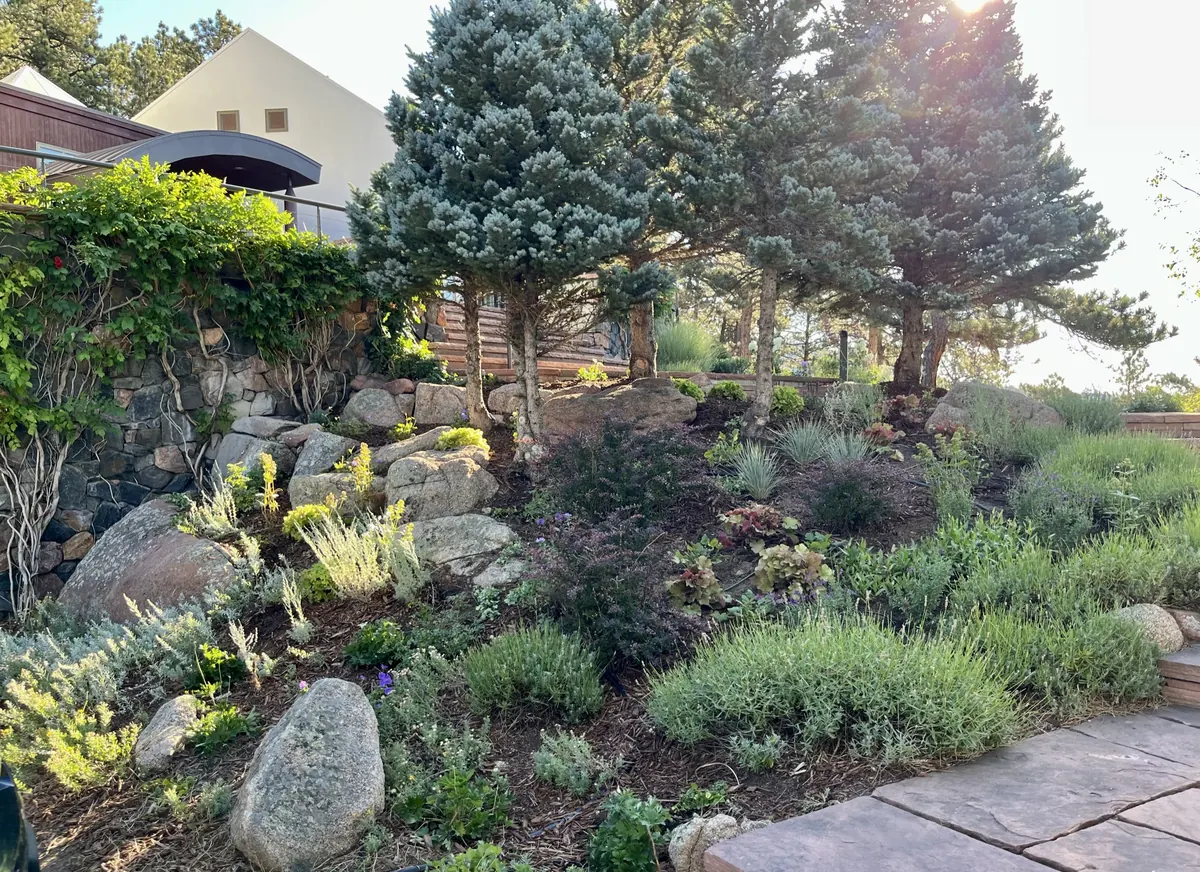
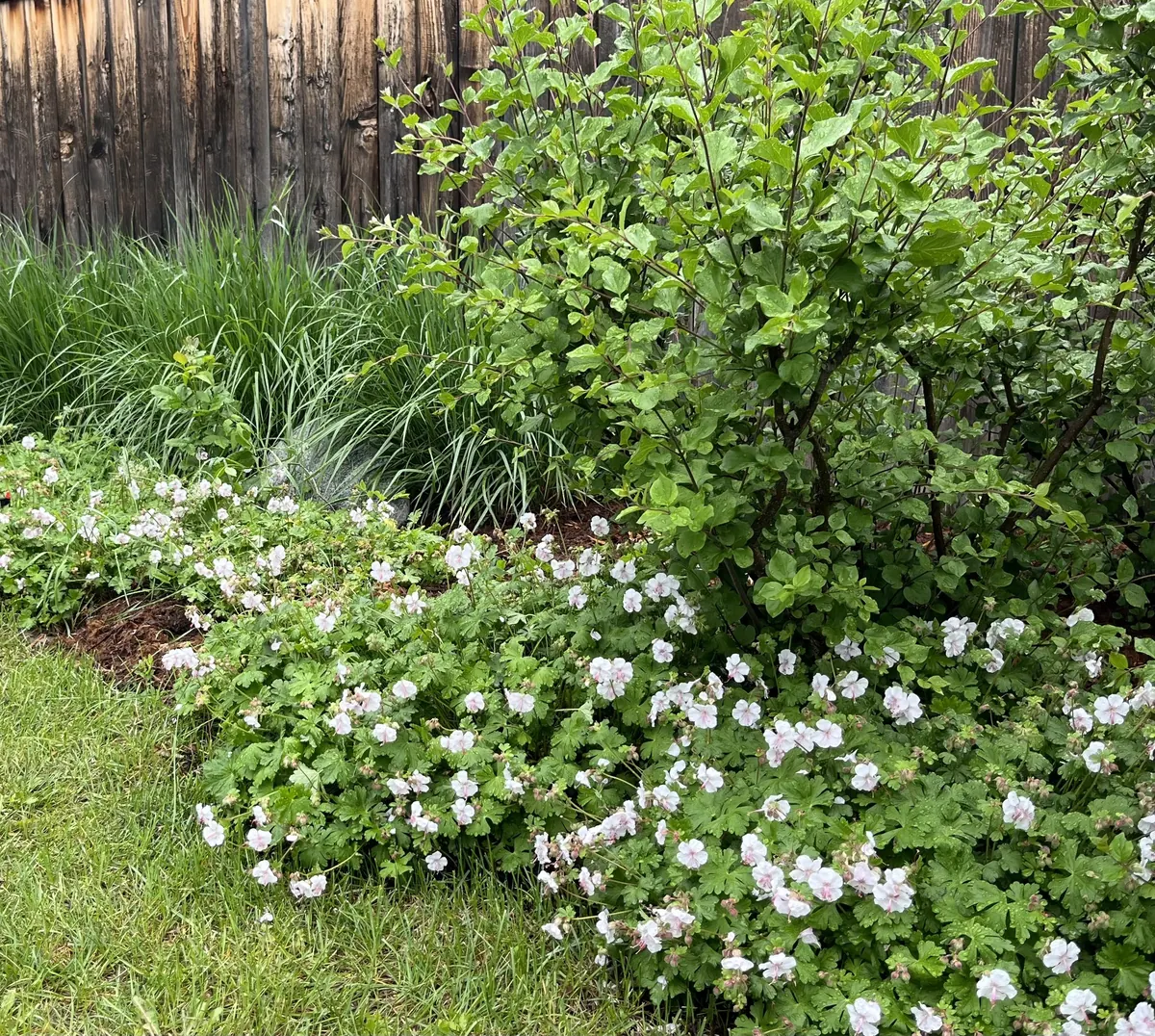
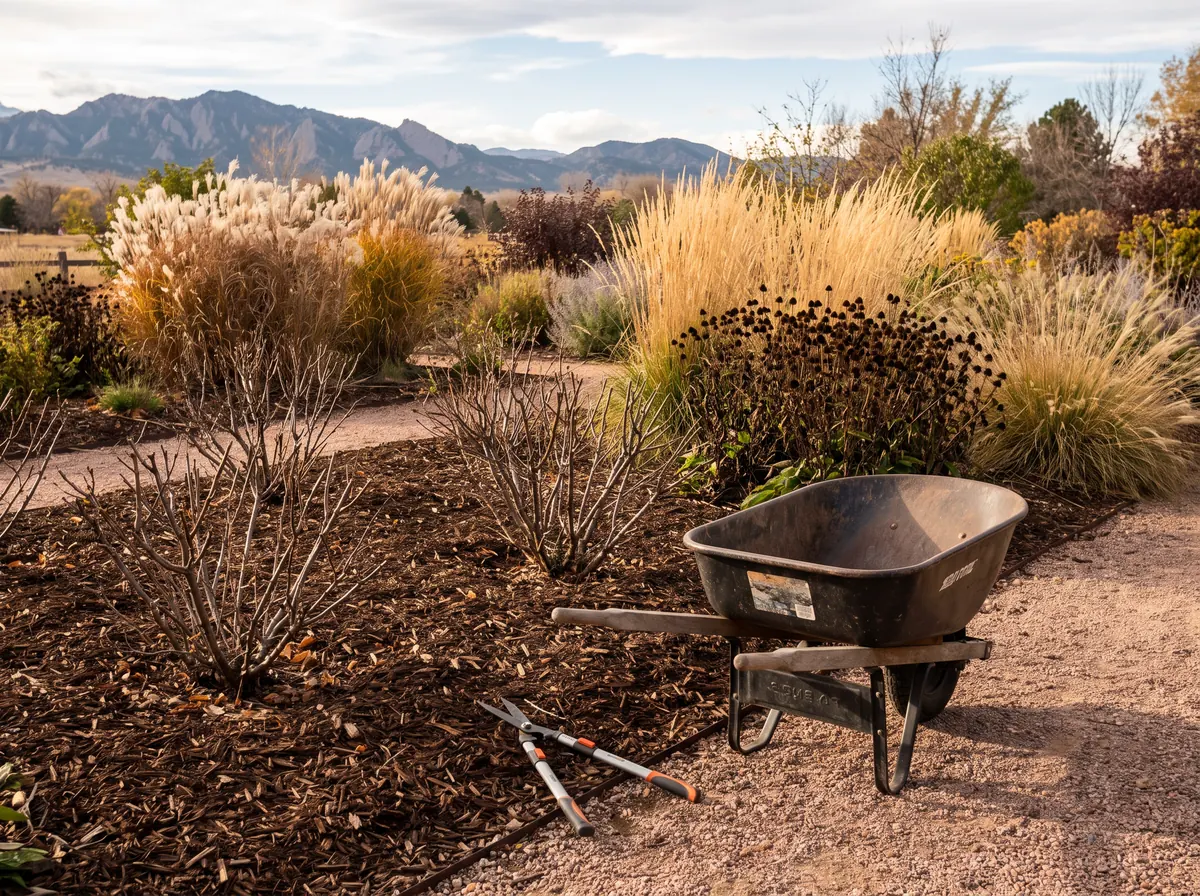
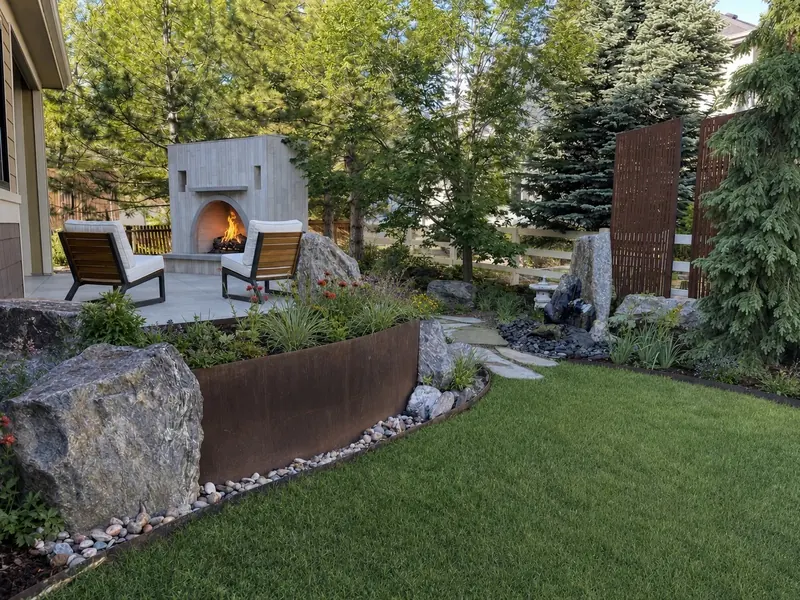
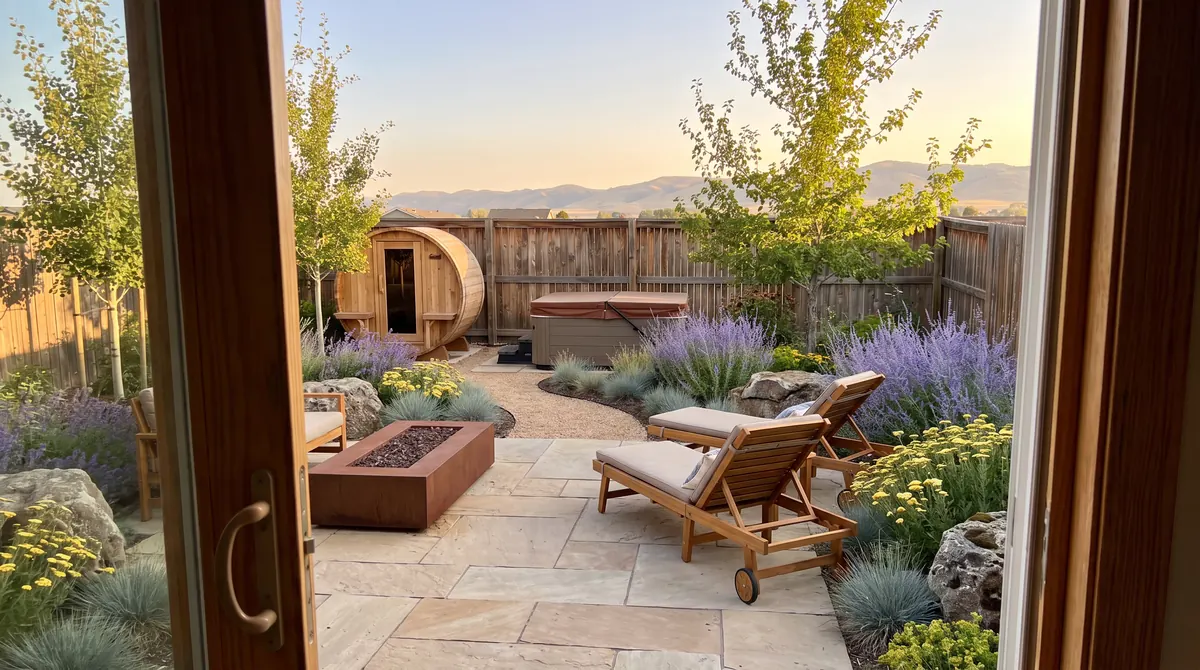
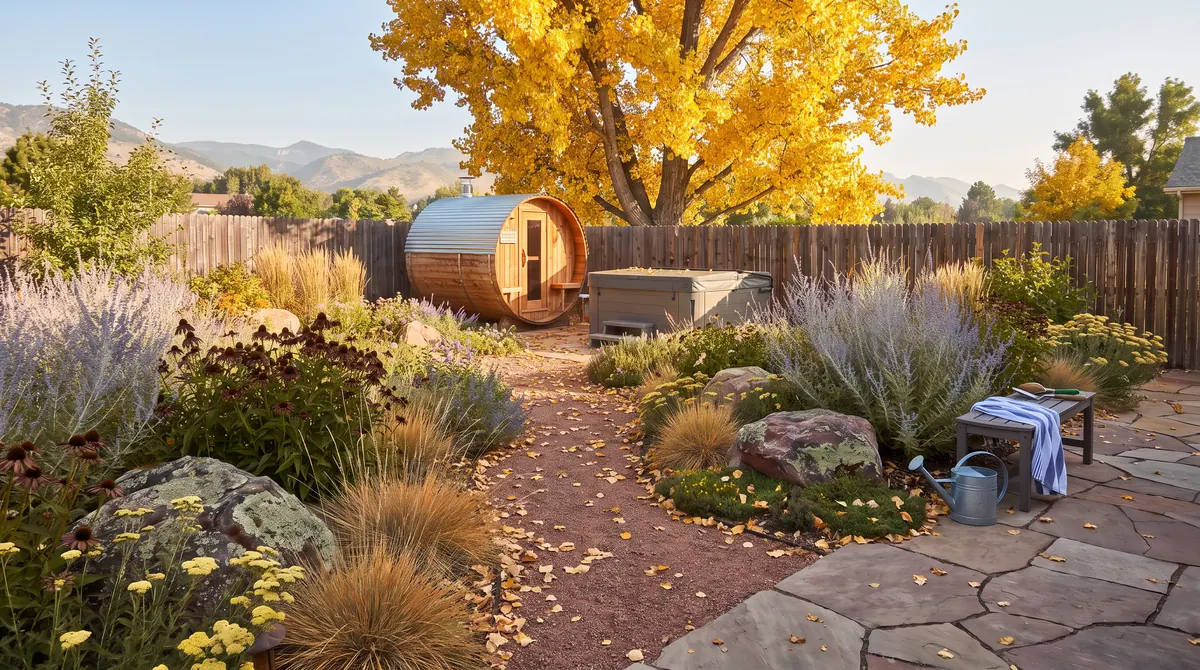
Layout helps too. Wildfire Partners suggests plant islands with gaps between them, and boulders, gravel, stone paths and lawn that break up a path for fire to reach the house. The closer a plant is to the house, the lower, more widely spaced and better kept it should be.
What help is there in Boulder County?
Wildfire Partners is Boulder County's wildfire mitigation program. It offers home assessments in west Boulder County and parts of rural east Boulder County, with a specialist on site for about two hours. It also supports community projects outside the City of Boulder and chipping for groups of five or more nearby homes.
In unincorporated Boulder County, wildfire rules are part of the building code. Defensible space is required for new homes and larger additions in the county's wildfire zones 1 and 2. All new and rebuilt decks need a noncombustible perimeter. Fences and retaining walls that connect to a building must be noncombustible near it: within 5 feet for fences, and within 8 feet for retaining walls. Cities such as Boulder, Longmont, Lafayette, Louisville and Erie have their own codes.
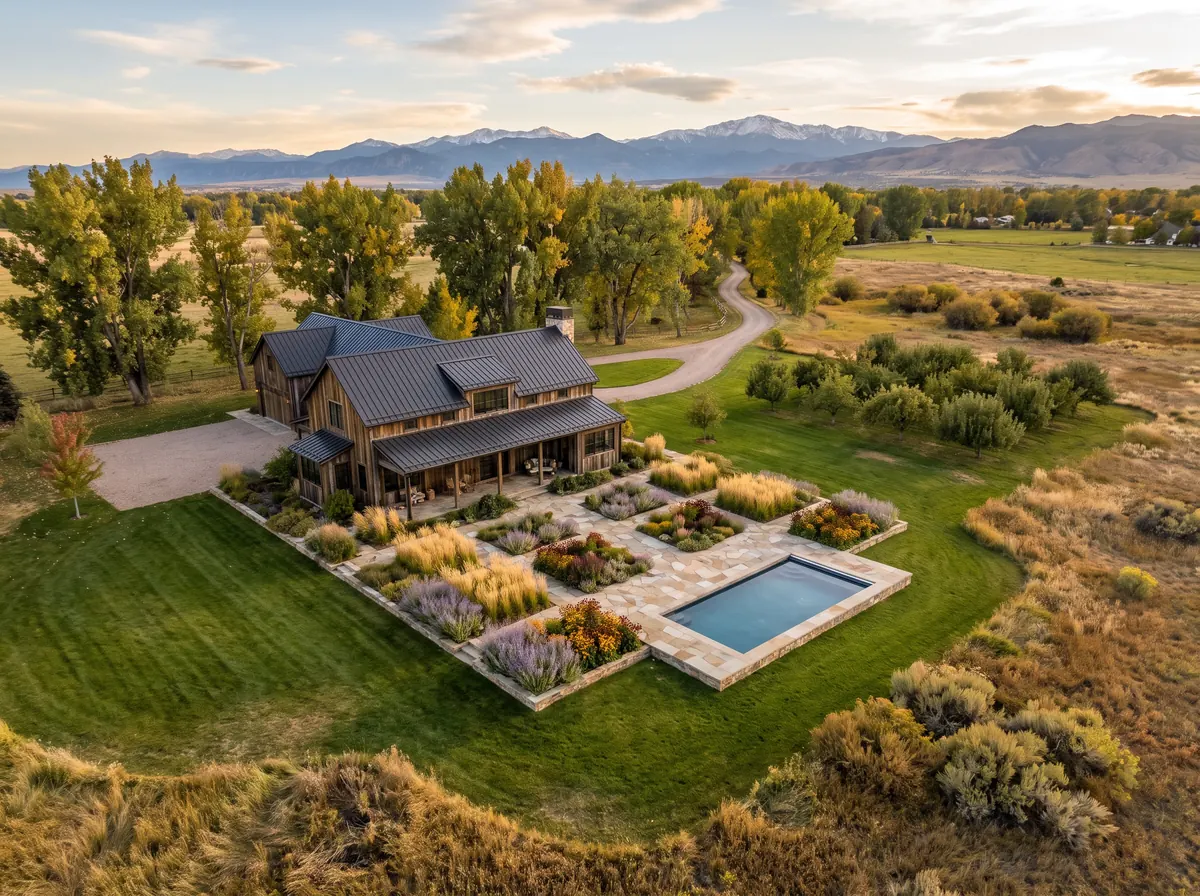
Idlewild's featured Panorama project is described on its site as a firewise garden, with concrete paths and patios framing a native meadow of perennials and grasses. A design can plan fire zones, paths and planting together instead of fixing them one at a time.
The three home ignition zones (Colorado State Forest Service guide)
| Zone 1: 0 to 5 feet | Zone 2: 5 to 30 feet | Zone 3: 30 to 100 feet | |
|---|---|---|---|
| Goal | Keep flames and embers off the house | Slow and weaken an approaching fire | Keep fire on the ground |
| Ground surface | Rock, gravel, pavers, concrete or bare earth | Grass mowed to 4 inches or less; no large piles of logs or mulch | Mowing not needed |
| Plants | No shrubs or mulch | Isolated shrubs, spaced by mature height, away from trees | Mixed ages and species, with openings |
| Trees | Prune branches over the roof; nothing within 10 feet of the chimney | At least 10 feet between crowns; groups of 2 or 3 with 30 feet between | 6 to 10 feet between crowns suggested |
Questions
Is wood mulch OK next to my house?
Not in the first 5 feet. CSFS says to remove mulch and woody debris from Zone 1 and use rock, gravel or pavers instead. Farther out, avoid large piles of mulch.
Do I have to cut down all my trees?
No. CSFS asks you to space them. In Zone 2, keep at least 10 feet between crowns, or keep small groups of two or three trees with 30 feet between groups.
Are there fireproof plants?
No. CSU and CSFS rate plants for flammability and suggest only the lowest-risk ones, rated 8 to 10, within 30 feet of the house. Even those need water and care to stay that way.
Can a firewise yard still feel like a garden?
Yes. Low ground covers, plant islands, stone paths, gravel and patios can all fit the zones. The work is in placing them, not leaving the yard bare.
Does the Boulder County wildfire code apply in Boulder or Longmont?
No. The county code covers unincorporated Boulder County. Boulder, Longmont, Lafayette, Louisville, Erie and other towns have their own building and wildfire codes.
Sources 6
- The Home Ignition Zone guide (Colorado State Forest Service, 2021)
- Protect Your Home & Property from Wildfire (Colorado State Forest Service)
- Wildfire Partners (Boulder County)
- Planting with Purpose: A Guide to Ignition-Resistant Landscaping in Boulder County (Wildfire Partners)
- Wildfire Mitigation Code Requirements (Boulder County)
- Low-Flammability Landscape Plants (CSU Extension CO-Horts blog, on fact sheet 6.305)