
Pergolas and louvered shade structures
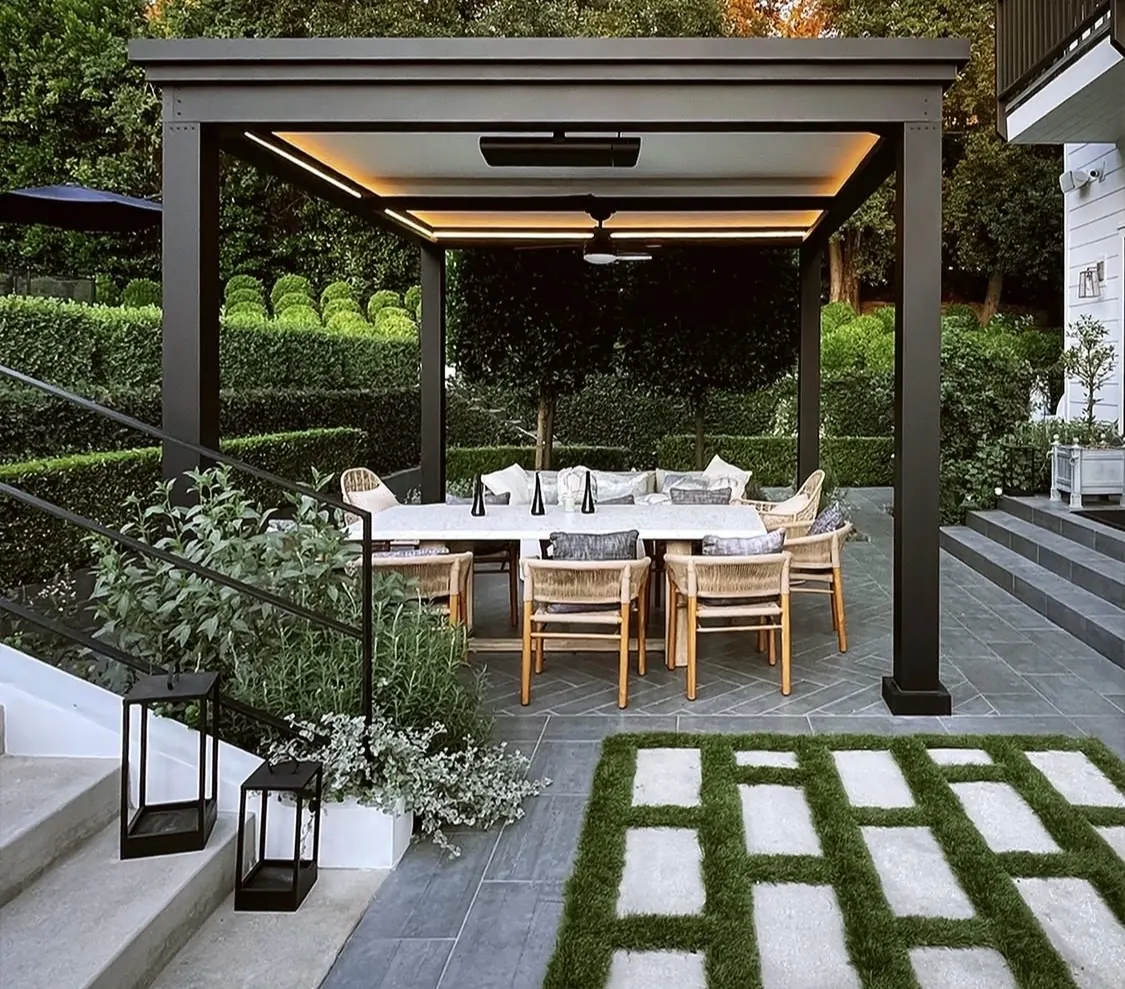
Idlewild Landscape Design designs and installs traditional pergolas and modern motorized louvered pergolas for patios and outdoor rooms in Boulder County and nearby towns. A louvered pergola lets you tilt the roof slats to choose sun or shade, and can include lights, fans and rain protection with drainage.
The short version
- We build
- Wood pergolas and motorized louvered roofs
- Louvered roofs
- Tilt for sun or shade; lights, fans, rain drainage
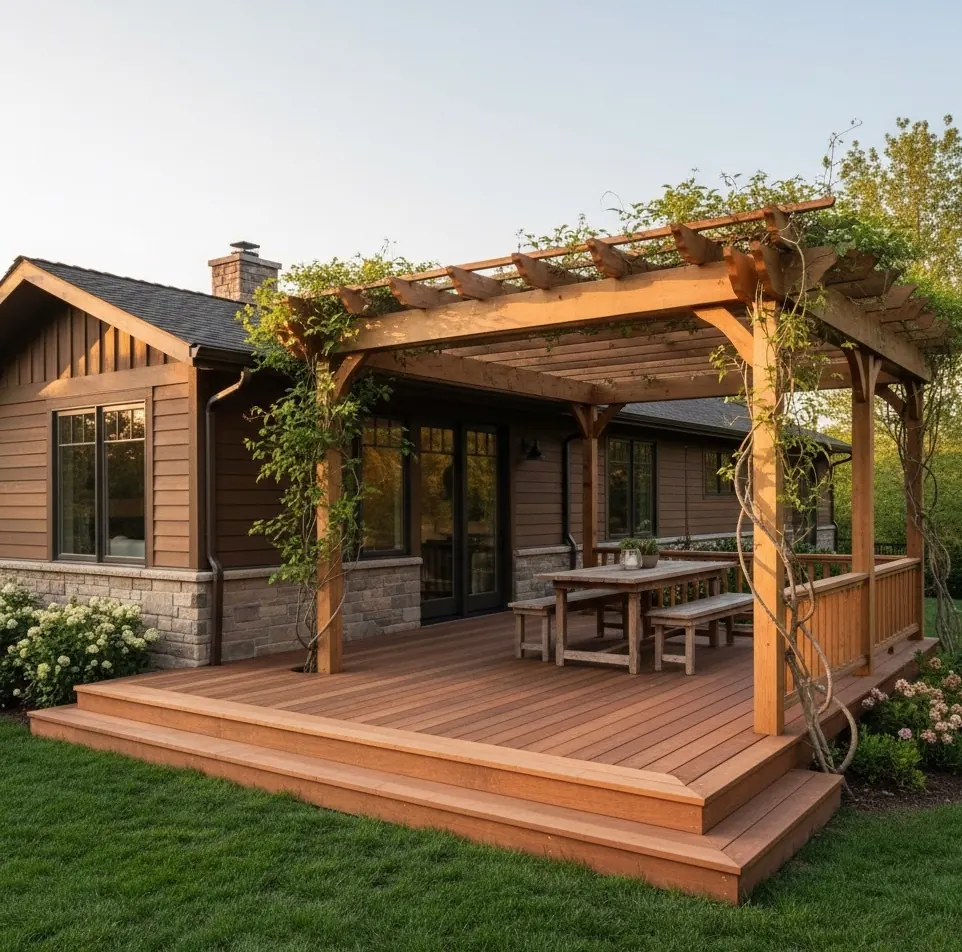
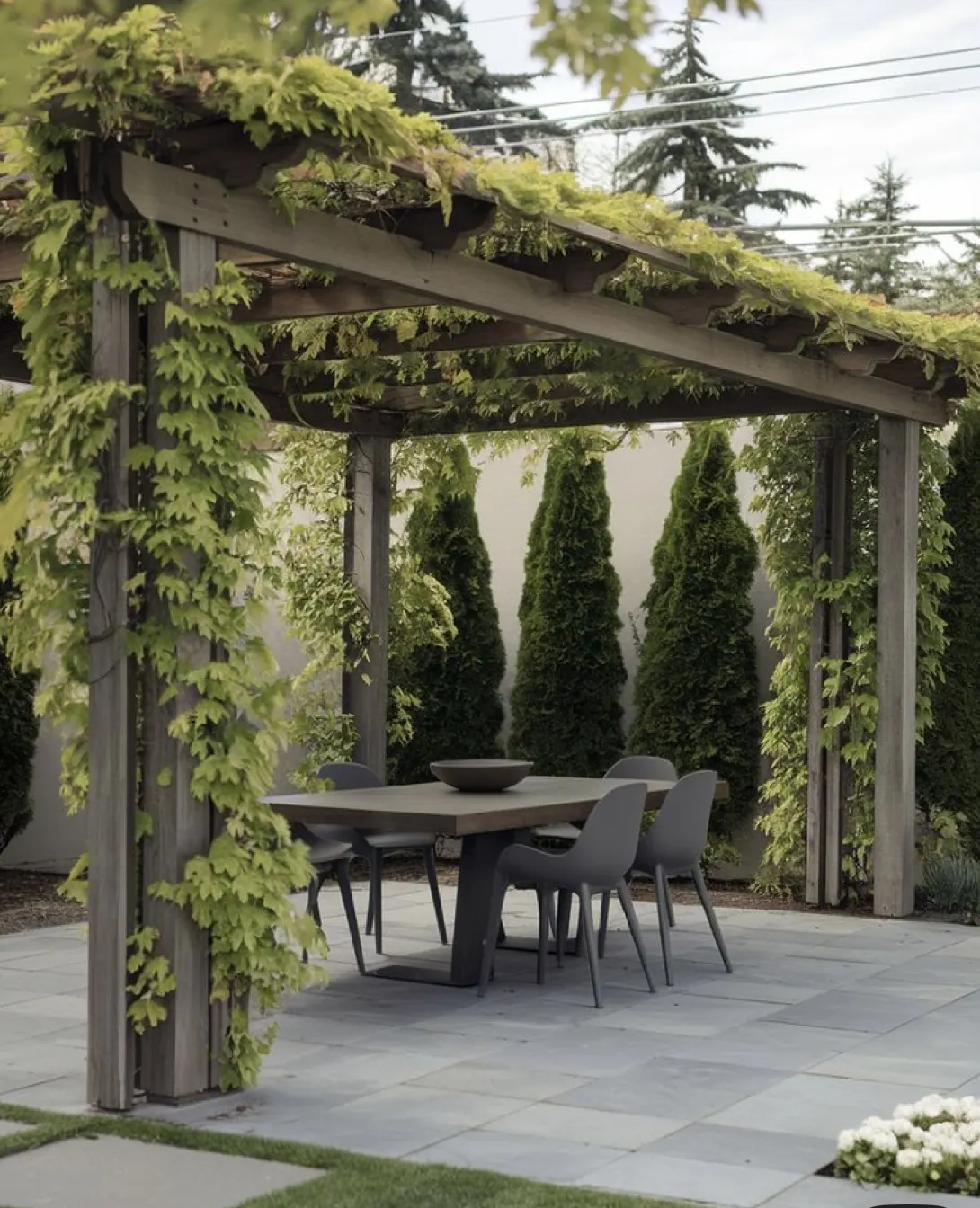
A traditional pergola gives moving, partial shade, and vines add more each year.
A louvered roof tilts its slats to choose sun, shade or cover from rain.
Snow, wind and wildfire rules set how the posts, footings and roof are built.
A traditional pergola
Open rafters and vines give shade that moves through the day and deepens each summer.
“Anne truly listened to our vision and brought it to life in ways we couldn't have imagined.”
Quick answers
Something else? Call (720) 243-9930.
What is a louvered pergola?
It is a pergola whose roof is made of slats that turn. Open, they let light and air through. Closed, they give full shade. The louvered systems we install can include built-in lights, fans and rain protection with drainage.
Do I need a permit for a pergola?
It depends on the town. The City of Boulder skips the building permit only for detached pergolas under 80 square feet and 10 feet tall with no electrical, plumbing or mechanical parts. Louisville lists pergolas as needing a permit. Boulder County's no-permit list does not name pergolas, so ask the county first.
Can a pergola go over an existing patio?
Often it can. Every Idlewild project starts with a design, which places the posts and footings and checks how the pergola meets the patio, the house and the planting around it.
Will a wood pergola meet wildfire rules?
It can, if the framing meets the local code. In Boulder County's wildfire zones, pergola framing must be metal, heavy timber, fire-retardant-treated wood, an ignition-resistant material, or solid lumber of set sizes fastened tight.
Can a pergola have lights and a fan?
Yes. Integrated lighting and fans are options on the louvered pergolas we install. In the City of Boulder, adding electrical equipment means a building permit is needed even for a small detached pergola.
Read the full page: the two kinds, loads, wildfire rules and permits
Shade where you sit
Summer sun at our altitude is hard on a bare patio. By mid-afternoon, a stone terrace with no cover can be too bright to use. A pergola puts shade over the table or the chairs, so the patio works on hot days, and it gives the space a ceiling, so it feels like a room.
Placement matters as much as the structure. A pergola set over the spot where afternoon sun hits gives you the most use. One that frames a view, or ties a patio back to the house, does design work too. Since every Idlewild project starts with a design, the pergola is placed on the plan with the patio, paths, lighting and planting, not added later.
Two kinds of pergola
We design and install both. They suit different houses and different ways of using a yard.
A traditional pergola has posts, beams and open rafters across the top. It gives partial shade that moves through the day. Vines trained up the posts and across the top add more shade each year and make the structure look settled in the garden. It fits cottage gardens, older homes and naturalistic planting.
A motorized louvered pergola has a roof of slats that turn. With the slats open, light and air come through. With them closed, the roof gives full shade. The louvered systems we install can include adjustable louvers for sun control, built-in lights and fans, and rain protection with a drainage system. They have a clean, modern look that suits newer homes and contemporary gardens.
Both kinds help you use an outdoor space for more of the season, from cool spring evenings to the hottest days of July.
Snow, wind and the roof overhead
A roof over a patio carries whatever falls on it. A pergola with closed slats or a solid cover holds snow, and posts have to resist wind. The structure and its footings are sized for the loads where it stands.
Those loads change across the county. Boulder County's deck guide says lots with a design wind speed of 140 mph (Vult) or more, or a ground snow load over 70 pounds per square foot, need a licensed design professional for deck structures, and it notes that most of unincorporated Boulder County is beyond the simple code tables. The county points owners to its PropertySearch map to find the loads for a given parcel.
If permits or engineered plans are needed for a pergola, we get them while planning the build, before a start date is set.
Pergolas in wildfire areas
Near open space and the foothills, a pergola is one more thing that can catch embers. Codes now set what it can be made of.
In Boulder County's wildfire zones, pergola framing must be metal, heavy timber, fire-retardant-treated wood labeled for outdoor use, another approved noncombustible or ignition-resistant material, or solid lumber of set sizes fastened tight. A patio cover counts as an overhanging projection, and its exposed underside must be noncombustible, ignition-resistant, heavy timber, or 3/4-inch fire-retardant-treated plywood. When new decks or covered porches are added, a weed barrier and gravel, or pavers or concrete, must go on all sides of the new work.
In the City of Boulder's wildland-urban interface area, new structures and changes to outside building parts must show they meet the city's WUI code, either in the plan set or with product sheets. The city's accessory structure guide asks for WUI compliance information for structures in the urban interface zone.
The Colorado State Forest Service calls the first 5 feet around a home the zone that needs the most care, and it advises replacing burnable fences and gates within 5 feet of the house. Vines on a pergola attached to the house sit in that zone, so plant choice and upkeep matter there.
Pergola permits in Boulder County towns
The rules depend on where you live, whether the pergola is attached to the house, and whether it has power for lights and fans.
- City of Boulder. detached pergolas smaller than 80 square feet, shorter than 10 feet, and with no electrical, plumbing or mechanical equipment do not need a building permit, but they still must meet code and accessory building setbacks. No structure may sit in an easement, even without a permit.
- City of Boulder, attached. a structure attached to the house is treated as an addition and must meet the setbacks for the house itself. A detached pergola around a pool or spa needs its own permit application.
- City of Boulder, open roofs. structures with more than half of the roof framing open do not have to meet building separation rules. Ones with less than half open need a zoning worksheet.
- Unincorporated Boulder County, including Niwot. the county's list of work that needs no permit names small detached sheds, playhouses and greenhouses up to 120 square feet and 12 feet tall with no utilities. It does not name pergolas, so ask the county before you build one.
- Louisville. the city lists pergolas, porches and covered patios as needing a permit.
Lights, fans and power
Built-in lights and fans make a louvered pergola useful after dark and on still, hot evenings. They also mean wiring, and in the City of Boulder, a pergola with electrical equipment no longer fits the no-permit rule for small detached structures. Plan the power route in the design, so conduit goes in before the patio is laid.
Lights under a pergola shine down onto the table, which helps where outdoor light rules are strict. Unincorporated Boulder County, for one, requires outdoor lights to be fully shielded and aimed down. Any trench for power starts with a call to Colorado 811.
Start with a visit. A walk around your property comes first. Pick a day and time online, or call.
Traditional pergola or motorized louvered pergola
Traditional pergola
- Roof
- Fixed open rafters
- Shade
- Partial; changes through the day
- Rain
- Passes through
- Lights and fans
- Can be added
- Vines
- Suits climbing vines across the top
- Look
- Garden and traditional homes
- Power
- None needed unless you add lights
- City of Boulder permit
- None if detached, under 80 sq ft, under 10 ft and no electrical
Motorized louvered pergola
- Roof
- Slats that tilt open or closed
- Shade
- Adjustable, from open sky to full shade
- Rain
- Rain protection with a drainage system
- Lights and fans
- Can be built in
- Vines
- Not the usual choice
- Look
- Modern homes and gardens
- Power
- Needs power for the motor, lights and fans
- City of Boulder permit
- Power means it does not fit the no-permit rule
Sources 10
- City of Boulder: Residential Accessory Structure Guide
- City of Boulder: Residential Building Permit Guide (single family homes, duplexes, triplexes and townhomes)
- City of Boulder: Wildland Urban Interface Code
- Boulder County: Residential Deck Requirements (publication B09)
- Boulder County: Building Permit Requirements (publication B05)
- Boulder County: Ignition Resistant Construction (publication B37, effective July 1, 2026)
- City of Louisville: Understanding Permit Requirements
- Colorado State Forest Service: Protect Your Home and Property from Wildfire
- Colorado 811: Colorado utility locator (call before you dig)
- Boulder County: Outdoor Lighting Requirements (publication P09)
Pergolas and shade structures usually leads to custom decks, hardscaping, outdoor kitchens and landscape lighting.
Start with a walk around your property.
We walk the property with you first. Pick a day and time online, or call.