
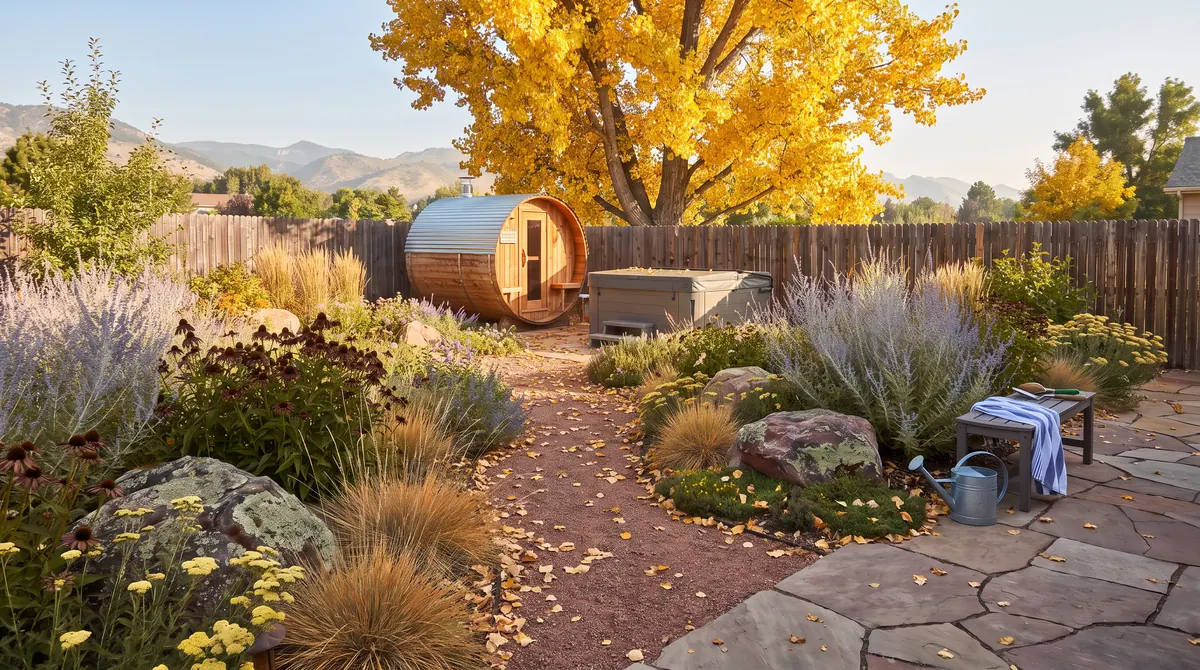
Crevice gardens for Colorado sun and cold
A crevice garden is a rock garden of flat stones set on edge in tight rows, with small alpine and dryland plants growing in the cracks. Idlewild Landscape Design designs and builds crevice gardens, along with decorative gravel paths, for homes in Boulder County and nearby towns from Longmont.
The short version
- We build
- Crevice gardens and gravel paths
- Water
- Low, once the plants root in
- Care
- Weeding is the main job
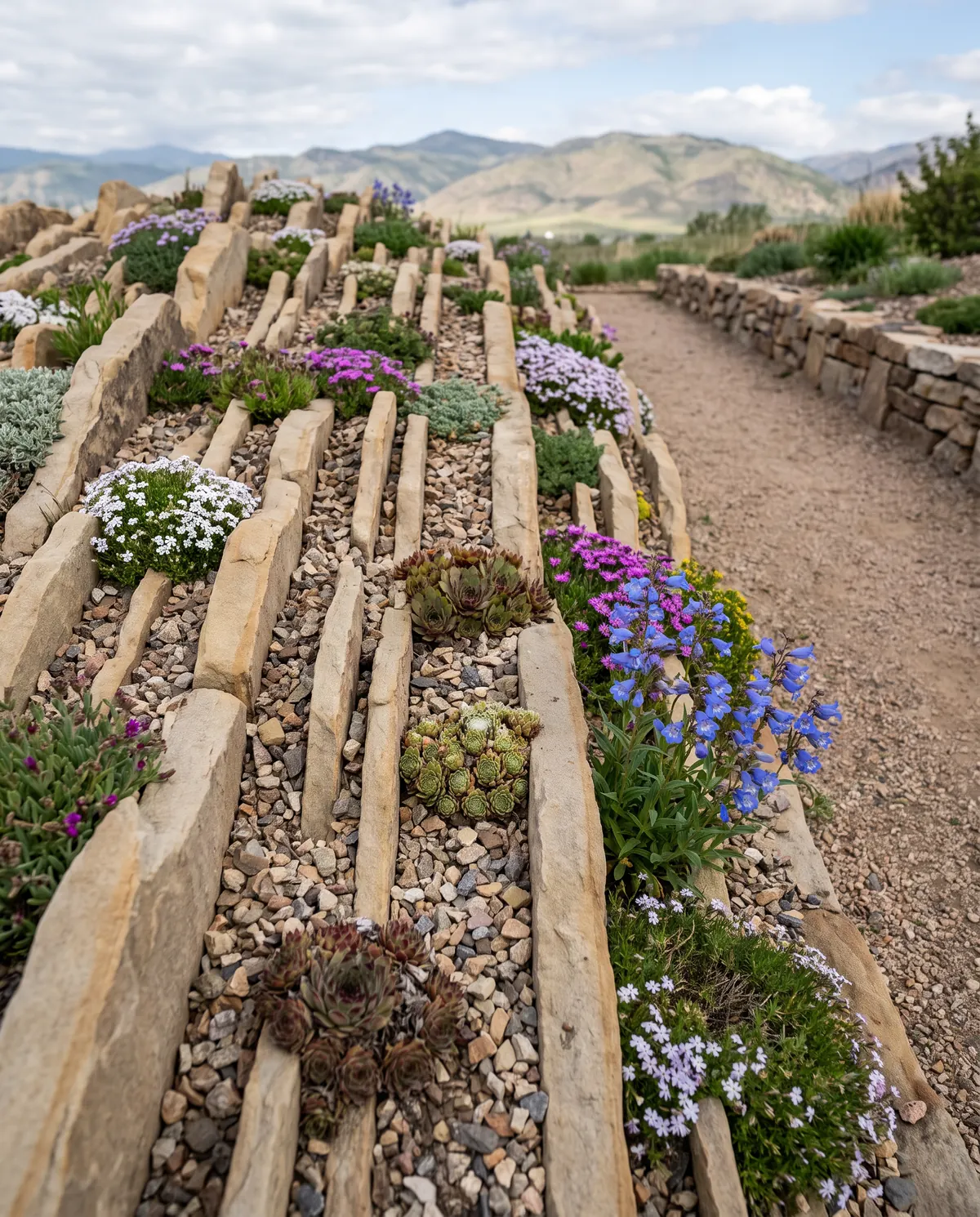
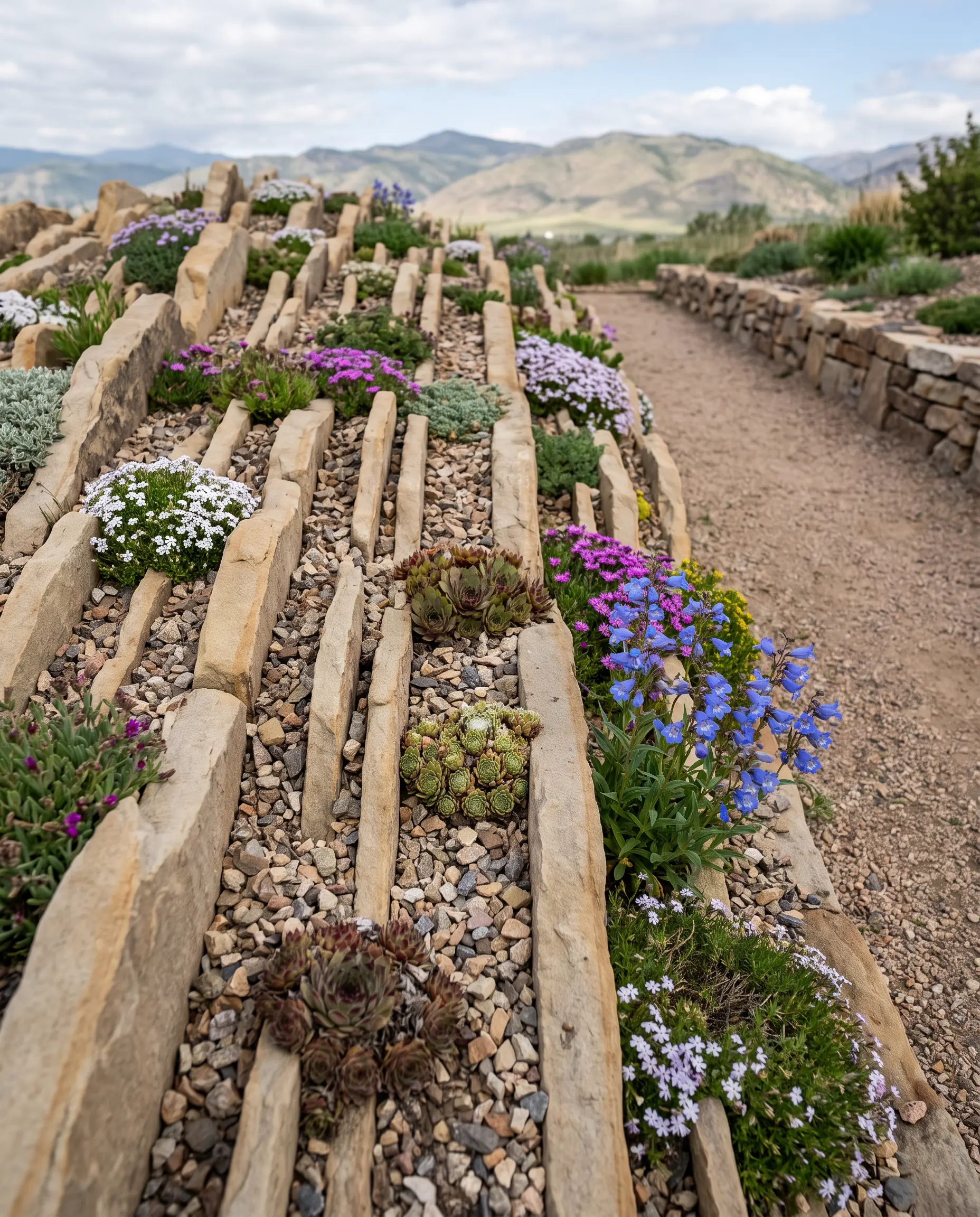
Flat stones stand on edge in tight rows; the cracks drain fast and keep plant crowns dry.
Small alpine and dryland plants, like penstemons, suit the gaps.
Once the plants root in, the main chore is weeding.
Plants in the cracks
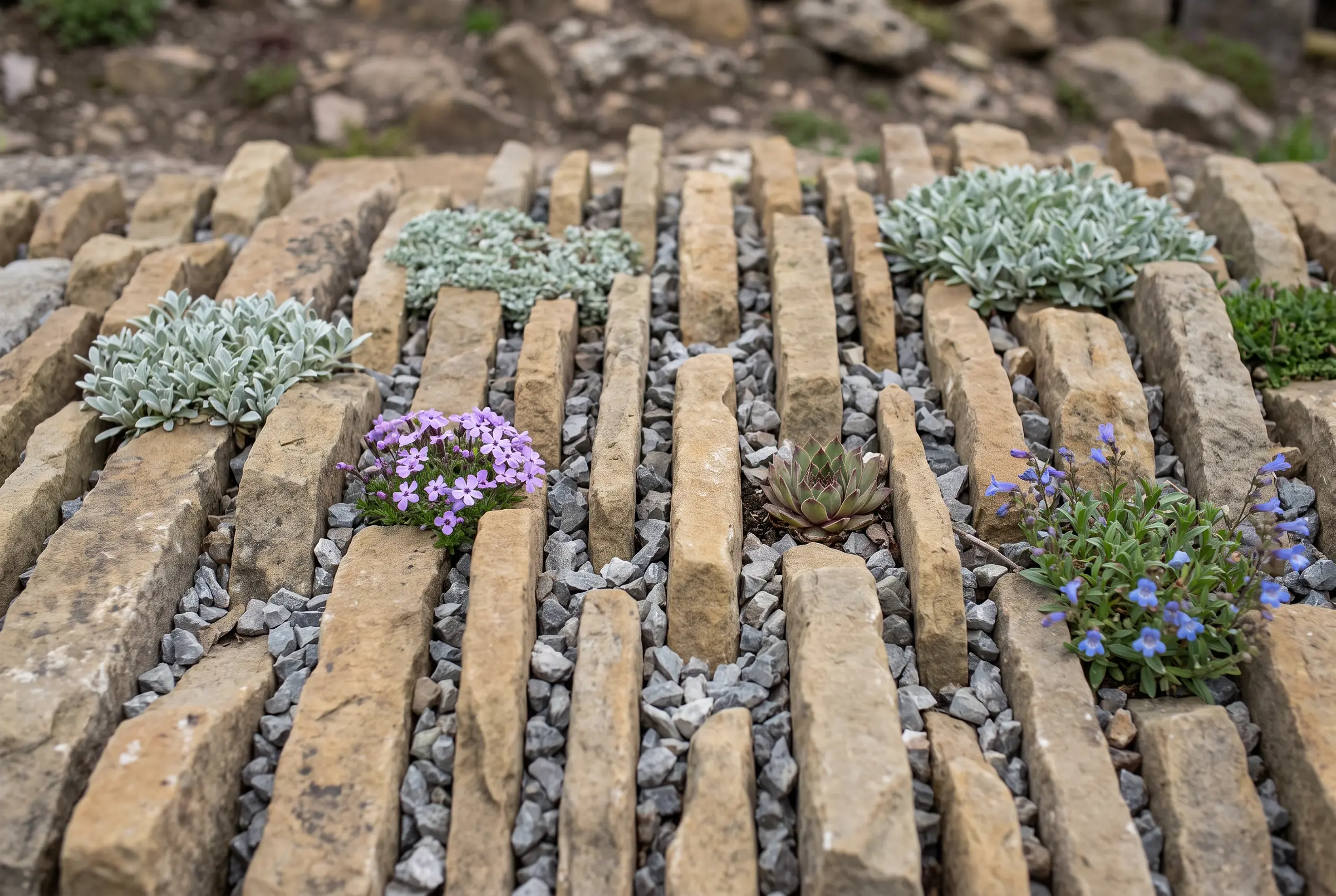
The narrow gaps hold a little moisture deep down and drain fast at the top, which is what small mountain plants need.
“Anne has a great sense of picking appropriate plants for dry environments, yet maximizing color.”
Quick answers
Something else? Call (720) 243-9930.
What is a crevice garden?
A rock garden made of flat stones set on edge in tight rows, with small plants growing in the narrow cracks between them. It copies layered rock in the mountains.
Do crevice gardens need a lot of water?
No. The plants are chosen for dry, sunny spots. New plants need water 1 to 2 times a week for the first few months, then much less.
Will a crevice garden work in clay soil?
It can. The plants grow in a deep layer of sand and gravel built on top, not in the clay. It should not go where water pools.
How big does a crevice garden need to be?
Penn State Extension suggests about 4 by 6 feet at the least. It can be a small bed by the door or a large feature on a slope.
Can a crevice garden go on a slope?
Yes. It can be built on flat ground or a slope. CSU's demonstration notes that crevice gardens can also work as a retaining wall.
What else do you build with gravel and stone?
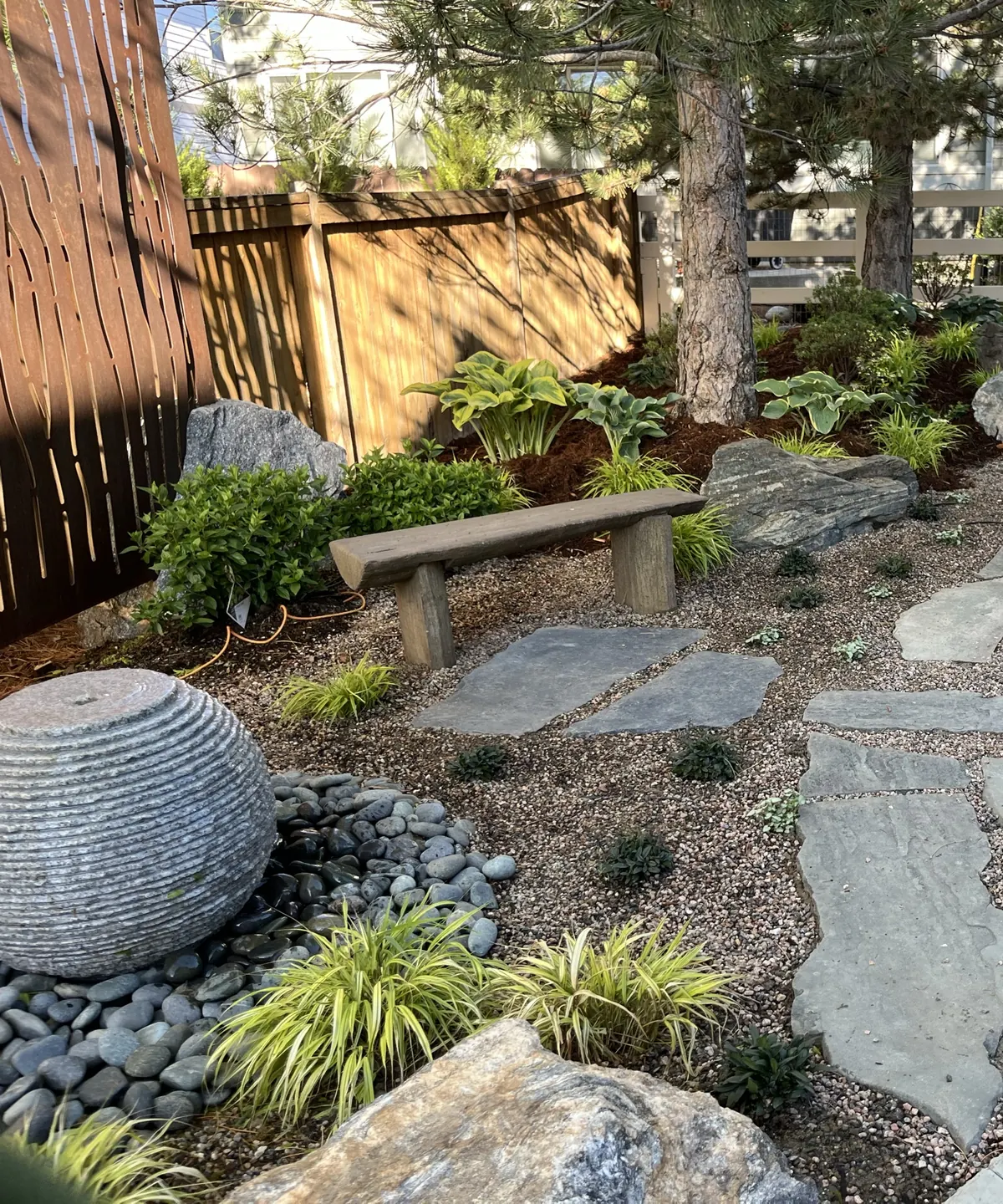
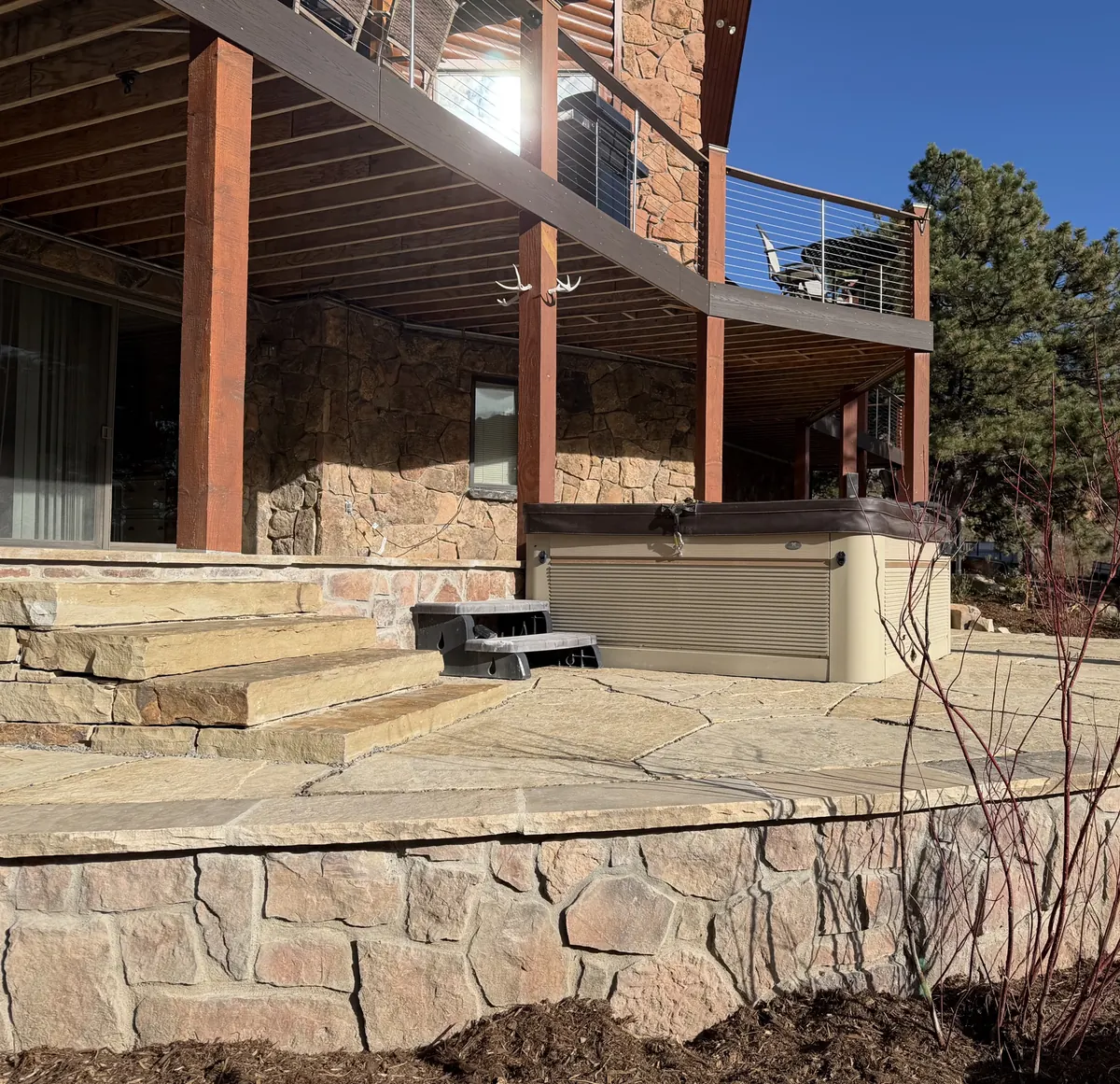
Crevice gardens sit in our hardscape work next to decorative gravel paths, entry walks, garden paths, patios, steps and retaining walls.
Read the full page: how one is built, plants and care
What a crevice garden is
Picture a slab of layered rock from the mountains, tipped up on its side, with plants growing in the cracks. A crevice garden copies that. Flat pieces of stone stand on end in rows, often at a slight angle. The gaps between them are filled with sand and gravel, and small plants grow in those gaps.
Penn State Extension traces the idea to a Czech gardener who wanted to grow hard-to-keep alpine plants. It names Colorado as one of the places where crevice gardening has caught on most.
Crevice gardens are part of our hardscape work, next to decorative gravel paths, stone walks and walls. We design each one to fit the plants and the house around it.
Why the cracks work so well here
Our yards get strong sun, dry air and cold nights, and many small mountain plants need sharp drainage to live through them. CSU Extension says good drainage is a must for most rock garden plants. A crevice garden builds that drainage into its shape.
Penn State Extension explains it like this. The stone surface warms up. The crevices drain fast, which keeps the crown of the plant dry. The narrow gap pushes roots to grow deep, down where it stays cool and moist.
Colorado State University's own crevice garden in Fort Collins was built where there had been a bike rack and packed soil. The people behind it expect it to use very little water, and they have seen hummingbirds, toads and many pollinators there. They also note that a crevice garden can work as a retaining wall, a window-well treatment or a feature on its own.
How one is built
Every site is different, so this is the general method, not a recipe. Penn State Extension's guide covers the basics:
- Pick the spot. full sun, away from large trees whose roots can push into it, and never where water pools.
- Size. about 4 by 6 feet at the least, for looks and to work well.
- Base. dig along the edges and build a low mound of coarse sand, about 6 inches deep.
- Stone. flat, local stone in mixed thicknesses, set on edge, straight up or tilted 10 to 20 degrees, working from the middle out.
- Gaps. crevices about 1 to 2 inches wide, with a few wider pockets for bigger plants.
- Top. a layer of small gravel over the sand, pushed up around each plant's crown.
Plants for the crevices
CSU Extension's advice for rock gardens fits crevices too. Use stone of one kind. Make sure the soil drains well. Choose plants that stay low and grow in clumps, and group plants that want the same sun and water. CSU's fact sheet says most of the plants on its list are hardy to 8,000 feet.
Plants from CSU Extension's rock garden list that suit sunny, dry crevices:
- Creeping penstemon. a 3 to 6 inch mat with blue flowers in May and June.
- Pineleaf penstemon. needle-like evergreen leaves and orange-red trumpet flowers from June to September.
- Sulfur flower. evergreen mounds with yellow flowers; the leaves turn reddish in fall.
- Hens and chicks. evergreen rosettes for dry, gravelly spots.
- Ice plants. low succulent carpets in purple, pink, salmon or yellow.
- Turkish speedwell and woolly thyme. flat mats only an inch or two tall.
- Pasque flower. blooms in March and April, then holds feathery seed heads.
Care after planting
Small plants are often set in bare-root, with the potting soil washed off, so the roots go straight into the new mix. Penn State Extension says to water well at planting, and then 1 to 2 times a week for the next few months while the roots take hold.
After that, the work is light. Keep fallen leaves off. When you cut plants back, carry the clippings away. Plant matter left to rot on the stone turns into soil, and soil in the cracks is what crevice plants do not want.
Weeds are the main chore in any rock garden, CSU Extension notes, so pull them while they are small. Penn State Extension says crevice gardens take less care than other kinds of rock garden, though they take more work to build.
Start with a visit. A walk around your property comes first. Pick a day and time online, or call.
Crevice garden or classic rock garden
Crevice garden
- How the stone sits
- Flat stones on edge, in tight rows
- Gaps
- Narrow cracks about 1 to 2 inches wide
- Fill
- Coarse sand with a gravel top
- Plants
- Small alpine and dryland plants
- Upkeep
- Light once plants root; keep leaves and clippings off
- Build
- More work to set up
Classic rock garden
- How the stone sits
- Rocks laid on their broadest face, at least a third buried
- Gaps
- Larger soil pockets between rocks
- Fill
- A coarse stone base with a sandy mix on top
- Plants
- Low, clumping perennials, bulbs and small shrubs
- Upkeep
- Weeding is the biggest job
- Build
- Several large rocks, some 200 pounds or more
Sources 5
- Penn State Extension: Crevice Gardens, Life Between the Cracks
- CSU Extension: Rock Garden Plants (fact sheet 7.401)
- PlantTalk Colorado (CSU Extension): Rock Garden Design (1115)
- PlantTalk Colorado (CSU Extension): Perennials for the Rock Garden (1016)
- Plant Select: Crevice garden demonstration at the CSU Horticulture Center, Fort Collins
Crevice gardens usually leads to hardscaping, landscape design, landscape construction and landscape enhancements.
Start with a walk around your property.
We walk the property with you first. Pick a day and time online, or call.