



















Why is winter hard on water features here?
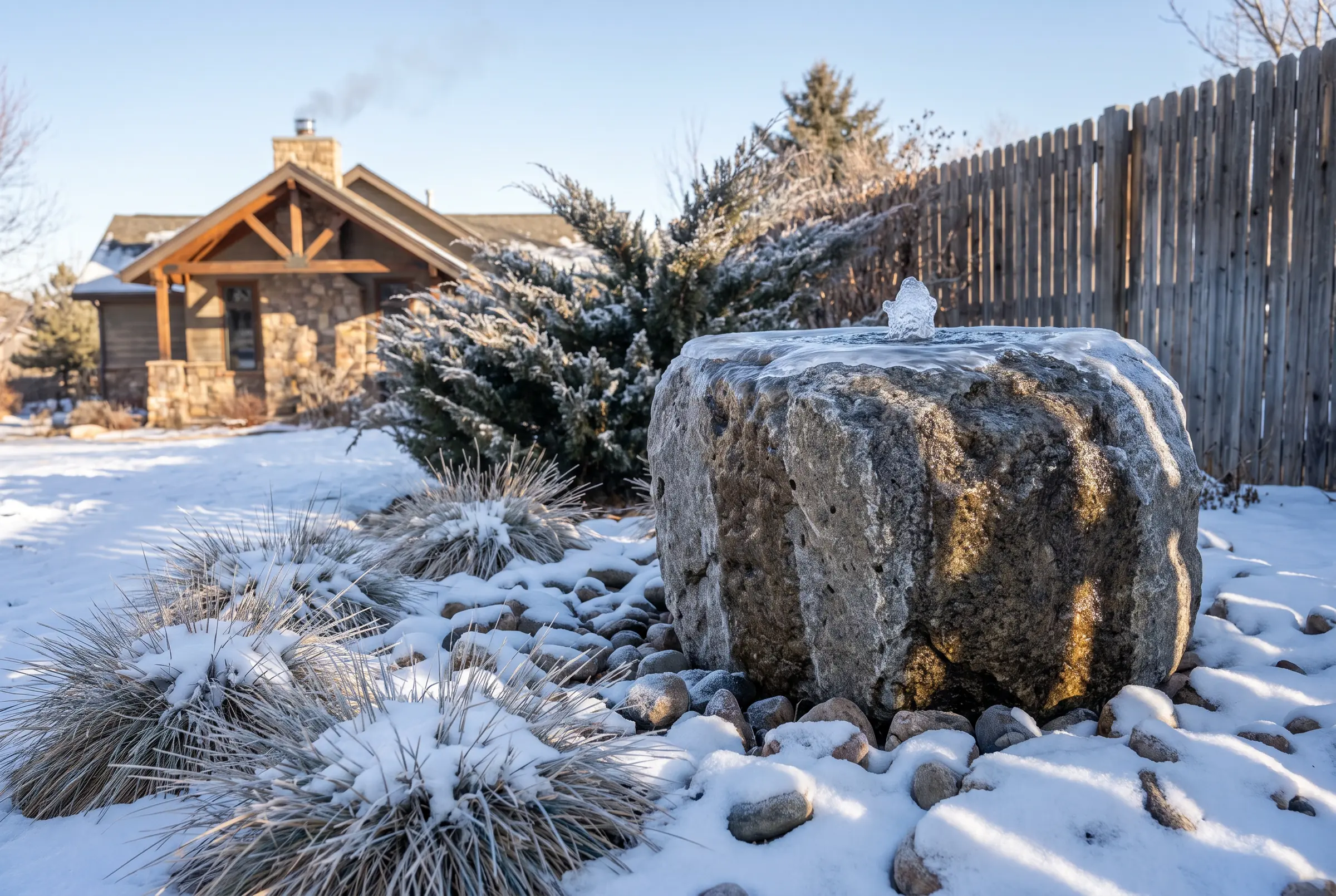
Water expands when it freezes. Water left in a stone bowl, a concrete basin or a pipe can crack it. Pumps can be damaged too. On the Front Range, freezing nights often follow sunny days, so water can freeze and thaw again and again in a single week.
Timing comes early. NOAA's Boulder record puts the average first fall frost on October 6, and it has come as early as September 8. Plan to shut most features down by early October, or keep an eye on the forecast once September ends.
Idlewild's site says it favors recirculating systems and plans water features for Colorado's freeze and thaw, so they are simple to winterize and ready again in spring. That planning starts in the design. Where the pump sits, how the water drains and how the basin is built all decide how hard fall shutdown will be.
Should I shut it down or keep it running?
For most decorative features, shut it down. Virginia Cooperative Extension notes that a pump left running can keep a pond from freezing solid. But on fountains and streams, spray and splash build ice on the edges. Ice can send water over the liner, and the reservoir can run low while you aren't watching. A pump that runs dry can burn out.
Ponds with fish or hardy plants are different. They stay full all winter and need oxygen and an opening in the ice. The table sums up the three common choices.
How do you winterize a fountain or basin?
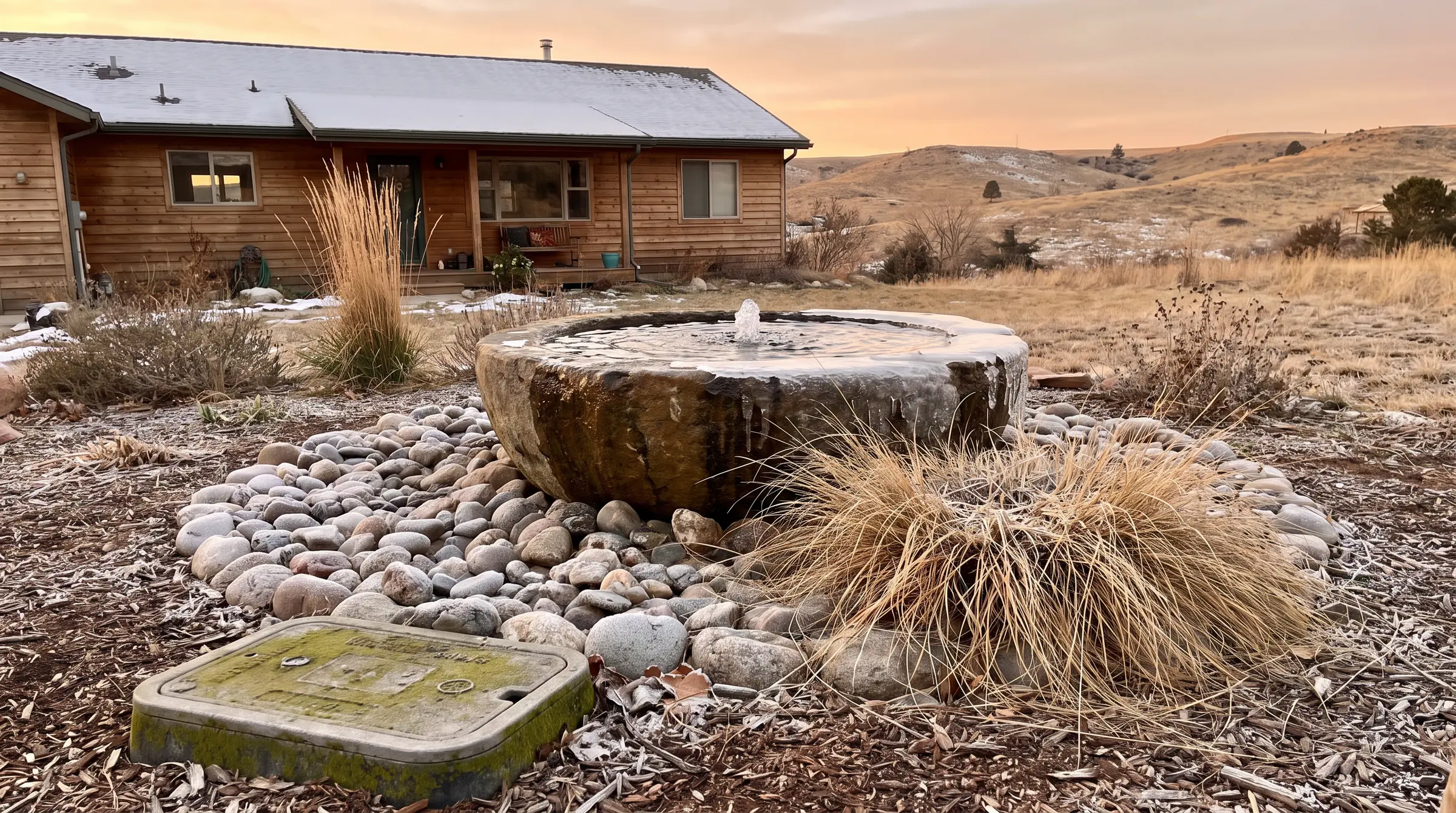
Most bubbling rocks, urns and wall fountains use a recirculating system. Water falls into a basin or a buried reservoir under gravel, and a pump sends it back up. Winterizing means getting the water out of everything that can crack and protecting the pump.
Follow your pump maker's instructions for storage. Some pumps should be stored dry and others in water, and the right method depends on the model.
- Unplug the pump at the outlet.
- Clear leaves and debris from the basin and screen.
- Drain the bowl, basin and any supply lines.
- Pull the pump and store it as the maker directs.
- Tip, cover or plug vessels so they can't hold water or snow melt.
- Cover the reservoir opening to keep out leaves and critters.
What about ponds with fish and plants?
Keep part of the surface open. Iowa State University Extension says an open hole lets harmful gases escape, and suggests a one-foot opening for each 100 square feet of pond surface. Virginia Cooperative Extension says thick ice should not seal the pond off. It lists pond heaters, floating de-icers and air bubblers as ways to keep a spot open.
Stretch netting over the pond in fall to catch leaves, as both extension services suggest. Remove dead plant material promptly, since rotting leaves use up oxygen.
Plants need sorting too. CSU's PlantTalk Colorado says to lower hardy water lilies to the deepest part of the pond in October or November, and to pull tropical lilies before the first frost. Illinois-Indiana Sea Grant suggests keeping hardy plants under at least two feet of water. Never dump pond plants into a creek, ditch or lake, because they can spread as invasive species.
How do I start it back up in spring?
Wait until hard freezes are past. Boulder's average last spring frost is May 5, but frosts have come into early June, so a cold snap after startup is possible. If one is forecast, shut the feature down again for a night or two.
Clean out debris, check the liner and edges for damage, and look at the stones around the basin for movement. Put the pump back, fill the system and watch the water level for a few days. A level that keeps dropping points to a leak or splash loss you should fix before summer.
Three ways to handle a water feature in winter
| Shut down and drain | Keep running | Pond with fish or plants | |
|---|---|---|---|
| Best for | Fountains, bubbling rocks, urns, streams | Rarely a good fit here; only with close watching | Ponds deep enough to hold fish or hardy plants |
| Main risk | Cracks if any water is left in stone, pipes or pump | Ice buildup, splash loss and a pump running dry | Ice sealing off the surface; low oxygen |
| What to do | Drain everything and store the pump | Check water level and ice often | Keep an opening with a heater, de-icer or bubbler; net in fall |
Questions
Can I leave water in a stone or concrete fountain over winter?
No. Water expands as it freezes and can crack stone, concrete and glazed pots. Drain it and tip or cover the bowl so snow melt can't collect.
When should I shut down my fountain?
Before the first hard freeze. In Boulder the first fall frost averages October 6 and has come as early as September 8, so early October is a safe target.
Will fish survive a Colorado winter in a backyard pond?
They can in a pond that is deep enough not to freeze solid and has an opening in the ice for gases to escape. Fish slow down in winter but still need oxygen.
What should I do with water lilies in fall?
CSU suggests lowering hardy lilies to the deepest part of the pond in October or November. Bring tropical lilies in before the first frost.
Is a pondless feature easier in winter?
Usually. With the water stored in a buried reservoir under rock, there is no open pond to manage, and shutdown is mostly draining and pulling the pump.
Sources 6
- Winterizing the Water Garden, 426-042 (Virginia Cooperative Extension)
- Fall and Winter Care of Watergardens (Iowa State University Extension)
- 1027 Water Gardening: Winterizing Water Lilies (PlantTalk Colorado, CSU Extension)
- How to winterize your water garden (Illinois-Indiana Sea Grant)
- First Day of Frost in Boulder (NOAA Physical Sciences Laboratory)
- Last Day of Spring Frost in Boulder (NOAA Physical Sciences Laboratory)