
What do the City of Boulder's lighting rules say for homes?
Boulder's outdoor lighting ordinance sets minimum rules for single-family homes. They are short and clear, and they shape every fixture choice in a city yard.
Spot and flood lights get their own rule. They are allowed only if they are aimed down, stay at or under 1,200 lumens, and run on a motion sensor and timer that turns them off after 5 minutes. They must not shine across property lines.
- Fixtures of 900 lumens or less. The city compares that to a 60-watt incandescent or 15-watt LED bulb.
- No bulbs over 3,000 K color temperature.
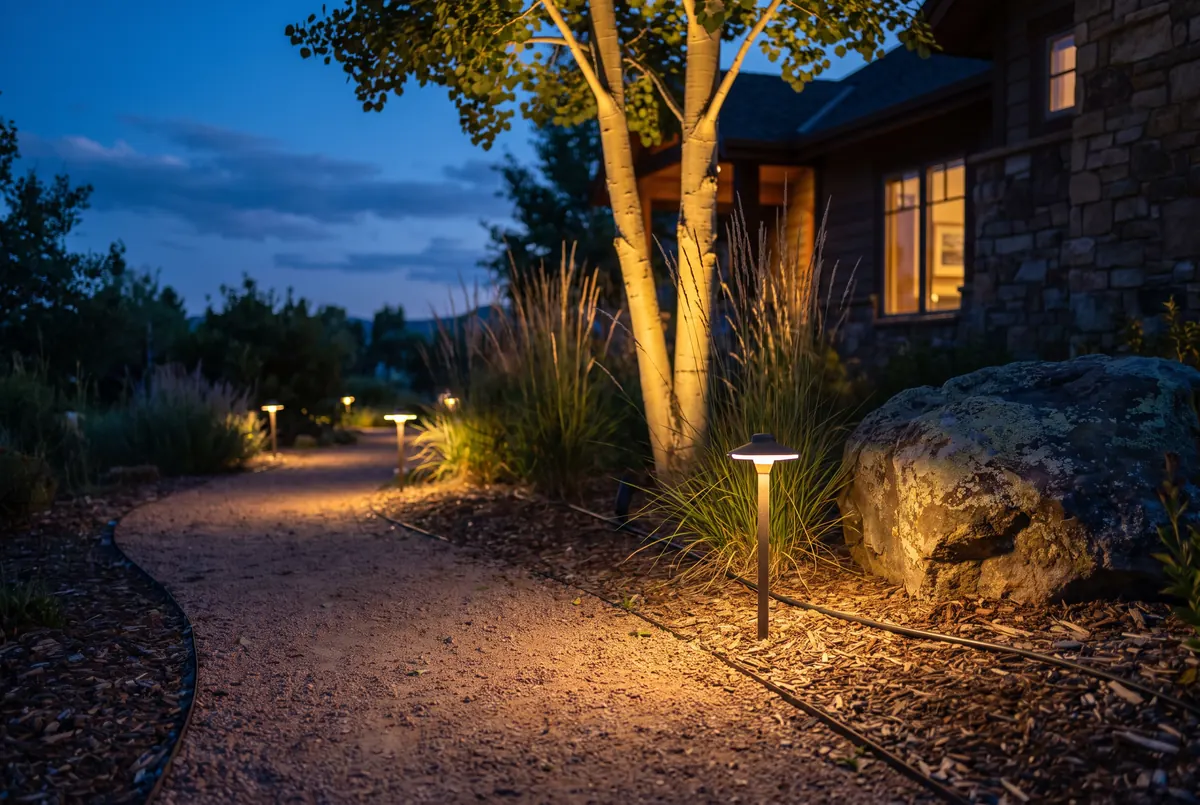
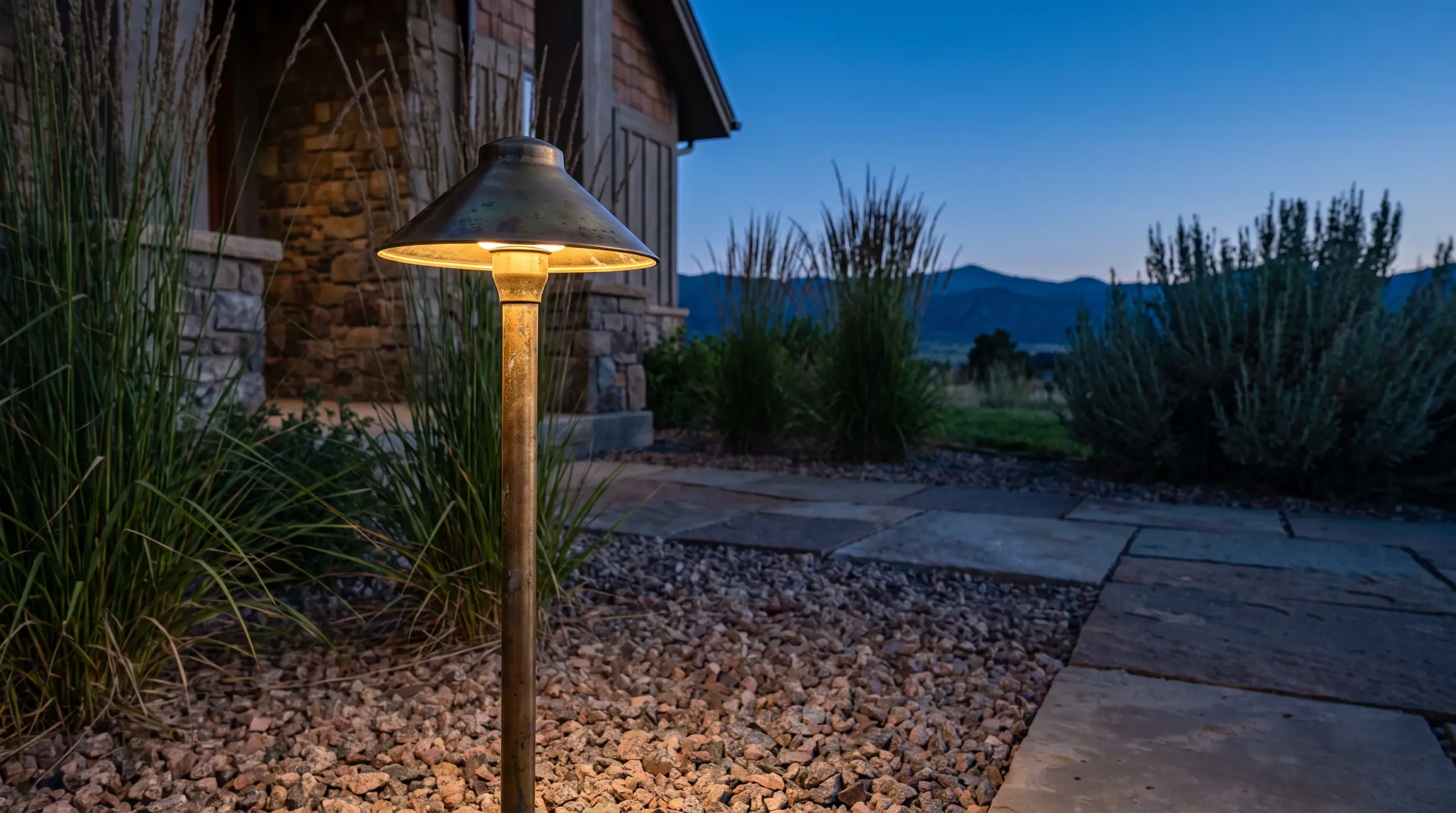
- Fixtures that direct light down and hide the bulb. No light may project upward.
- The bulb can't hang below the fixture or show through clear glass.
What does Boulder County require outside city limits?
Boulder County's outdoor lighting handout covers lighting for parking areas, landscaping, homes and recreation areas. Lights must be fully shielded and downlit, with an opaque shield so no light passes through. No blinking or flashing lights are allowed, and no lighting may be taller than 12 feet. Temporary holiday displays are exempt.
Two points catch people out. First, lighting plans must show every outdoor fixture, including landscape lighting, and new exterior fixtures need approval before a building permit is issued. Second, the county says not every Dark-Sky approved fixture meets its rules, and some shielded fixtures still fail. Installed fixtures must be UL listed. The Niwot Rural Community District can have stricter rules.
What does dark-sky lighting mean in practice?
DarkSky International, working on light pollution, sets out five principles for responsible outdoor lighting: useful, targeted, low level, controlled and warm-colored. They turn into simple choices in a garden.
- Useful: light steps, paths, gates and the places you sit. Skip what nobody uses at night.
- Targeted: use shielded fixtures aimed at the ground or the object, not the sky or the neighbors.
- Low level: use the fewest lumens that still let you see. Eyes adjust fast in a dark yard.
- Controlled: put lights on timers, dusk sensors or motion sensors so they turn off.
- Warm-colored: choose warm white, 3,000 K or lower, which Boulder requires anyway.
Can I still light trees, paths and a patio?
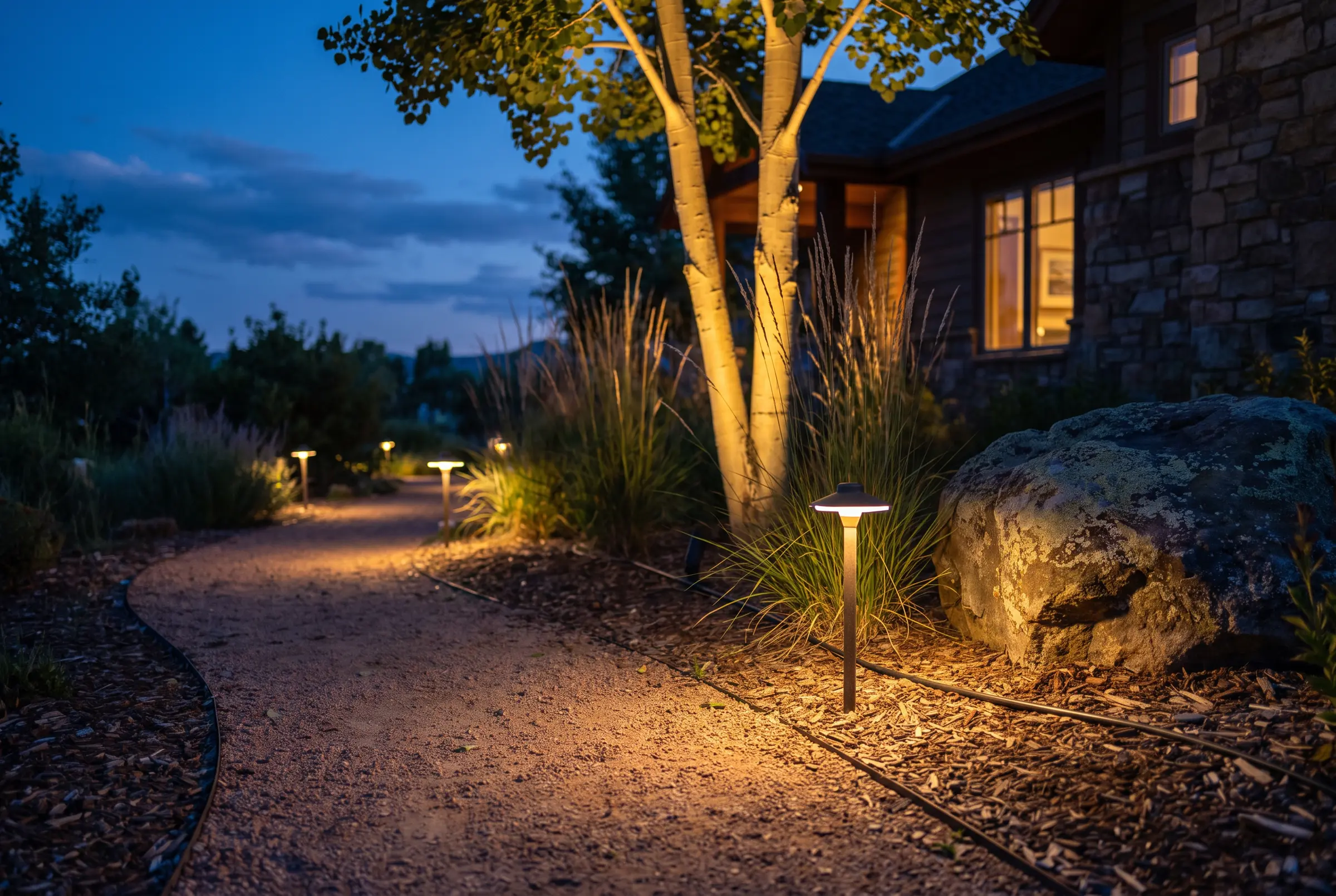
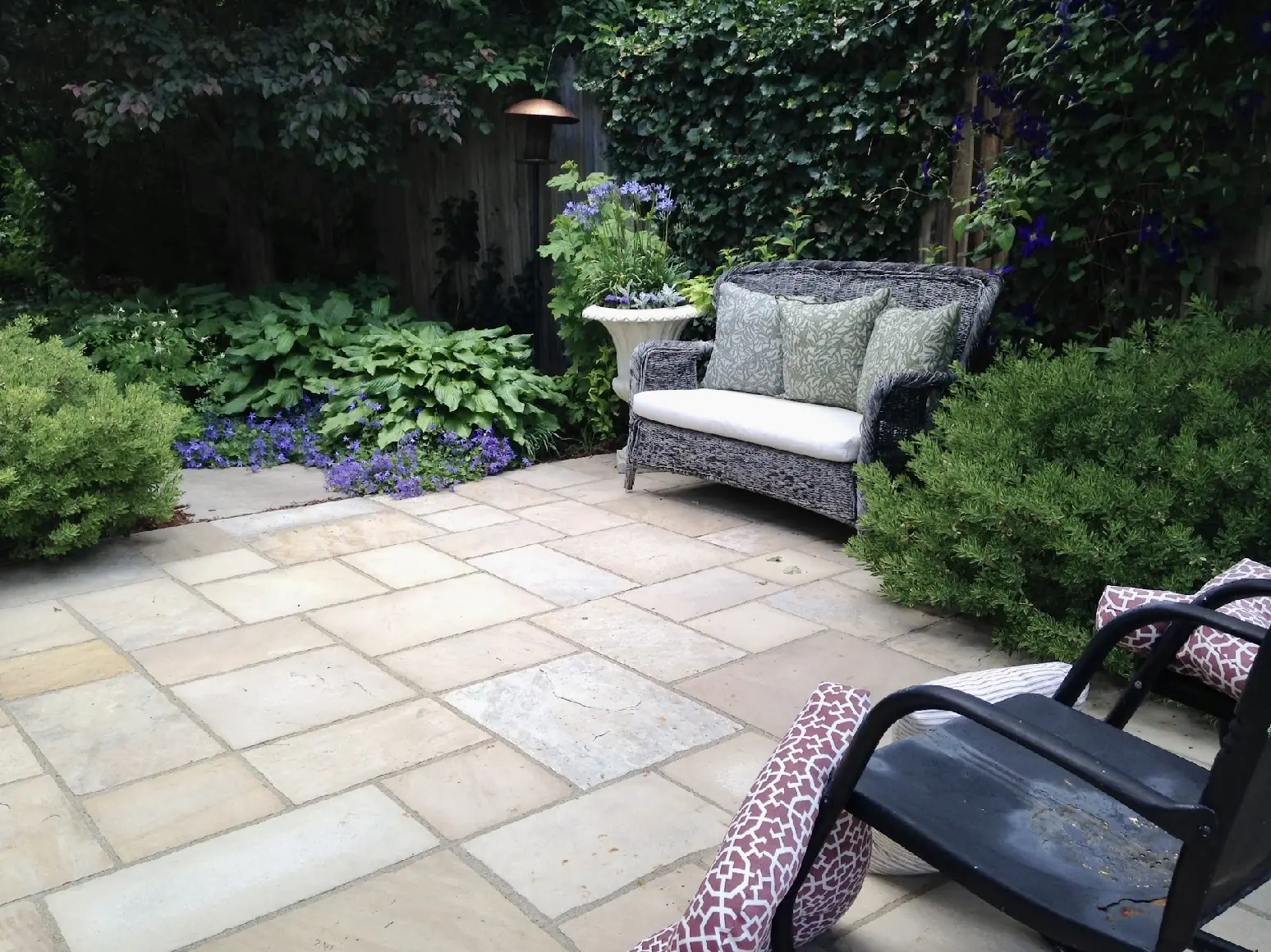
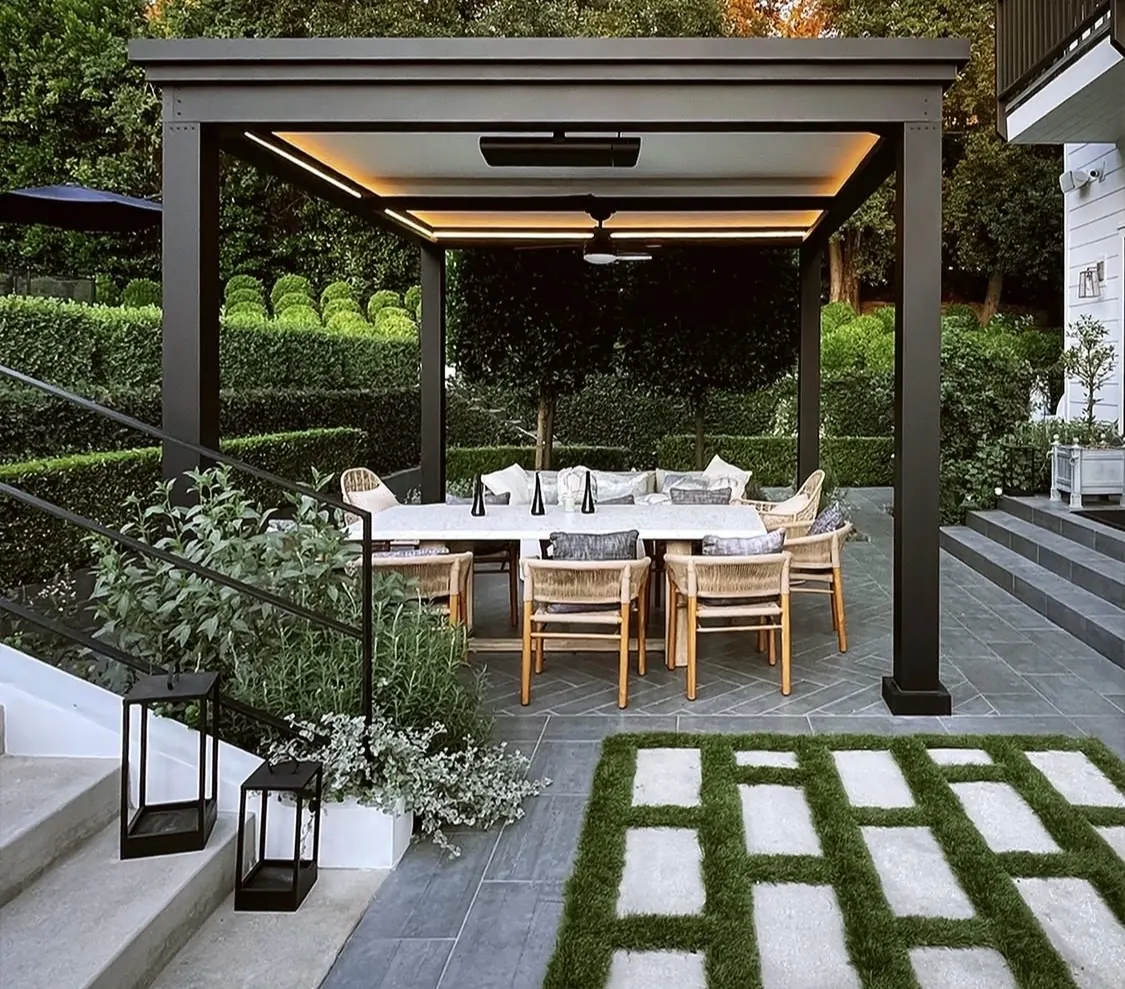
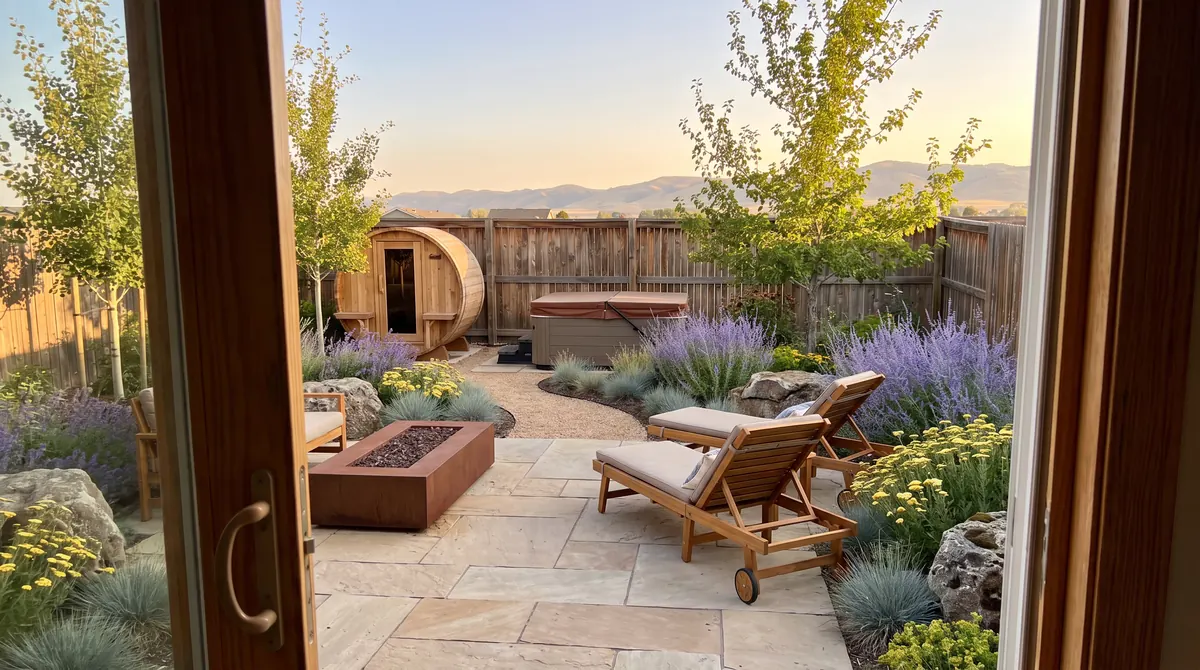
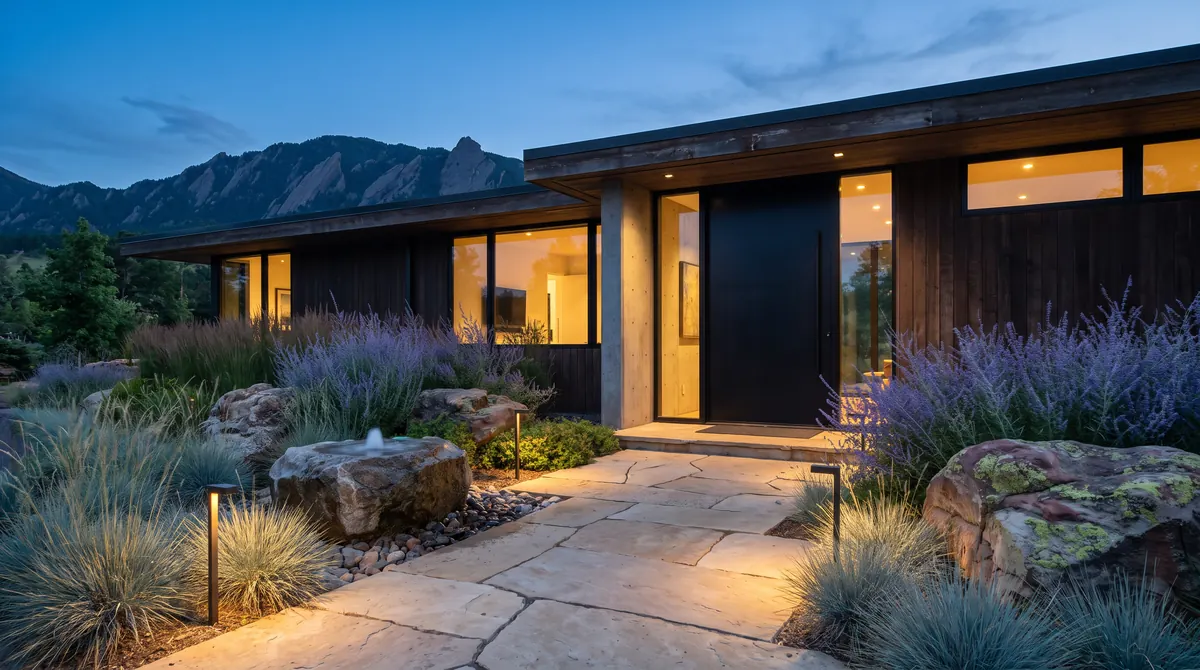
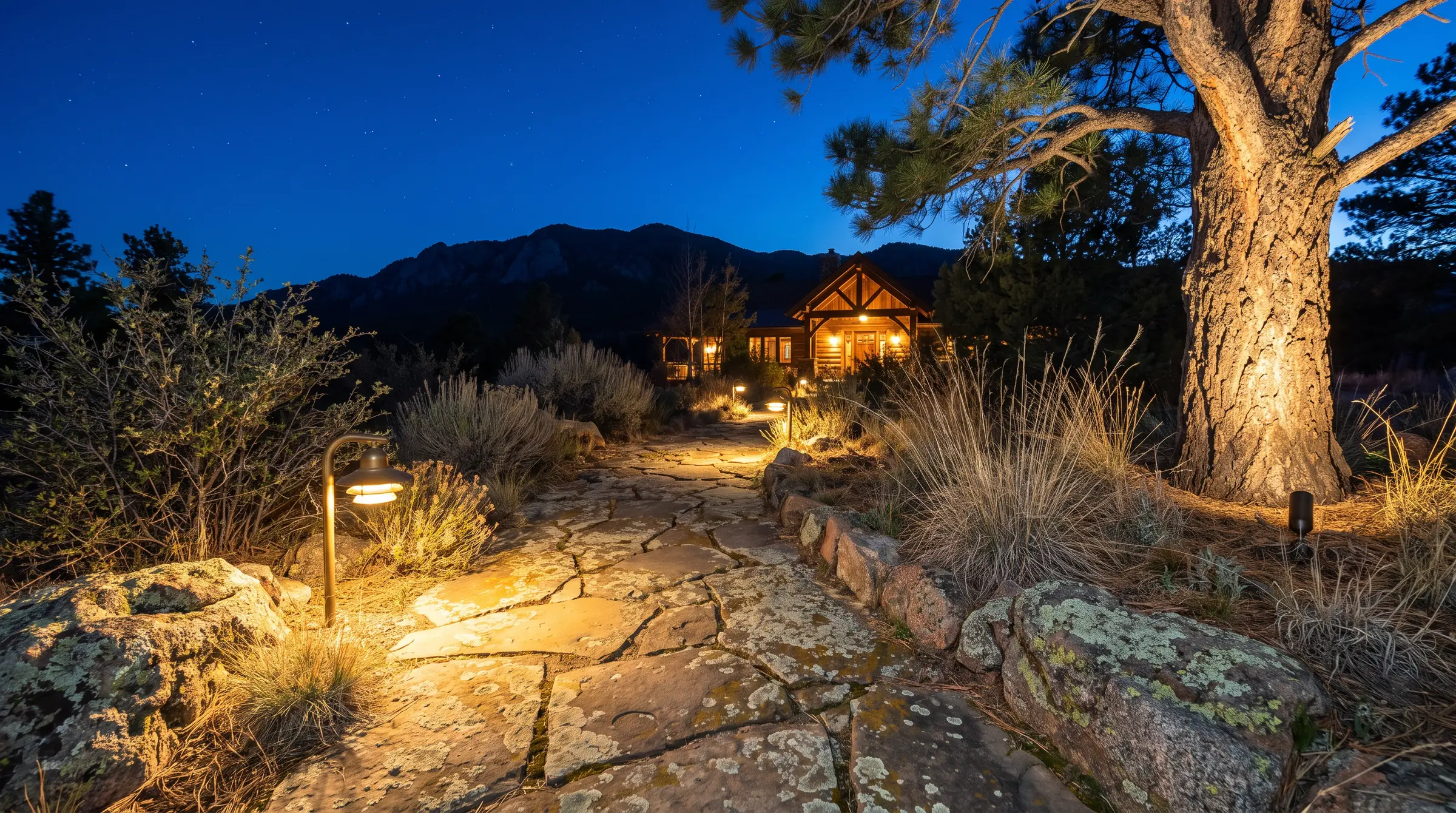
Yes, with care. Shielded path lights, step lights set into walls and downlights mounted high in a tree can light a yard without sending light into the sky. Downlighting from a tree throws soft shadows on the ground below, close to moonlight.
Uplighting is the hard part. Boulder's summary for homes says no light may project upward, and the page does not set a separate rule for landscape fixtures. Boulder County requires all outdoor lights to be fully shielded and downlit. If you want to light a tree trunk or a stone wall from below, ask the city or county before you buy fixtures.
Most landscape lighting today is low voltage, run from a small power unit that steps household current down, with a timer. That makes it easy to dim, zone and schedule. Idlewild's lighting page says it places fixtures in unobtrusive spots and uses lighting that does not waste electricity.
How do color temperature and timers fit together?
Color temperature is measured in kelvins, written K. Lower numbers look warmer and more amber. Higher numbers look whiter and bluer. A 2,700 K lamp looks warmer than a 3,000 K lamp, and both look warmer than the 4,000 K or 5,000 K lamps sold for security lights.
A timer plan finishes the job. Many homes run path and patio lights from dusk to bedtime, then off. Security lights stay off until motion turns them on, which Boulder requires for spot and flood lights. Fewer hours on means less glare for neighbors, less light in the sky and lower power use.
City of Boulder and Boulder County outdoor lighting rules for homes (from each official summary page)
| City of Boulder | Unincorporated Boulder County | |
|---|---|---|
| Shielding | Light directed down; no light may project upward; bulb hidden | Fully shielded and downlit, with an opaque shield |
| Brightness | 900 lumens or less per fixture | Not stated on the summary page; see Land Use Code Article 7-1600 |
| Color temperature | 3,000 K or lower | Not stated on the summary page |
| Spot and flood lights | Aimed down, 1,200 lumens or less, motion sensor and 5-minute timer | Must meet the same shielding rule |
| Landscape lighting | No separate rule on the summary page; ask the city | Must appear on the lighting plan |
| Holiday lights | Not covered on the summary page | Temporary holiday displays exempt |
Questions
What does 3,000 K mean on a bulb?
It is the light's color temperature. At 3,000 K, light looks warm white. The City of Boulder does not allow bulbs over 3,000 K outdoors at homes.
Can I uplight my trees in Boulder?
Ask first. Boulder's home lighting rules say no light may project upward, and Boulder County requires all lights to be fully shielded and downlit. Downlighting from a tree is the safer choice.
Is a DarkSky Approved fixture always allowed?
Not in unincorporated Boulder County. The county says not every Dark-Sky approved fixture meets its rules. Check the fixture with county Land Use staff before you buy.
Do I need approval for landscape lighting?
In unincorporated Boulder County, new exterior fixtures need approval before a building permit is issued, and lighting plans must show landscape lighting. In a city, ask the building or planning department.
Do holiday lights count?
Boulder County exempts temporary holiday displays. The City of Boulder's summary page does not address them.