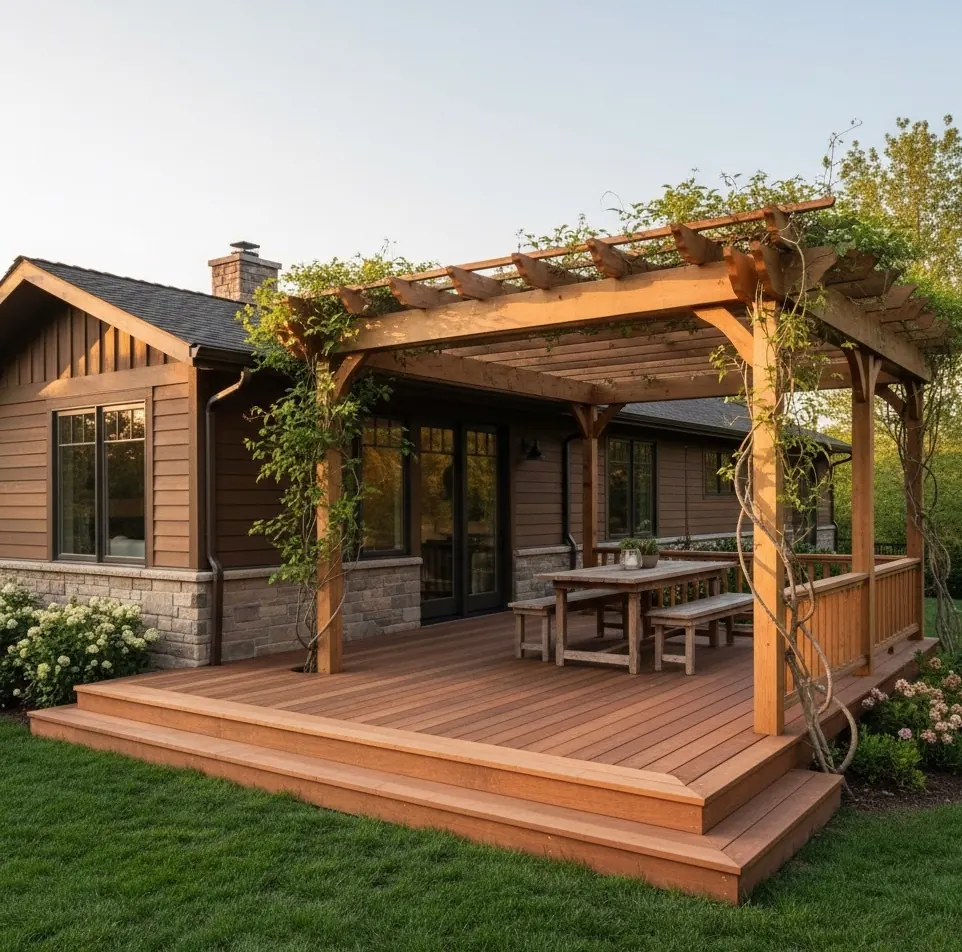
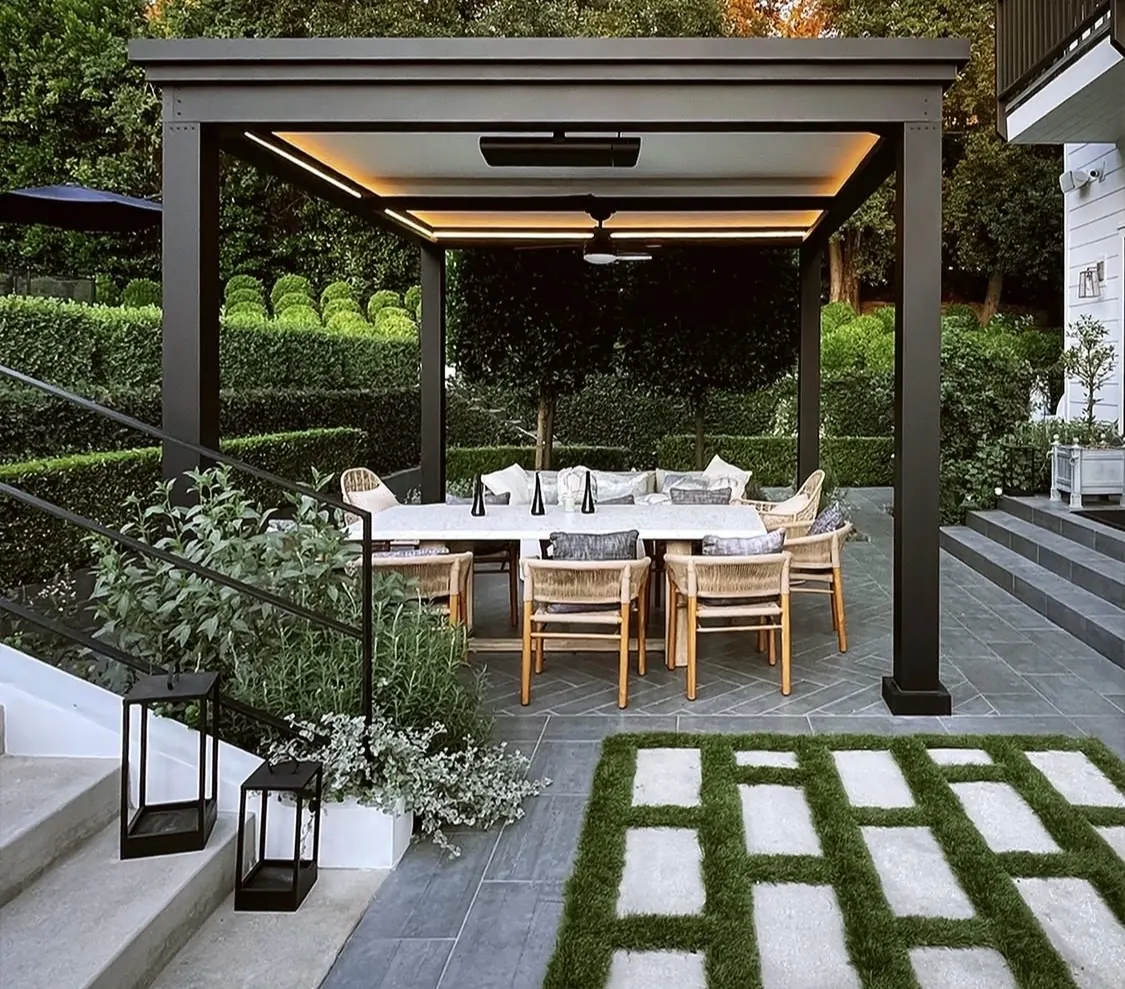
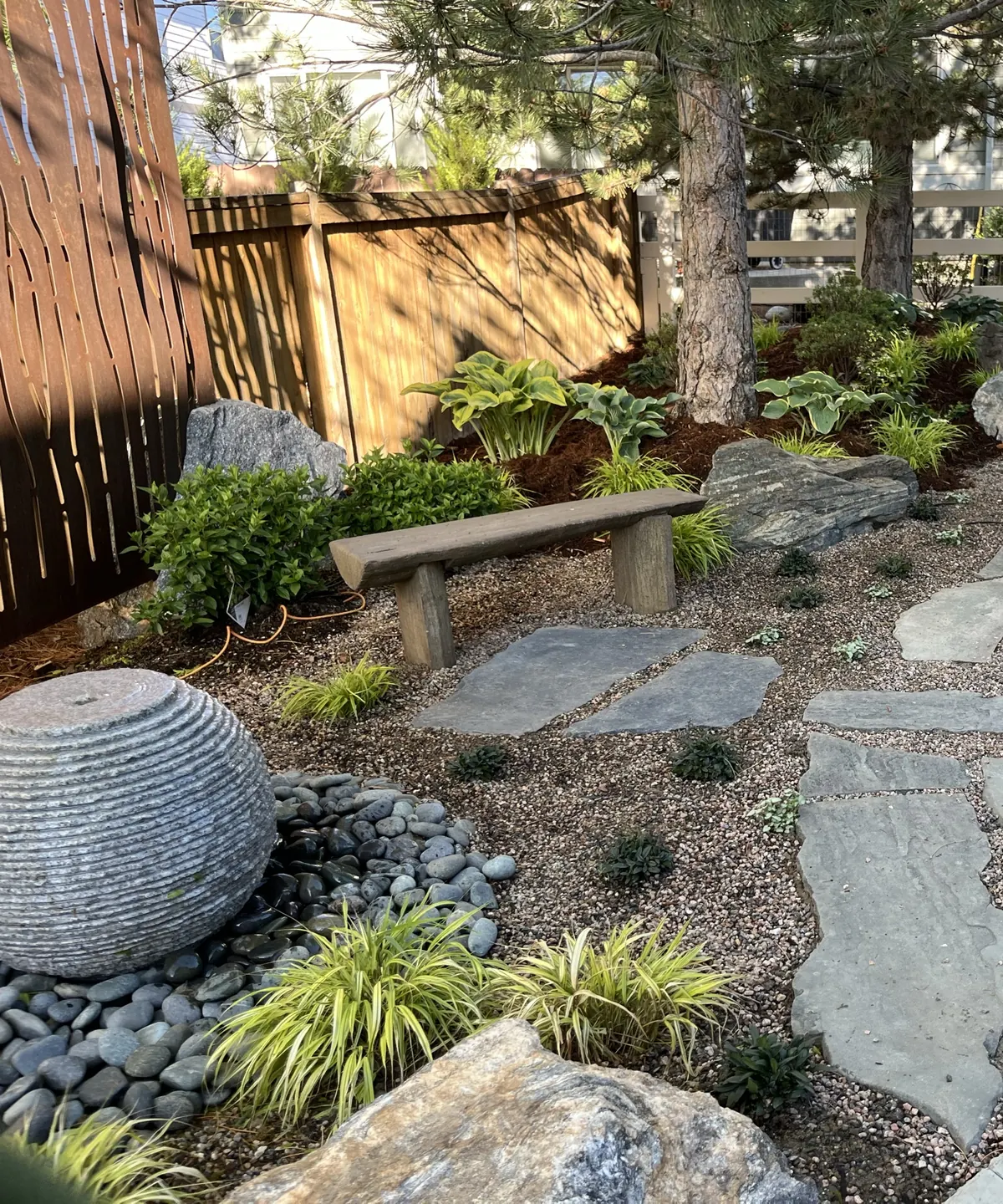
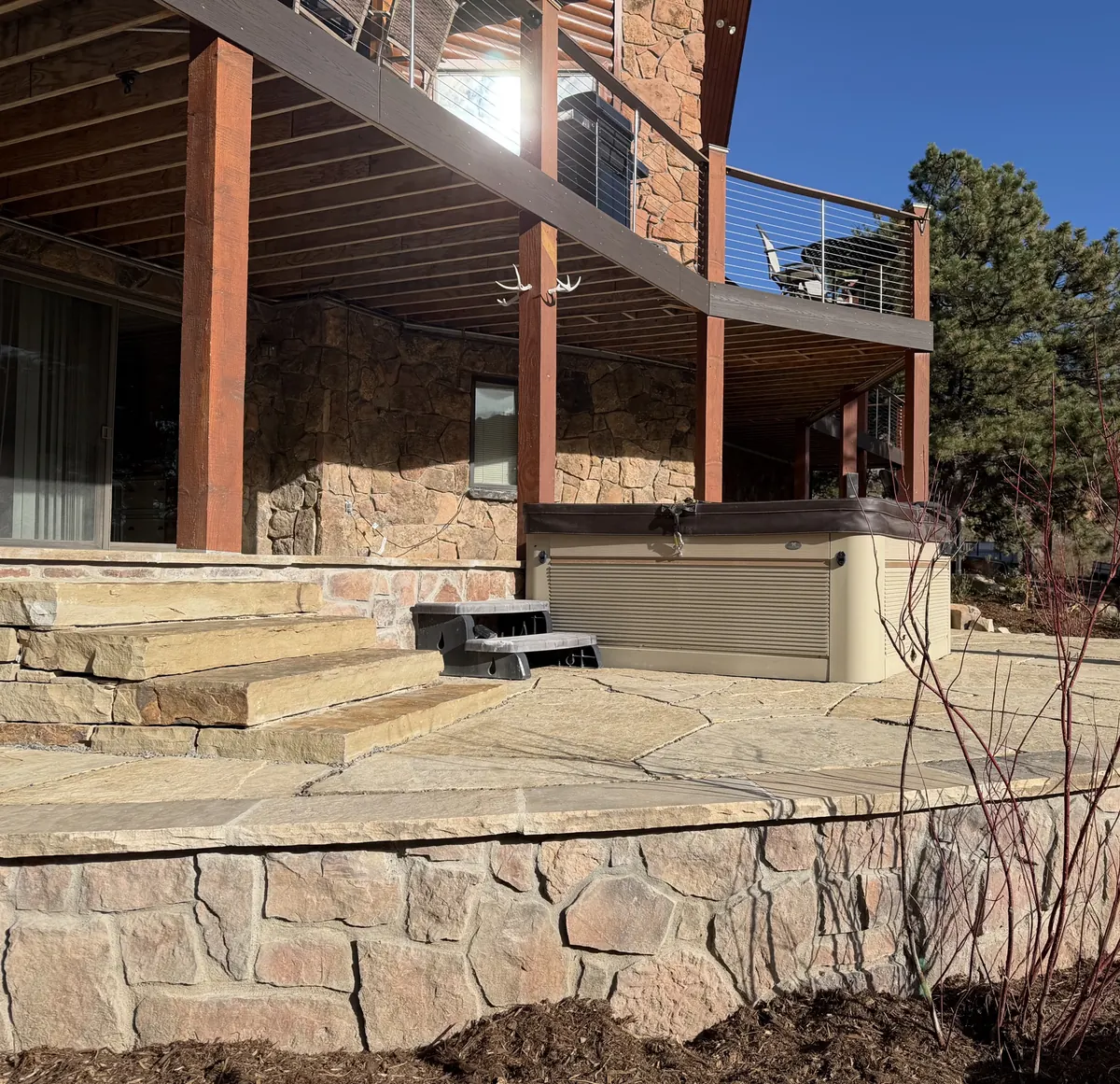
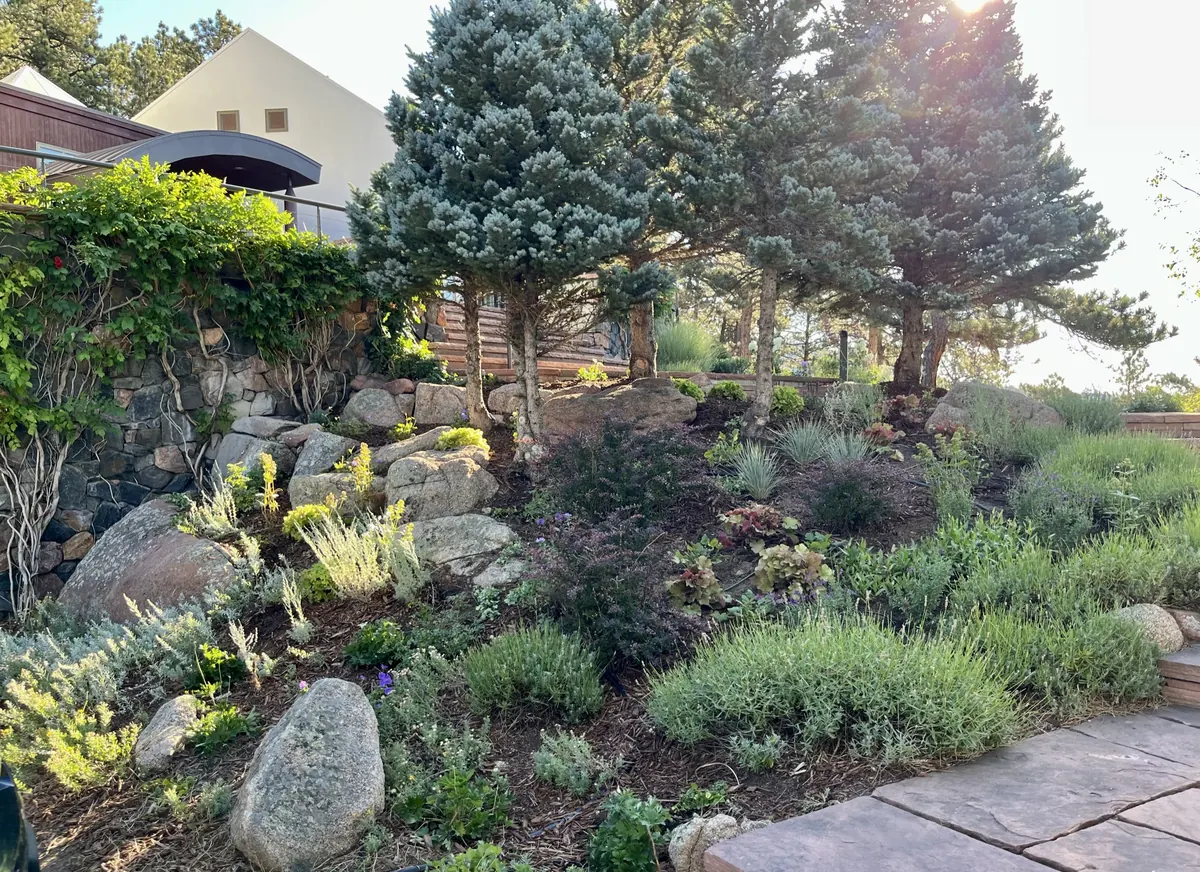
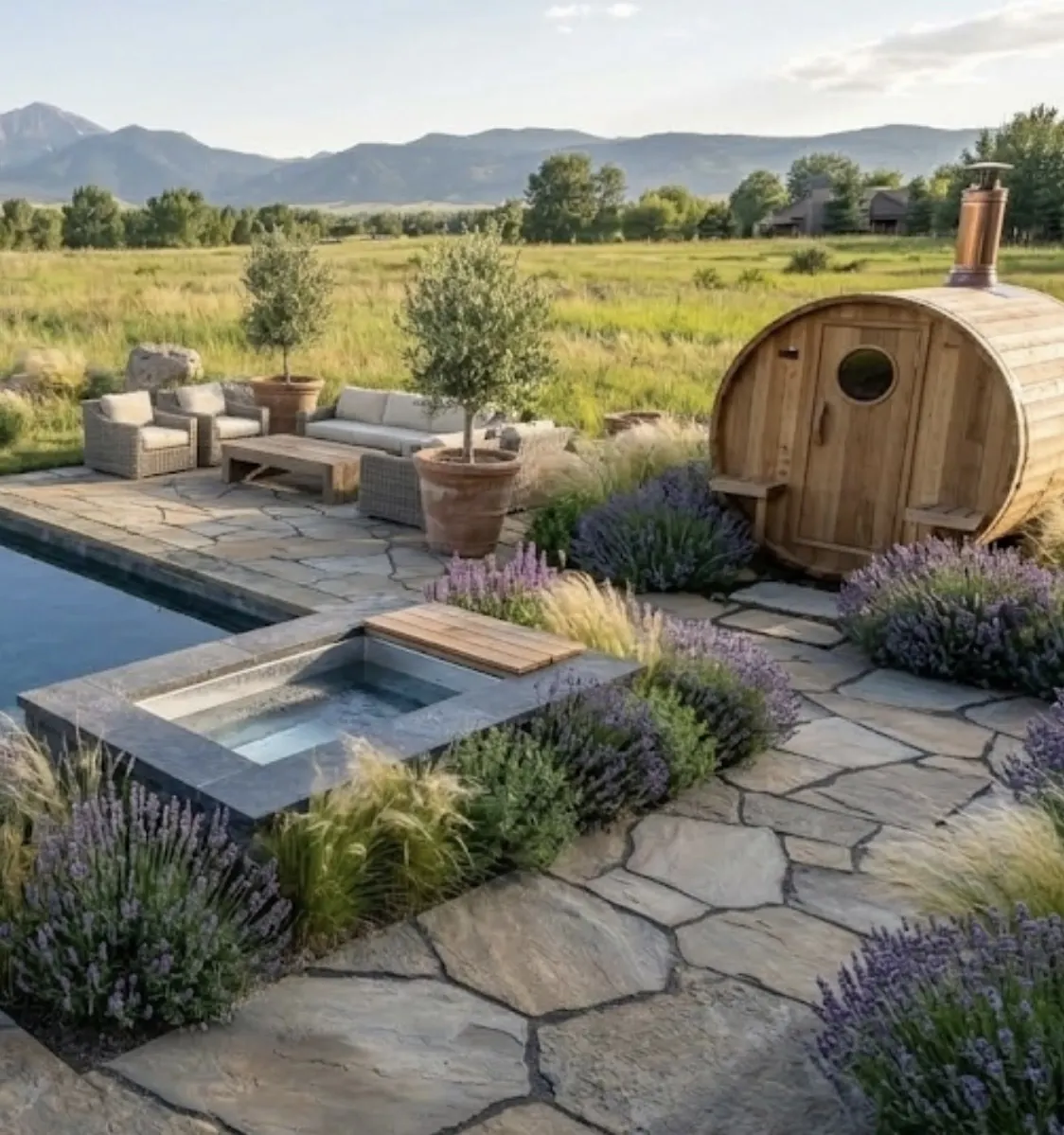
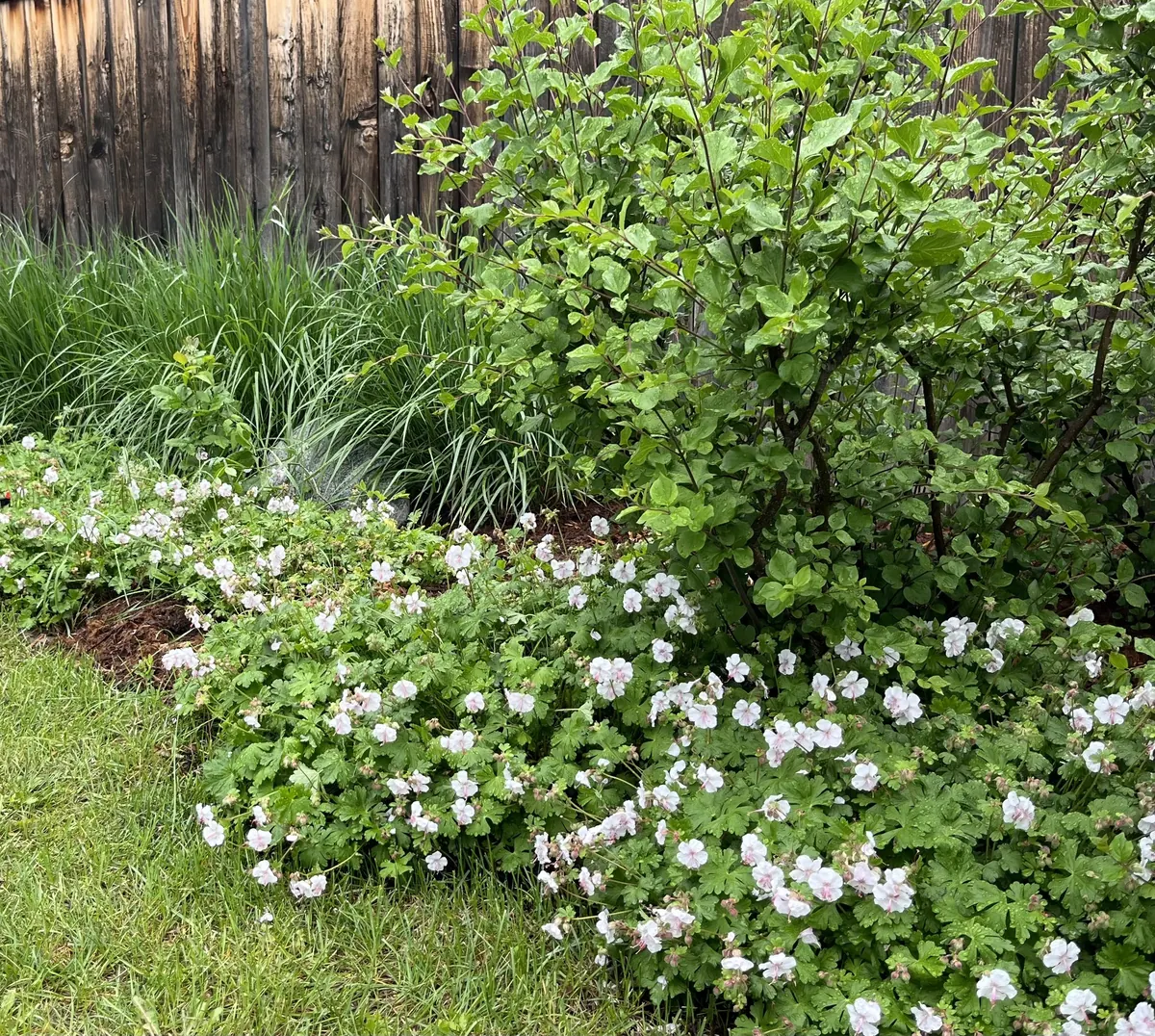
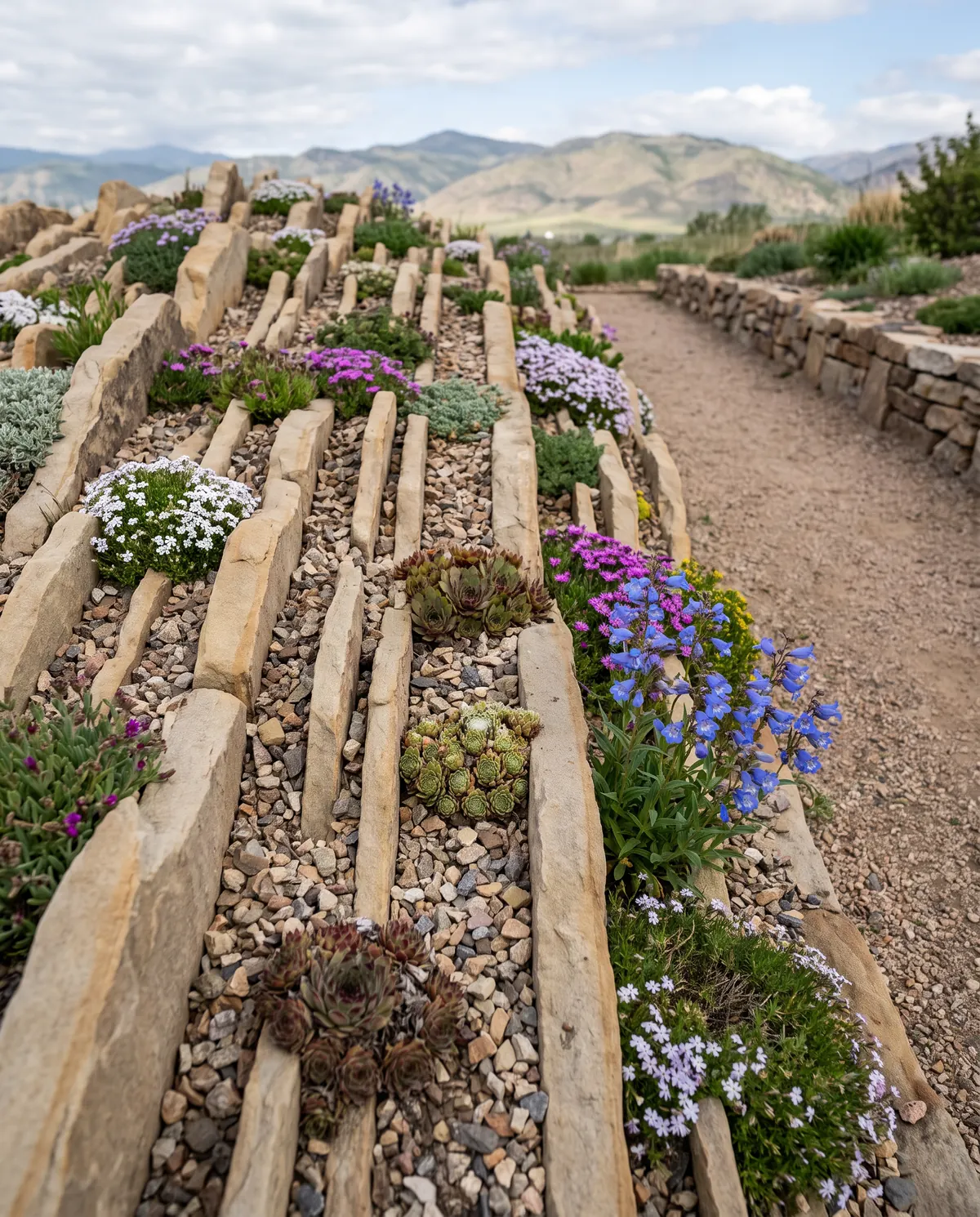
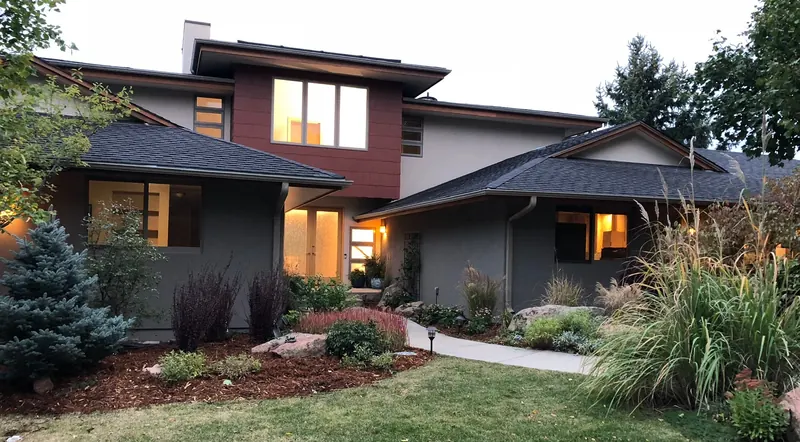
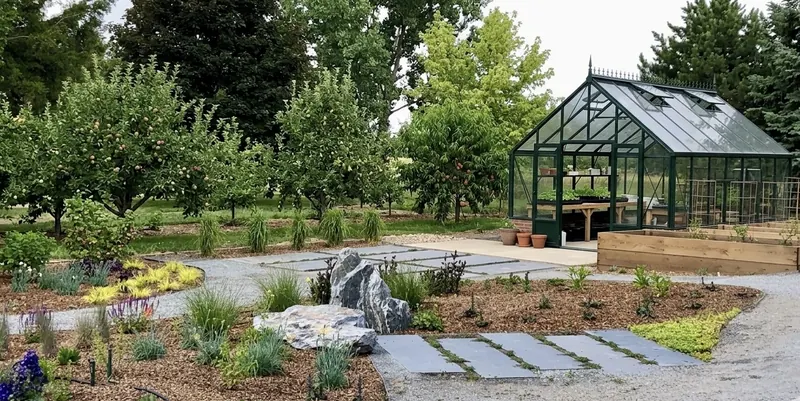
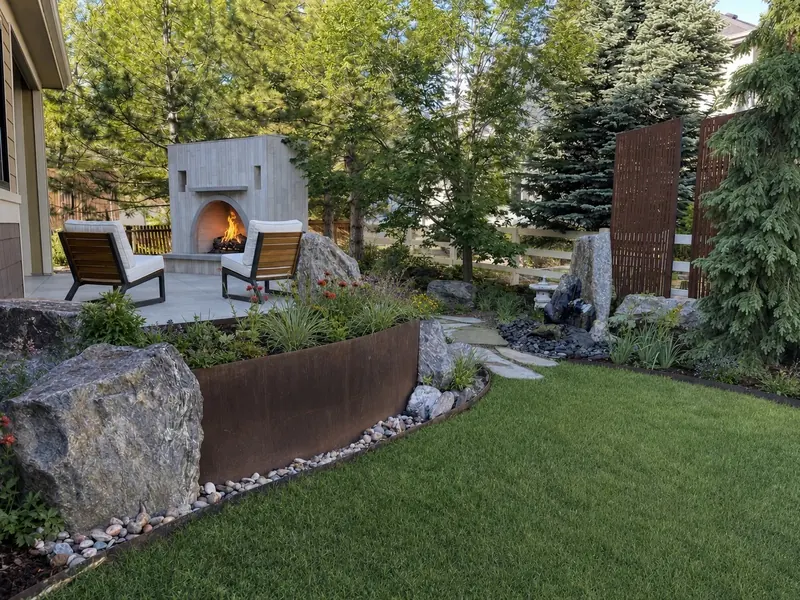
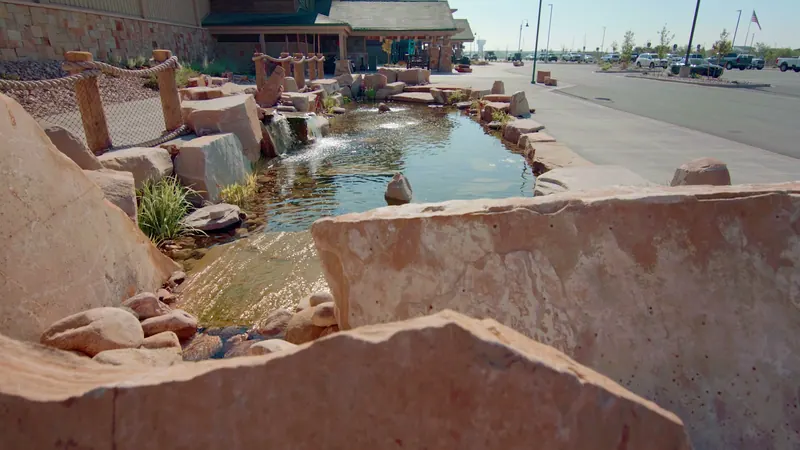
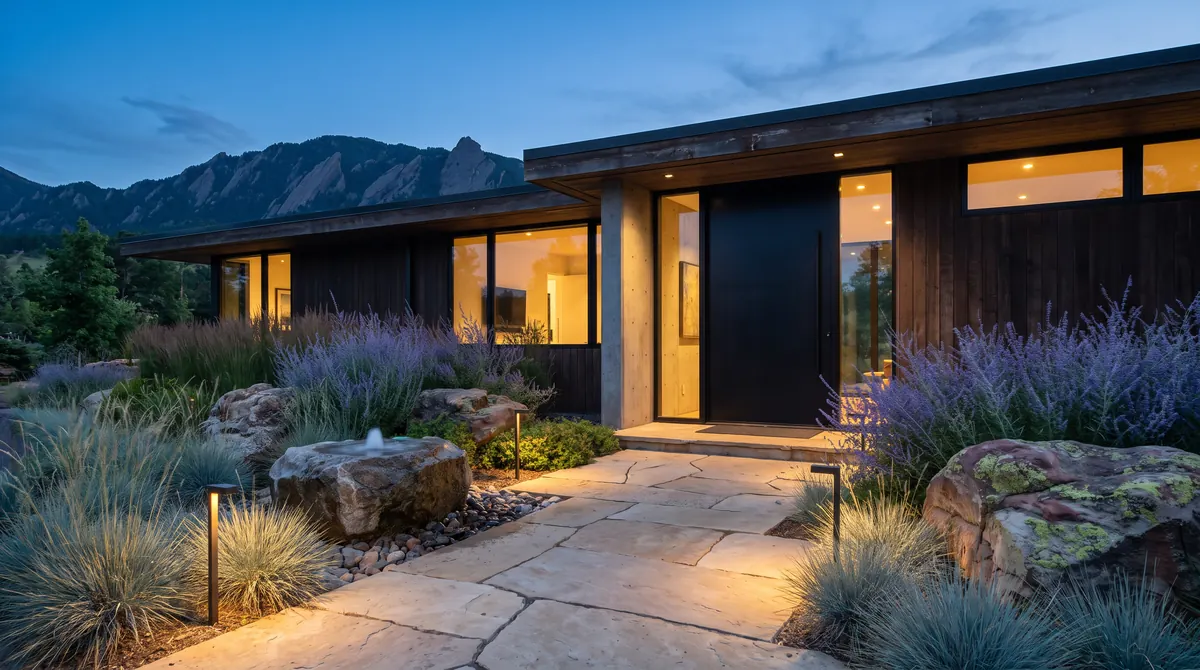
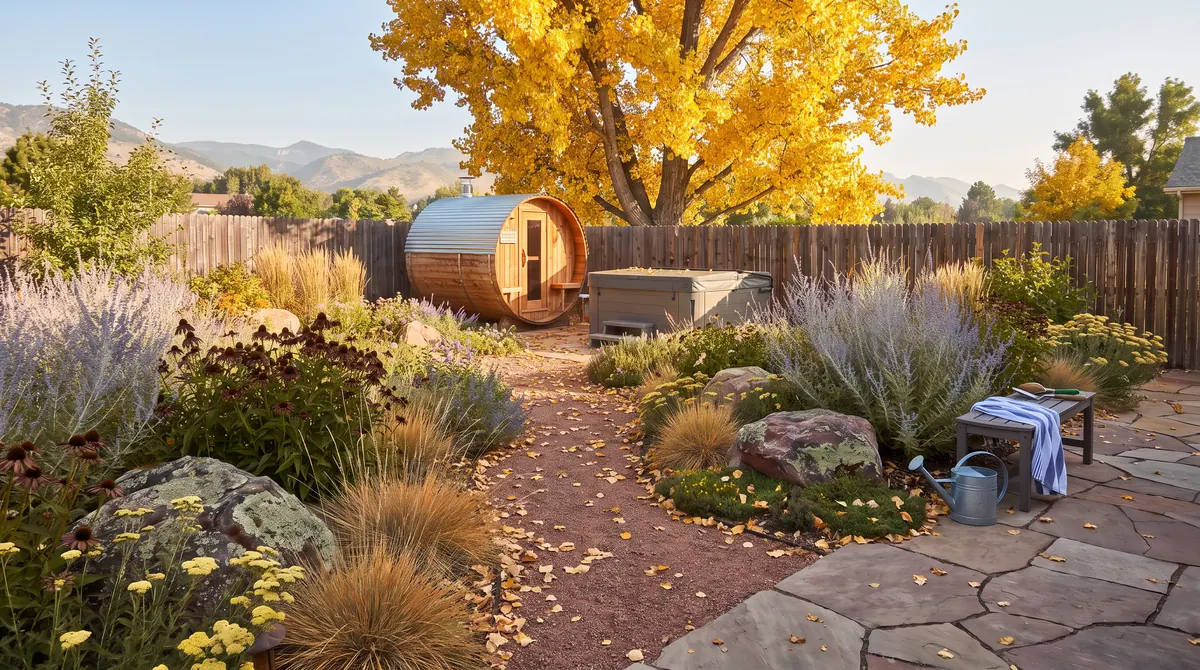
Landscape construction, built by the team that designed it
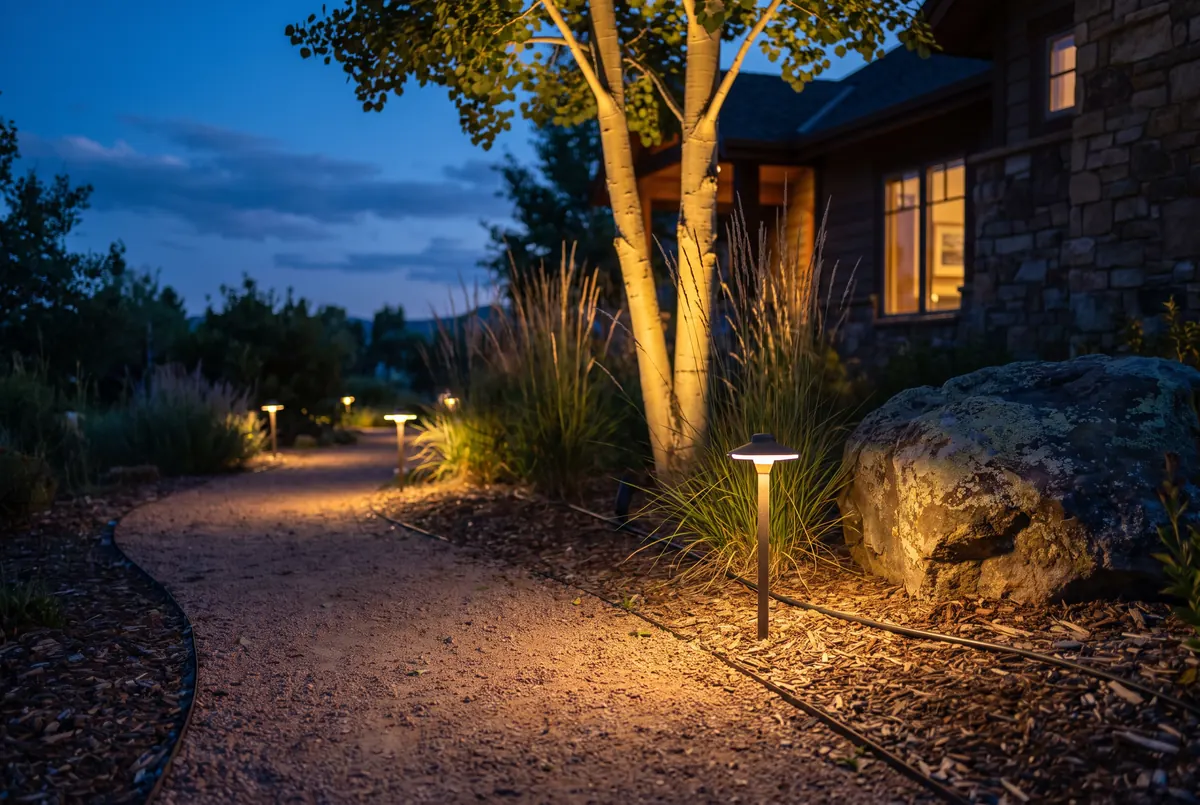
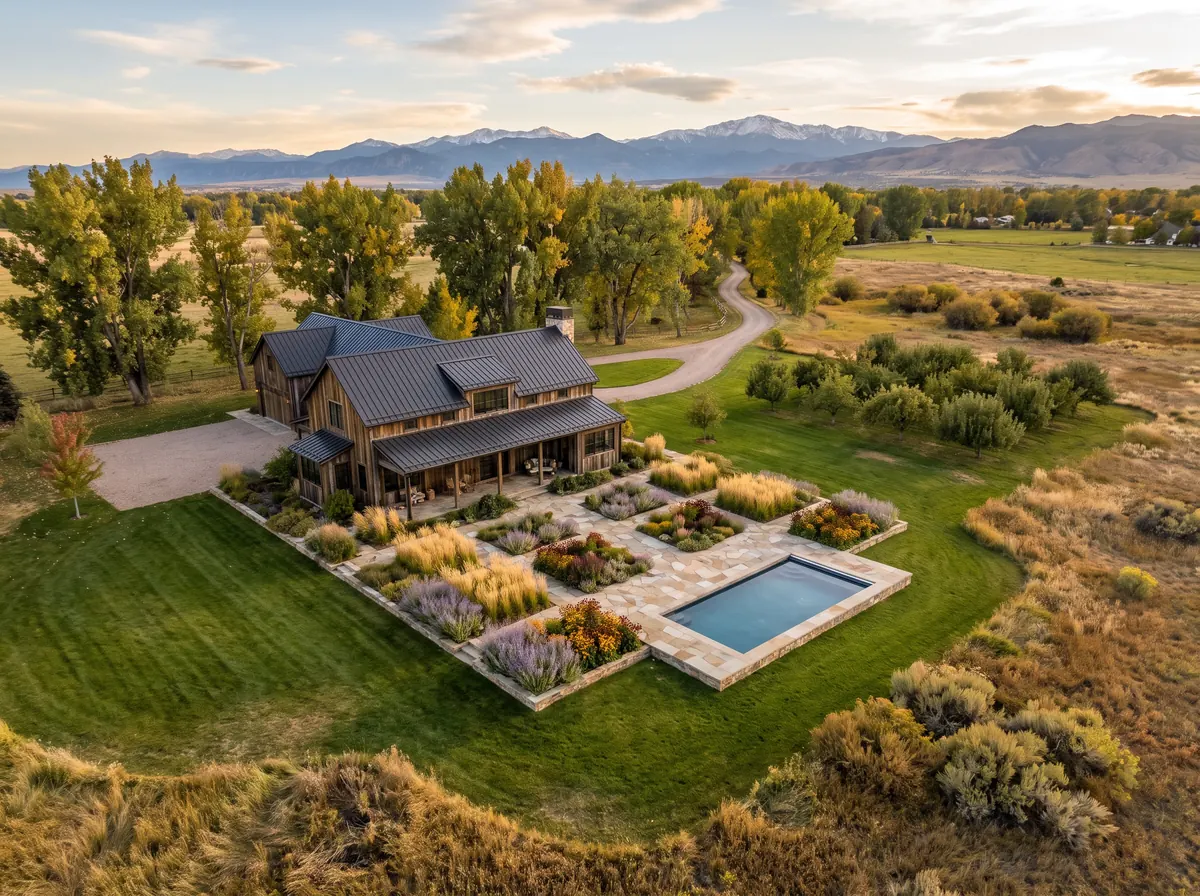
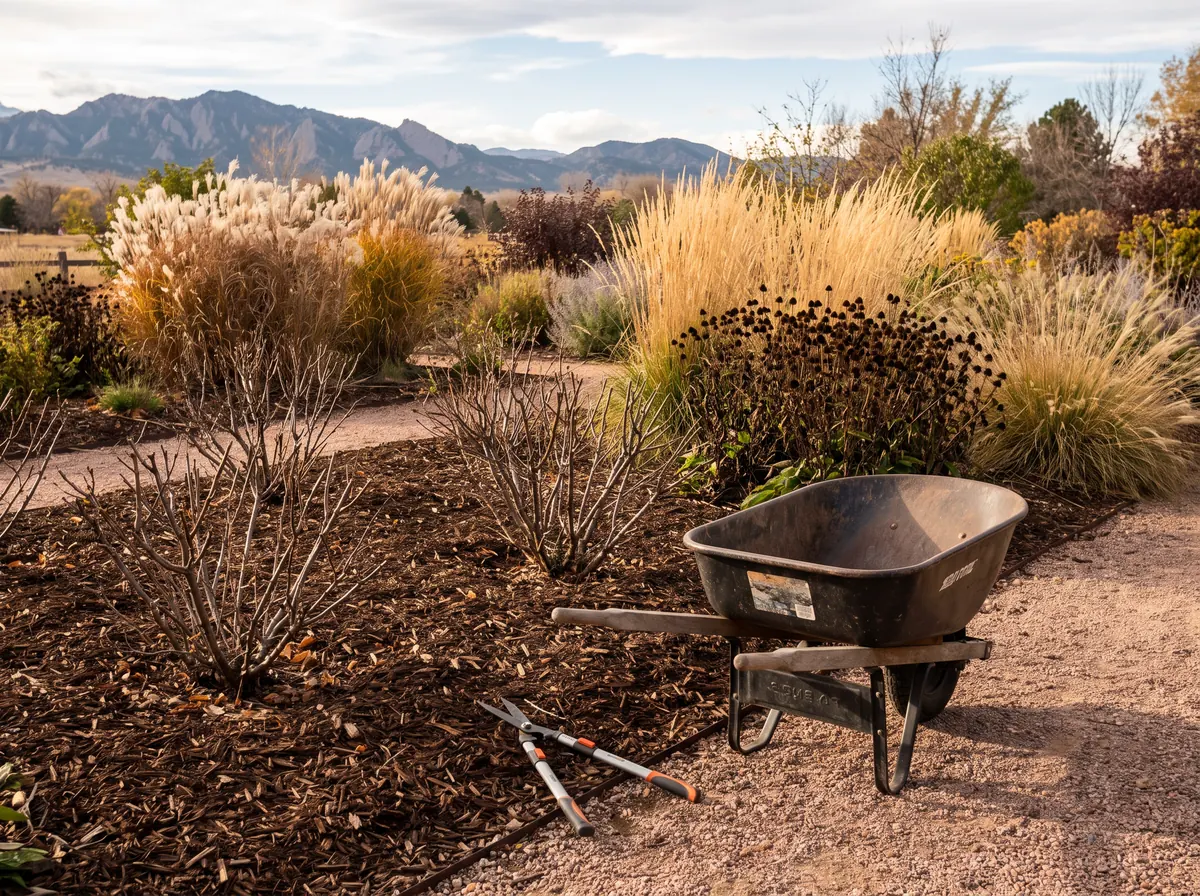
Idlewild Landscape Design builds the landscapes it designs: grading, drainage, patios, walls, irrigation, lighting and planting. We are the same Longmont company from plan to final walkthrough, for homes in Boulder County and nearby towns.
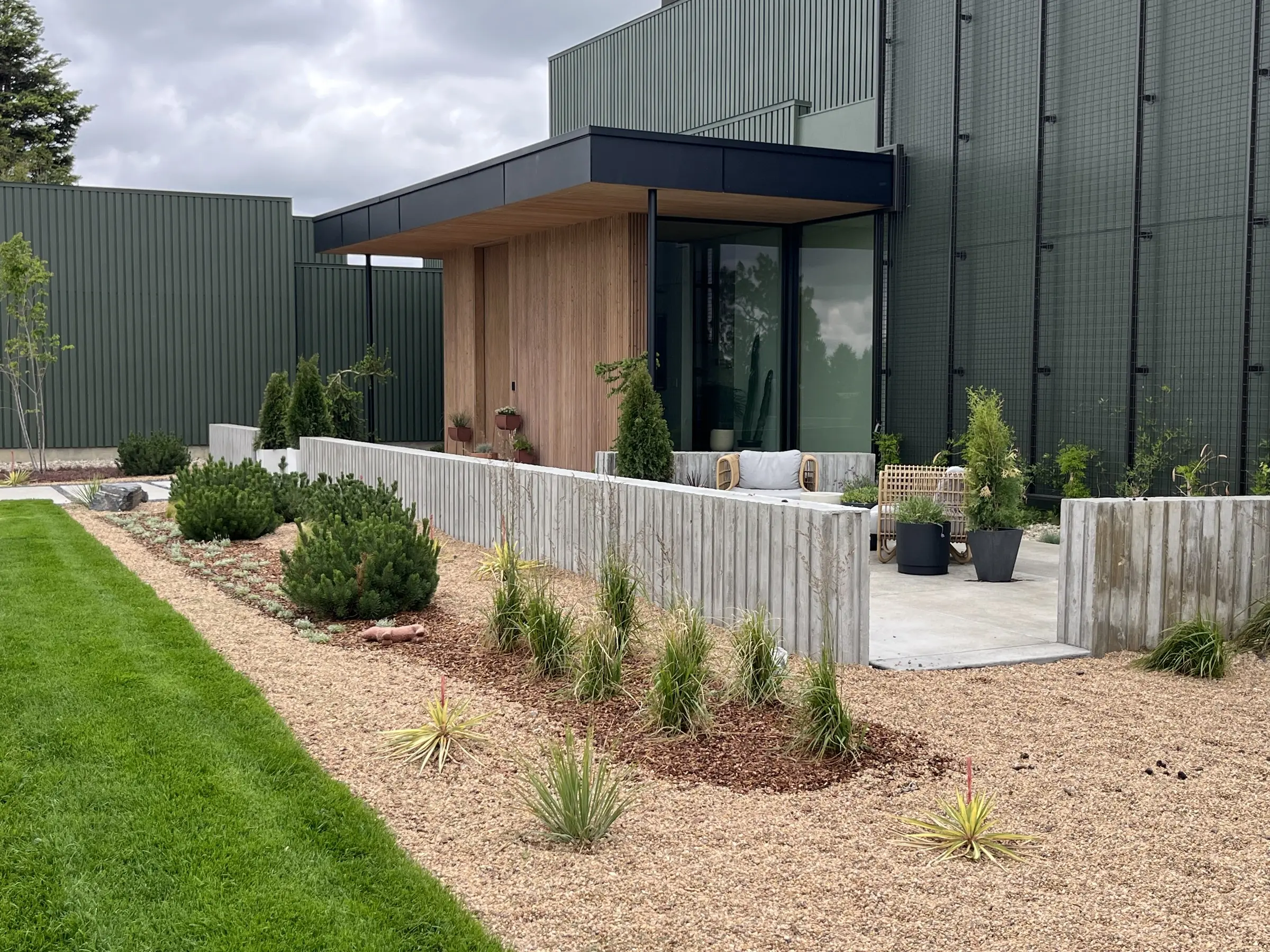
The short version
- We build
- Grading, drainage, stone, irrigation, light and planting
- Your team
- Designer and crew, plan to walkthrough
We drew the plan and we build it, so there is no handoff between the idea and the work.
Work runs in a set order, so pipe, irrigation lines and wire are in before stone and plants cover them.
Before any digging, Colorado law requires a call to 811 at least three business days ahead.
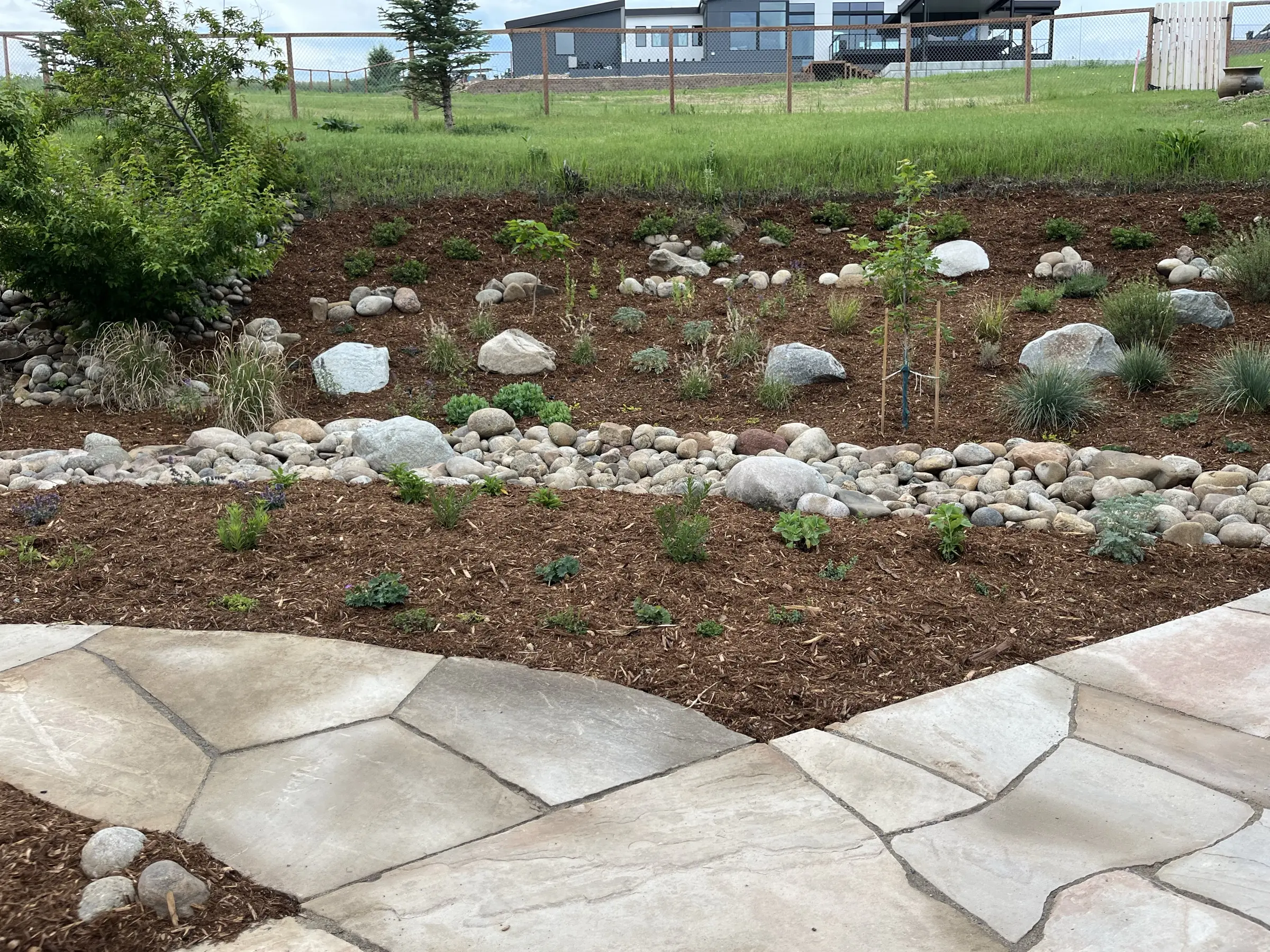
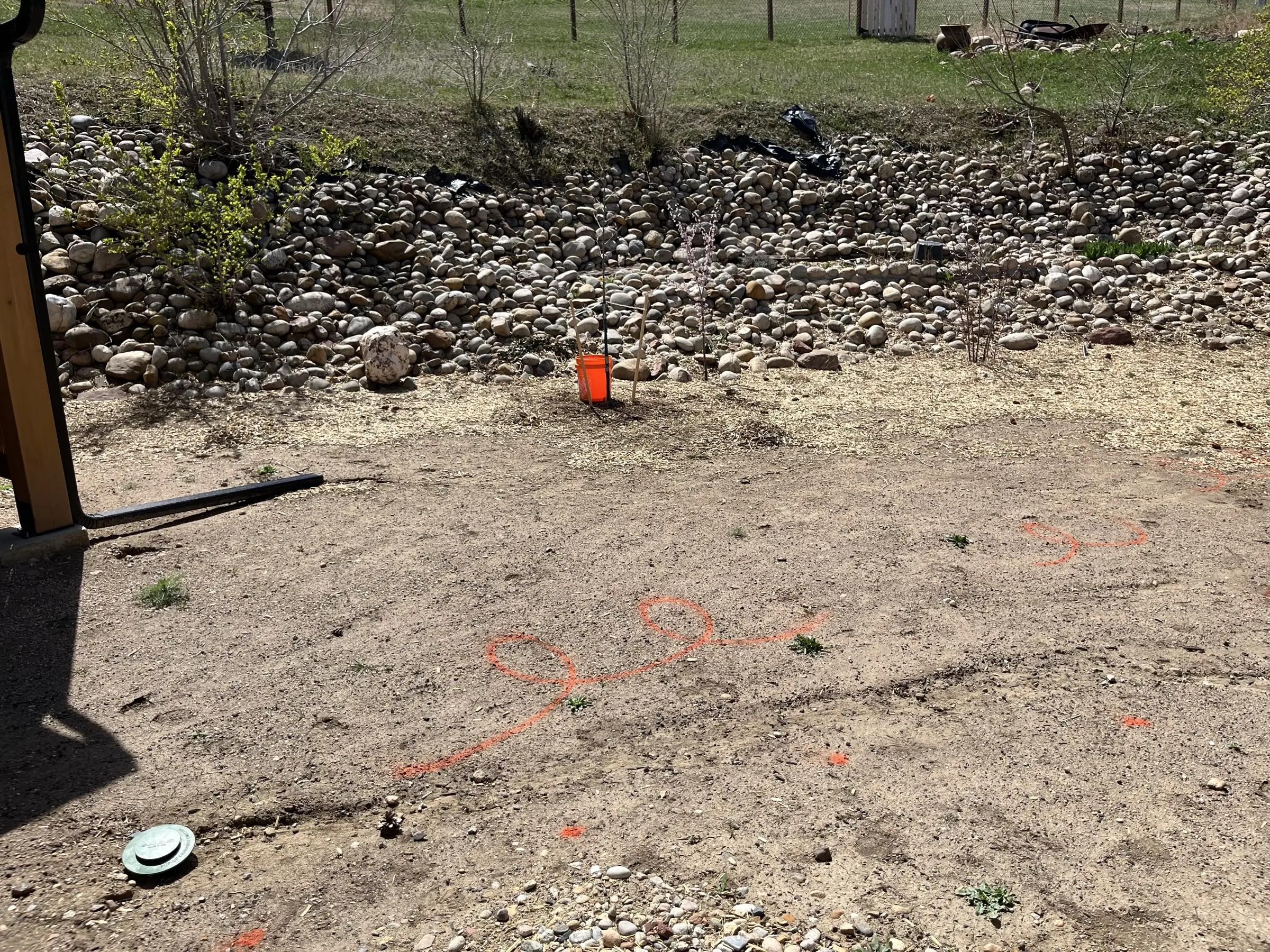
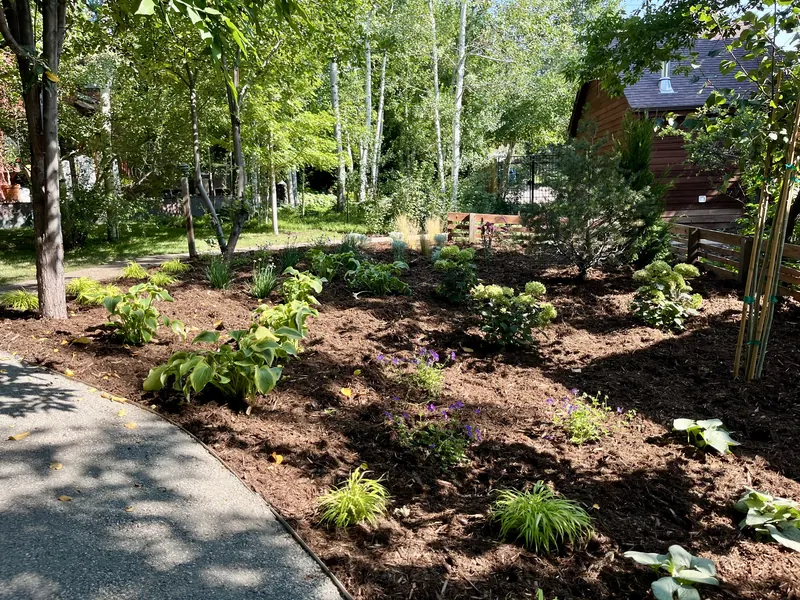
Before and after
The same spot before we started and after. Drag across the photo to compare.
Eight stages, in order
Every site is different, but our projects follow a common order. Each layer covers the one before it, so nothing new gets dug up.
- 01Demolition
- 02Grading
- 03Boulders, hardscape, drainage
- 04Irrigation tap
- 05Soil amendment
- 06Paths and carpentry
- 07Planting
- 08Final walkthrough
“Each day, they all showed up on time, together, and worked as a cohesive unit.”
Quick answers
Something else? Call (720) 243-9930.
Who will be working on my yard?
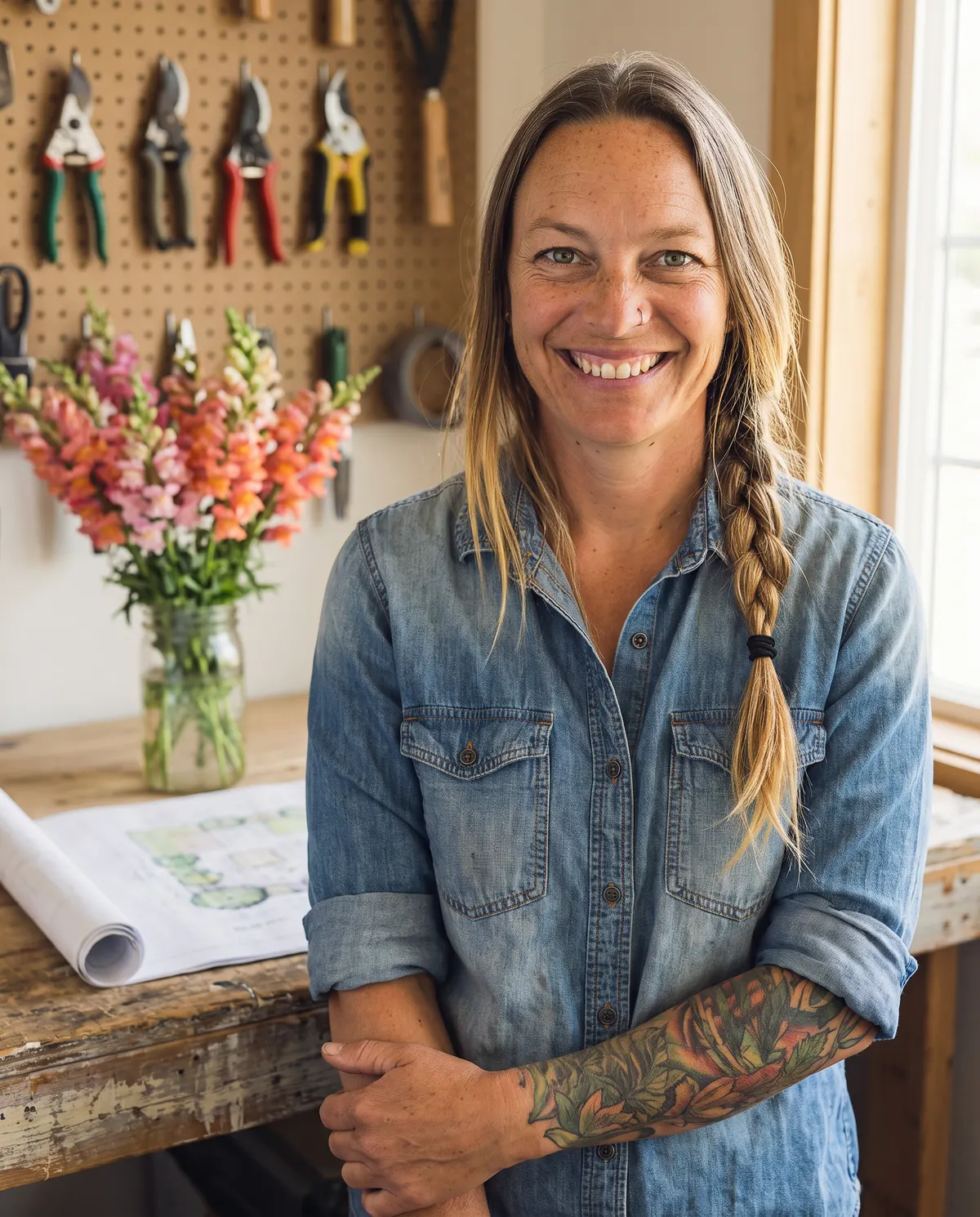
Our own crew handles hardscaping, planting and irrigation, and the designer stays involved through the build. Masonry, carpentry, welding and pool work go to partner trades.
How long does construction take?
It depends on the scope, the materials, permits and the season. We set expectations with you during design, before work starts.
Do I need a permit?
Some parts of a landscape do. Tall retaining walls, pools and spas, and new exterior lighting in unincorporated Boulder County all have permit or approval rules. Cities and the county each set their own, so checking is part of planning the job.
What happens if the crew finds a problem once digging starts?
The designer and the crew work it out together on site, so the fix still fits the plan. This is why we keep design and construction in one company.
Why does the order of work matter?
Drain pipe, irrigation lines and lighting wire go in before stone and plants cover them. Building in order avoids tearing up finished work to add something that was missed.
Read the full page: the build, where parts meet, frost and footings
From drawing to final walkthrough
For us, design and construction are one process. Construction is the fourth of our five steps, after Discovery, Design and Collaboration. We drew the plan and we build it, so there is no handoff between the idea and the work.
The designer stays involved while the yard is built. Sites hold surprises: a buried pipe, a wet spot, a ledge of rock. When one turns up, the designer and the crew decide together, so the fix still fits the plan. The job ends with a final walkthrough.
Our own team handles design, project management, hardscaping, planting and irrigation. Masons, carpenters, welders and pool builders are partner trades we bring in. We also limit the number of projects we take on each season.
Eight stages, in order
Every site is different, but our projects follow a common order. Most begin with some demolition. Then we grade the site. Boulders, hardscape, drainage and the irrigation tap go in next, and this is when the yard starts to take shape. After that we amend the soil, lay the paths, build any carpentry and get the ground ready for planting.
The order matters because each layer covers the one before it. Drain pipe, irrigation lines and lighting wire have to be in the ground before stone and plants hide them. Working in order avoids digging up new work.
- Demolition and removal
- Grading
- Boulders, hardscape and drainage
- Irrigation tap
- Soil amendment
- Paths and carpentry
- Planting and finish work
- Final walkthrough
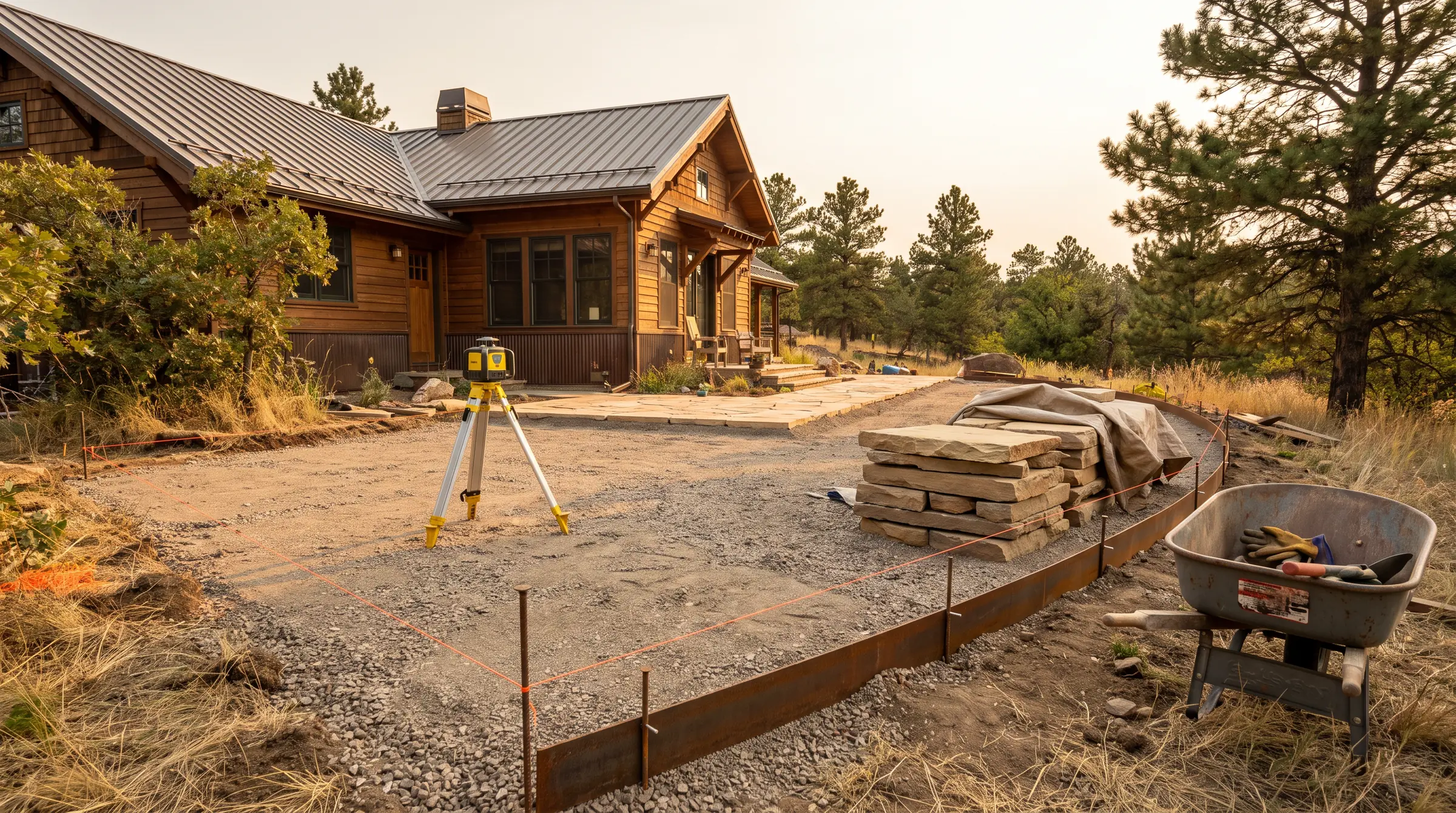
Where the parts meet
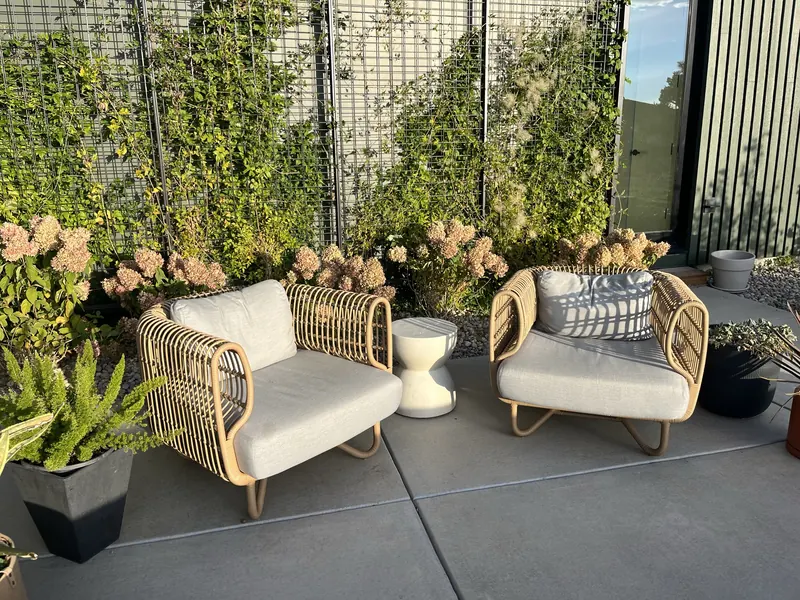
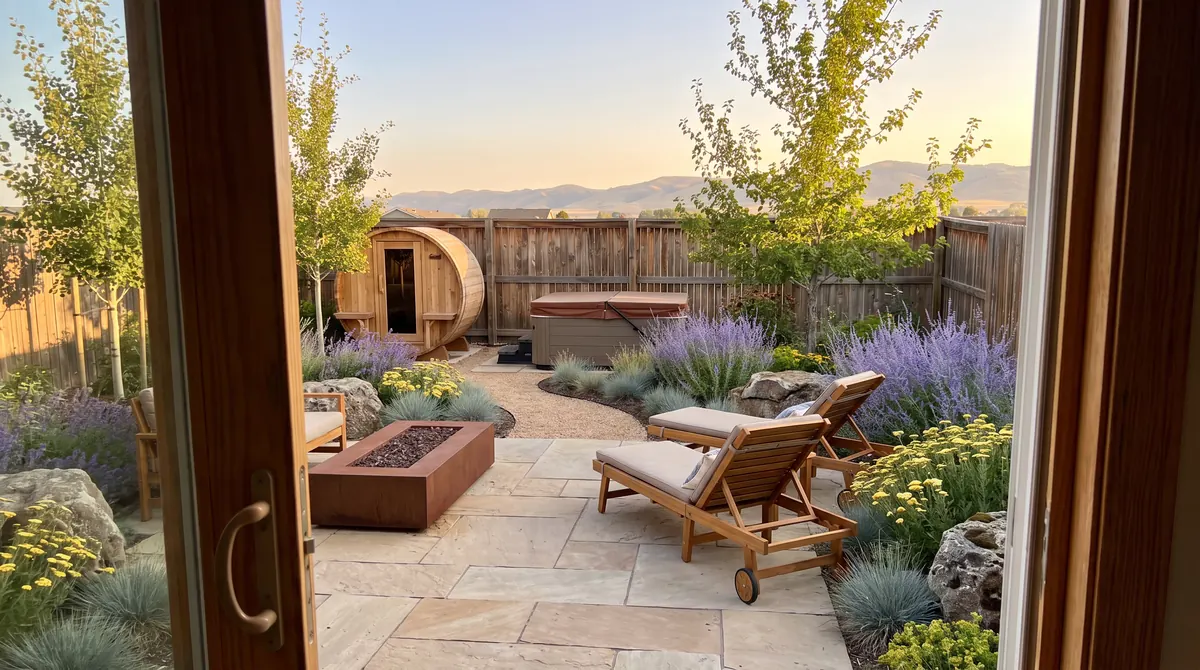
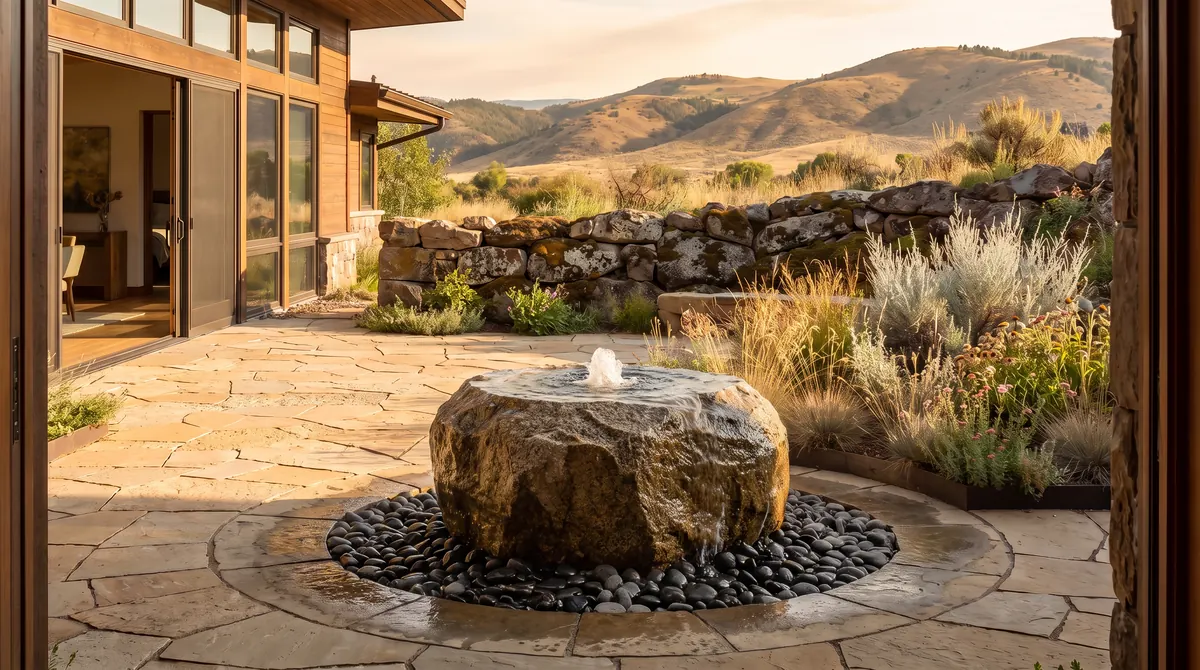
A full build can include patios and terraces, paths, pergolas and shade structures, outdoor kitchens, fire and water features, raised gardens, wellness spaces, lighting, planting, irrigation, drainage, grading and soil preparation. We treat them as parts of one landscape, not a list of separate features.
The places where parts meet are where quality shows. A wall should meet the grade so it looks settled. A patio edge should meet the planting bed cleanly. Stone should suit the house. Light should set a mood as well as help you see. Soil should be ready before the first plant goes in.
Each kind of work has its own page with the options for that part of the yard: hardscaping, water features, outdoor kitchens, lighting and irrigation.
Frost, footings and the 811 call
The parts you see last only as long as the parts you don't. On the Front Range that mostly comes down to water and frost. CSU Extension notes that water expands by about one-eleventh when it freezes. That is enough to crack pipes and lift what sits on wet ground. So hard surfaces need a firm base and a slope that sends water away from the house.
Footings follow local rules. The City of Boulder, for example, asks for fence posts set in concrete at least 24 inches deep. Boulder also requires a Colorado licensed engineer to design any retaining wall more than 3 feet tall, measured from the bottom of the footing to the top of the wall. The same goes for a wall of any height on a slope of 15 percent or more. Other towns set their own rules, so checking them is part of planning.
Soil is the other hidden layer. CSU Extension says an amendment works only when it is mixed into the soil, not buried or left on top. Fresh wood products can tie up nitrogen and starve new plants.
Before any digging, Colorado law requires a call to Colorado 811 at least three business days ahead. Utilities mark their lines with paint or flags, and digging within 18 inches of a mark is done by hand.
Start with a visit. A walk around your property comes first. Pick a day and time online, or call.
Sources 6
- CSU Extension: Home Sprinkler Systems, Preparing Your Sprinkler System for Winter (fact sheet 4.719)
- City of Boulder: Fence and Retaining Wall Permit Guide
- CSU Extension: Choosing a Soil Amendment
- Colorado 811: Colorado utility locator (call before you dig)
- Boulder County: Swimming Pools, Spas and Hot Tubs (publication B26)
- Boulder County: Outdoor Lighting Requirements (publication P09)
Landscape construction usually leads to landscape design, hardscaping, irrigation and landscape lighting.
Start with a walk around your property.
We walk the property with you first. Pick a day and time online, or call.