
















What does deer-resistant really mean?
It means less likely to be eaten, not safe. Colorado State University Extension, or CSU, says a hungry deer will find almost any plant tasty. Any plant may draw hungry deer in some seasons.
Tastes also change by place and year. CSU notes that deer in different areas seem to like different things, so plant lists vary. Deer may leave a plant alone for several years and then browse it hard. Damage is most noticed in spring, when new growth is soft.
How you grow a plant matters too. CSU says native plants growing where they belong may appeal less to deer than garden plants that get lots of water and fertilizer. A lush, well-fed bed can turn a lightly browsed plant into a favorite.
Which plants does CSU list?
CSU's PlantTalk Colorado lists the plants below as deer-resistant. It also suggests asking your county Extension office for a longer local list. Treat these as better odds, not a promise.
- Trees: white fir, Colorado spruce, pinyon pine, common juniper, Rocky Mountain maple, hackberry and honeylocust.
- Shrubs: lead plant, potentilla, Austrian copper rose, quince, 'Blue Mist' spirea, golden currant, lilacs, Oregon grape holly and pyracantha.
- Perennials: purple coneflower, peony, blazing star, Shasta daisy, Mexican hat coneflower, lily-of-the-valley and Russian sage.
- Ground covers: creeping mahonia, thyme and snow-in-summer.
- Herbs: marjoram and lavender.
- Bulbs: daffodils, which deer tend to avoid. CSU calls grape hyacinth, Dutch iris, scilla and puschkinia less favored.
How should I lay out beds where deer visit?
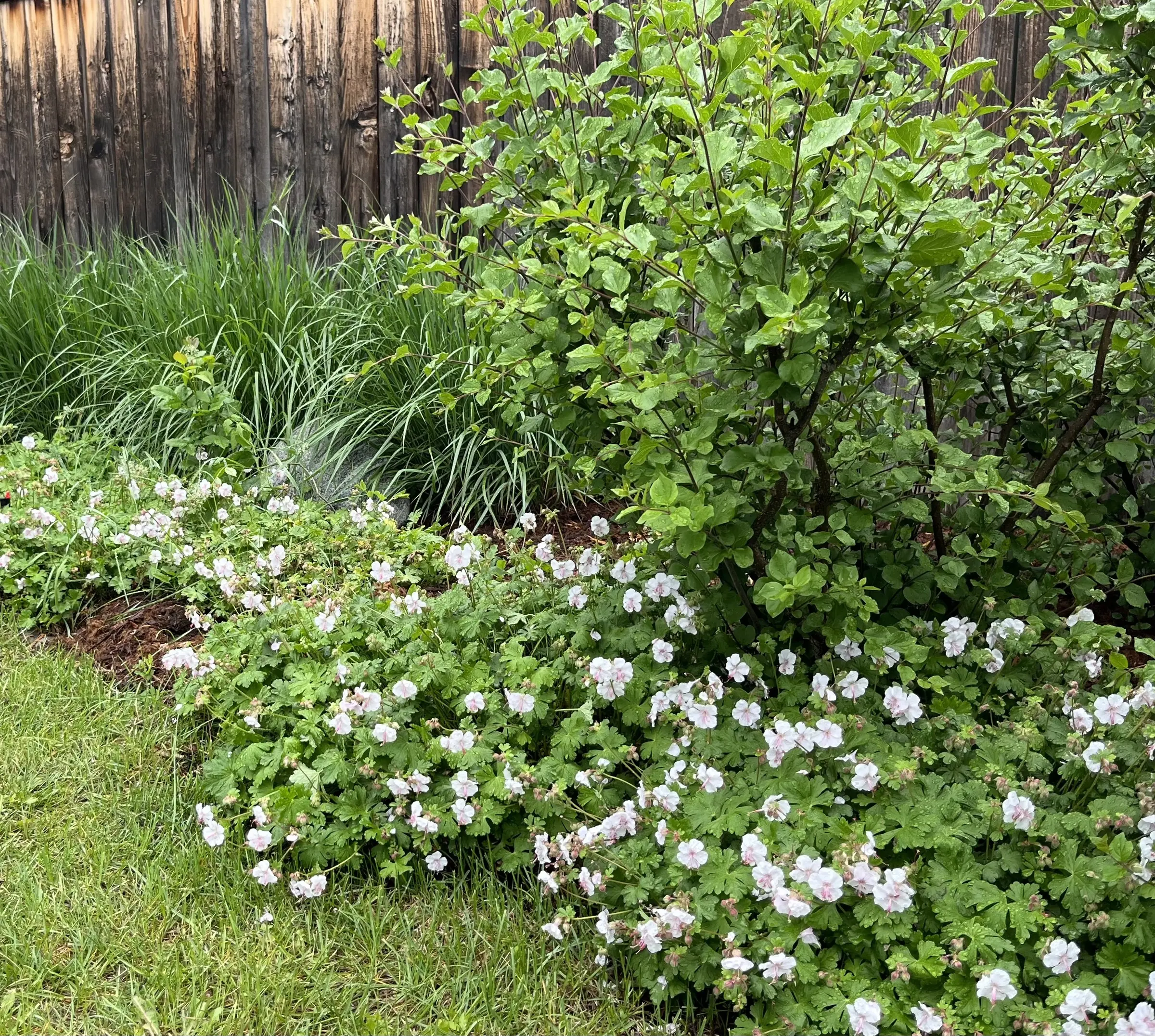
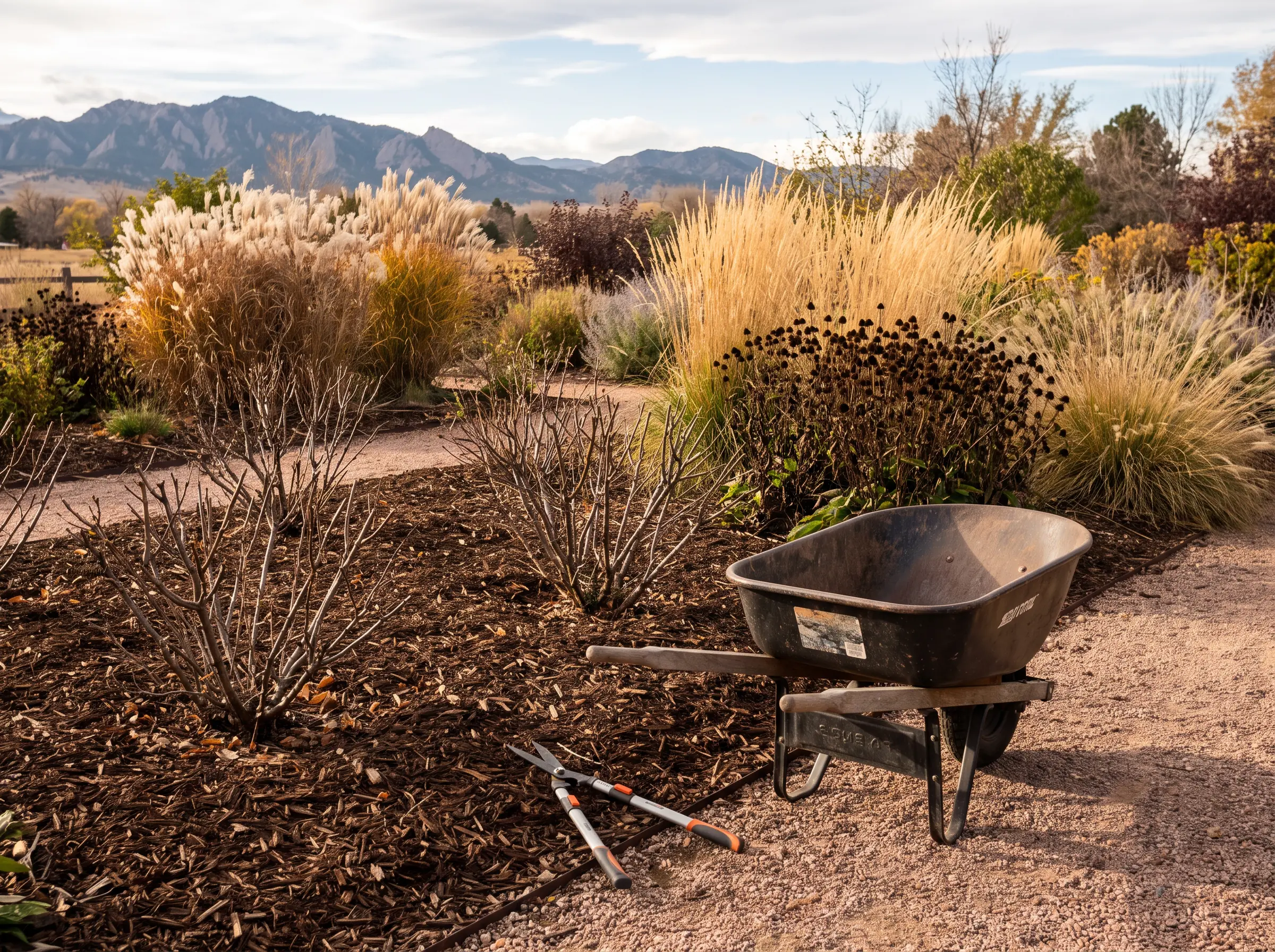
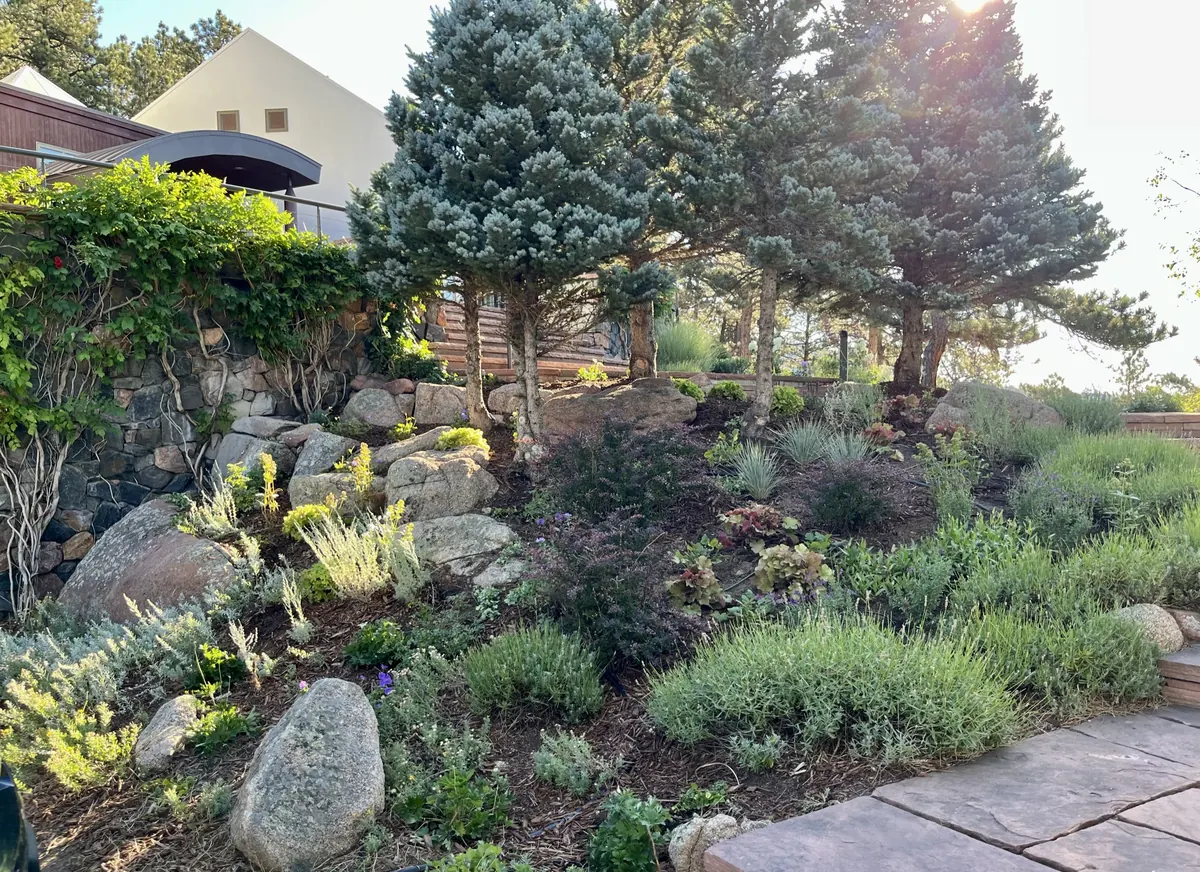
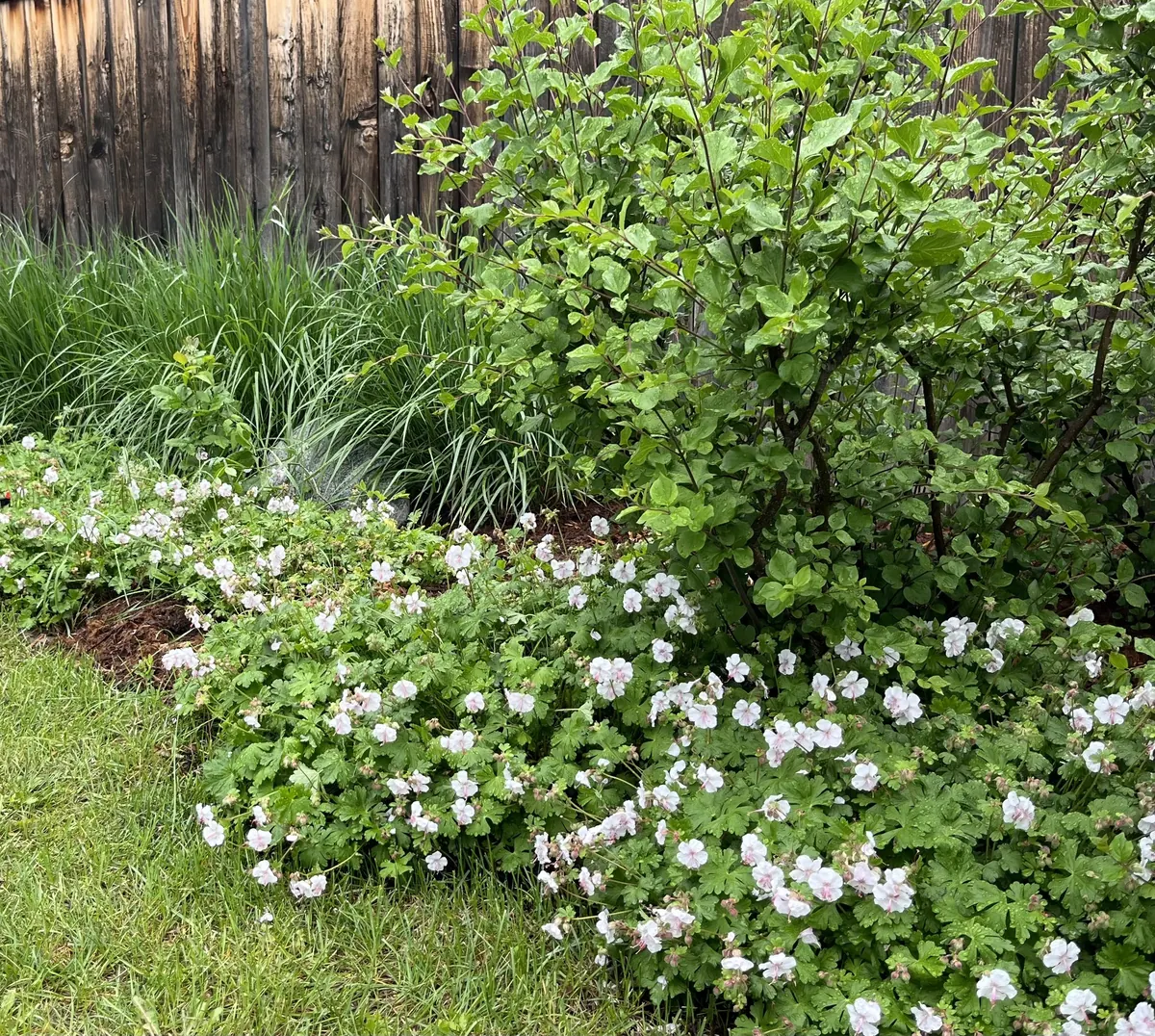
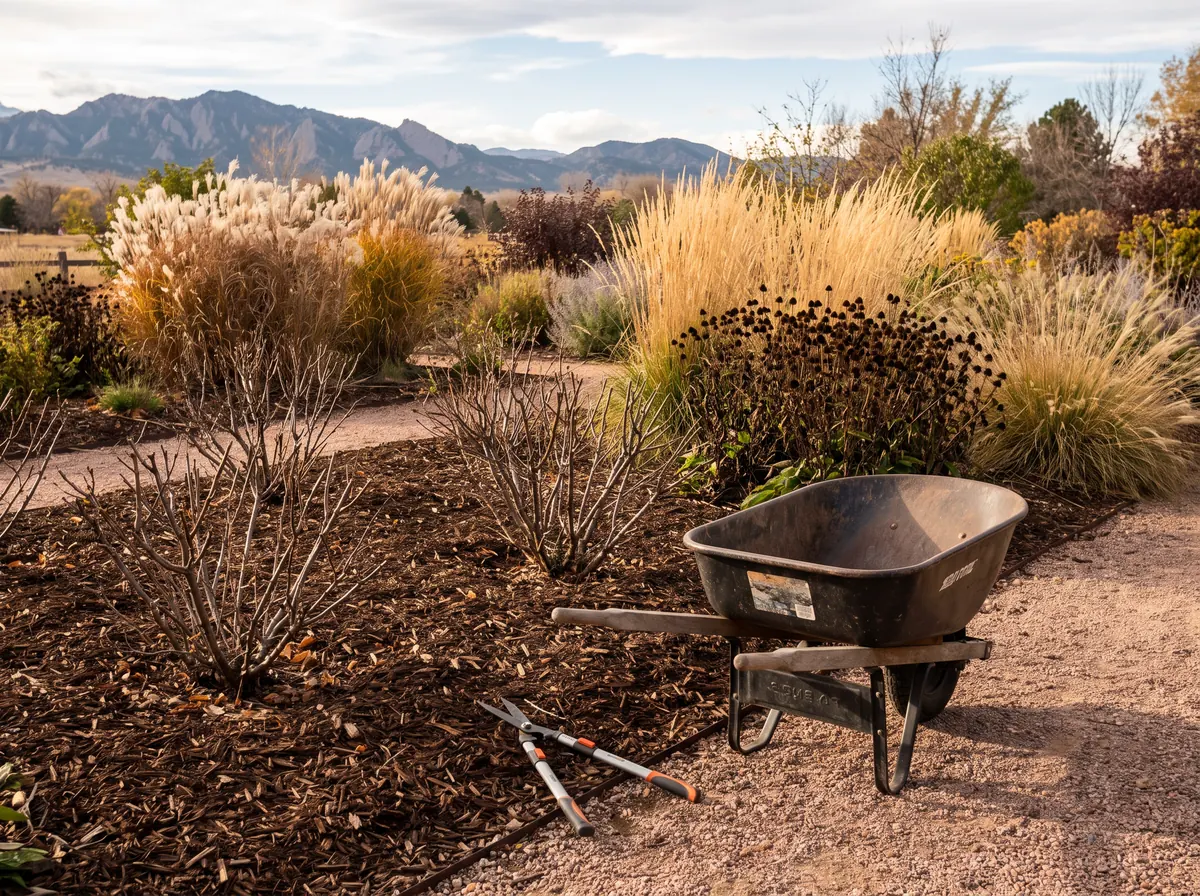
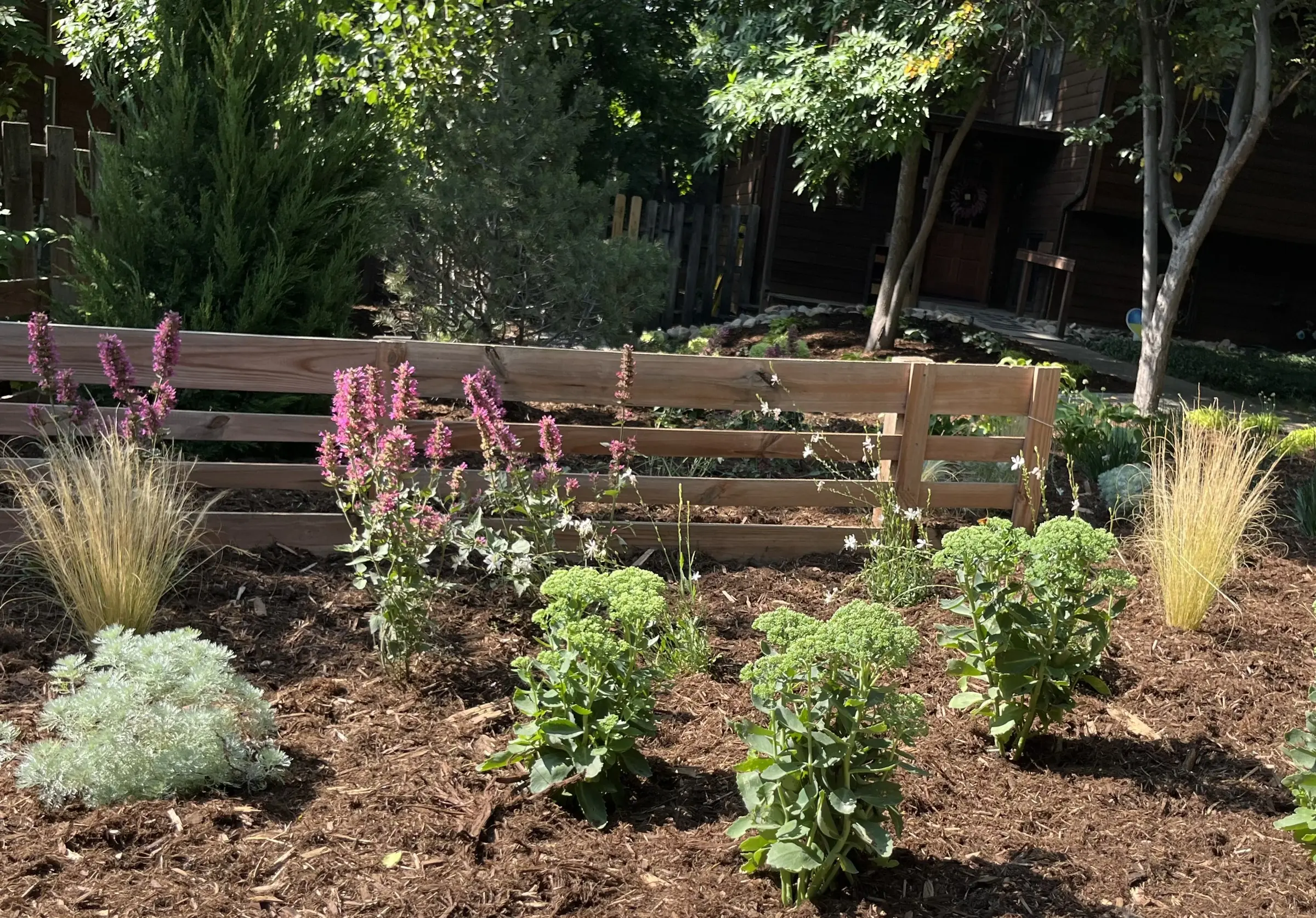
Use what deer dislike as a guide. CSU says deer tend to avoid plants with strong smells, such as lavender, hyssop, artemisia, chocolate flower and oregano. They also tend to skip many ornamental grasses and ferns, and plants with fuzzy, prickly or sharp leaves, such as lamb's ear and yucca.
Then use placement. CSU's deer damage fact sheet says to put the plants deer like best near the house, inside a fence, or inside a ring of plants they like less. A border of scented and fuzzy perennials can shield the plants deer like best.
Do not feed deer, even in a hard winter. Colorado Parks and Wildlife says intentionally feeding deer is illegal in Colorado. It warns that feeding deer can draw mountain lions into neighborhoods and spreads disease when animals crowd together.
How do I protect young trees?
Young trees are at the most risk because their growing tips sit right at deer height. CSU suggests netting tubes around seedlings, attached to a stake. They can cover just the growing tip or the whole small tree. Paper bud caps around the top bud may also cut browsing.
Fall brings a second problem. Bucks rub the velvet off their antlers on young trunks, and CSU says they can damage trunks even through tubes. Where that happens, a small fence around the tree may be needed.
Repellents can help for a while. CSU says to apply them on a dry day above freezing. Treat young trees completely, and older trees only on new growth. Treat up to 6 feet above the deepest snow you expect, since deer browse from the top down. A spray of whole eggs and water is one of the more effective options in CSU's testing, but it needs to be reapplied about every 30 days.
CSU calls home remedies such as hanging soap or hair questionable. Noise makers, lights and similar scare devices usually give only short relief.
What fence keeps deer out, and what do local rules allow?
CSU says fencing is the only sure control. A woven-wire fence 8 feet high is the standard deer-proof fence. Electric fences are another option CSU describes. Single-strand electric wire should be marked with cloth strips or reflective tape so deer can see it.
Local rules may not allow that fence everywhere. The City of Boulder exempts fences up to 7 feet from a building permit, so an 8-foot fence needs one. Boulder also limits fences within 3 feet of a property line to 7 feet, and does not allow fences with barbs, sharp points or an electric charge.
In unincorporated Boulder County, including Niwot, fences up to 6 feet are exempt from a building permit. Longmont and Louisville both list fences among work that needs a permit. HOAs often have their own fence rules on top of the city's. Ask the building department and your HOA before you order materials.
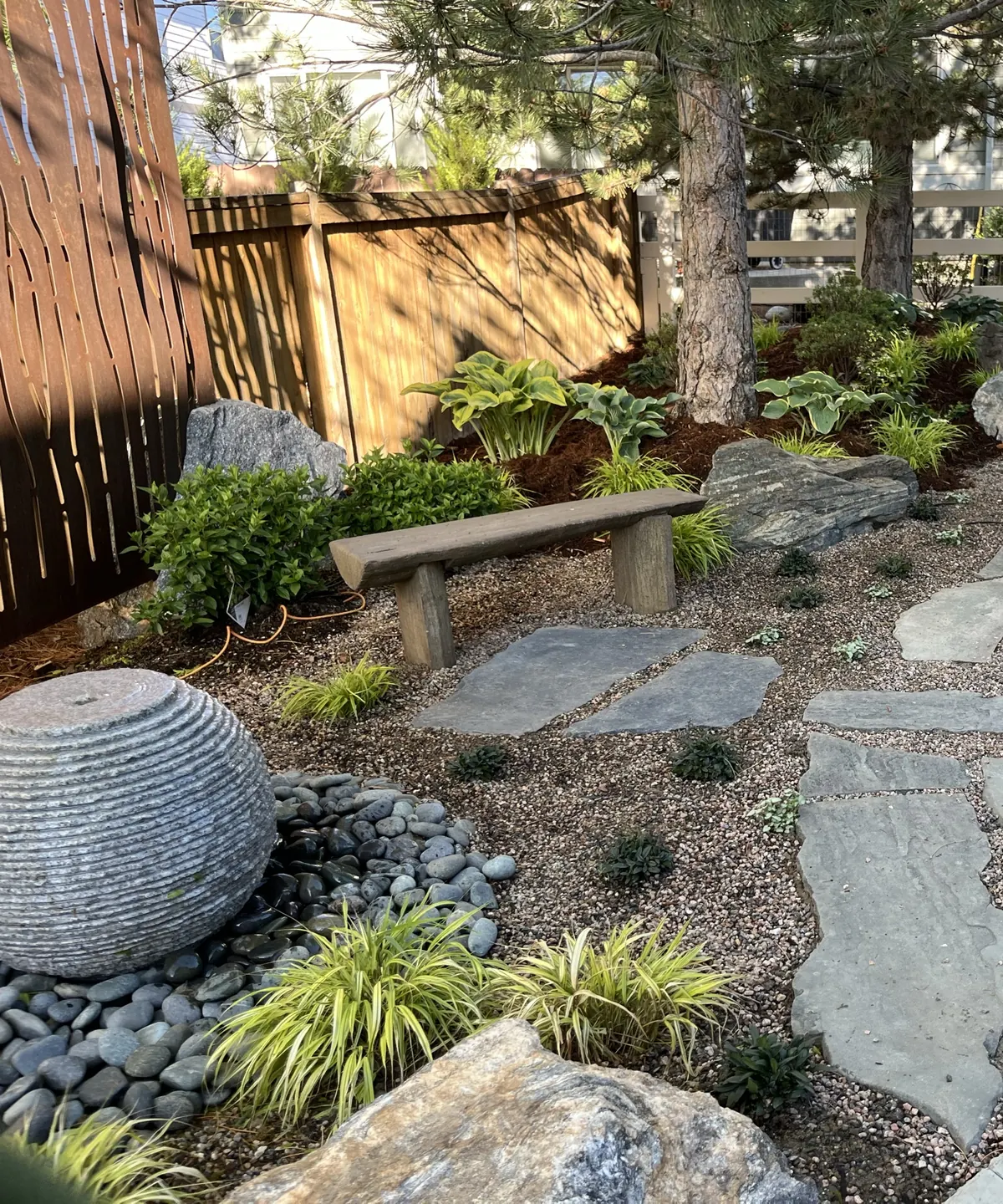
Idlewild's planting focuses on climate-adapted plants suited to Colorado. A design can place deer-resistant plants at the edges and protect the plants you care about most.
Fence rules that affect a deer fence (from each official page, checked November 2026)
| What the page says | What it means for an 8-foot deer fence | |
|---|---|---|
| City of Boulder | Fences up to 7 feet need no building permit; 7 feet maximum within 3 feet of a property line; no barbs, sharp points or electric charge | Needs a permit, must sit back from the property line, and cannot be electric |
| Unincorporated Boulder County (including Niwot) | Fences up to 6 feet are exempt from a building permit | Needs a building permit |
| Longmont | Fences are listed among work that needs a permit | Apply for a fence permit |
| Louisville | Fences are listed as needing a permit | Apply for a fence permit |
| Other towns | Not checked here | Call the town's building department |
Questions
Is any plant truly deer-proof?
No. CSU says a hungry deer will eat almost any plant. Deer-resistant plants are simply less likely to be eaten, and that can change by season, place and year.
How tall does a deer fence need to be?
CSU calls a woven-wire fence 8 feet high the standard deer-proof fence. Check your town first. In Boulder, fences over 7 feet need a building permit, and in unincorporated Boulder County the limit without a permit is 6 feet.
Can I put up an electric fence for deer in Boulder?
Not within city limits. Boulder's fence guide says fences may not carry an electric charge. Other towns and the county may treat it differently, so ask.
Is it OK to feed deer in winter?
No. Colorado Parks and Wildlife says intentionally feeding deer is illegal in Colorado. Feeding crowds animals together, spreads disease and can draw mountain lions.
Do deer repellents work?
Some work for a while. CSU rates a spray of whole eggs and water among the most effective, but it must be reapplied about every 30 days. Apply on dry days above freezing.
Sources 9
- Preventing Deer Damage (CSU Extension fact sheet 6.520)
- Deer Resistant Plants (PlantTalk Colorado 2302, CSU Extension)
- Deer and Gardening (PlantTalk Colorado 2307, CSU Extension)
- Deer Resistant Bulbs (PlantTalk Colorado 1067, CSU Extension)
- Feeding Wildlife (Colorado Parks and Wildlife)
- Fence and Retaining Wall Permit Guide (City of Boulder)
- Building Permit Requirements B05 (Boulder County)
- Permits (City of Longmont)
- Permit Requirements (City of Louisville)