
What a retaining wall costs by type and height
Walls are priced by the square foot of wall face: length times height. A 40-foot wall 3 feet tall has 120 square feet. Some builders count the buried row too, so ask.
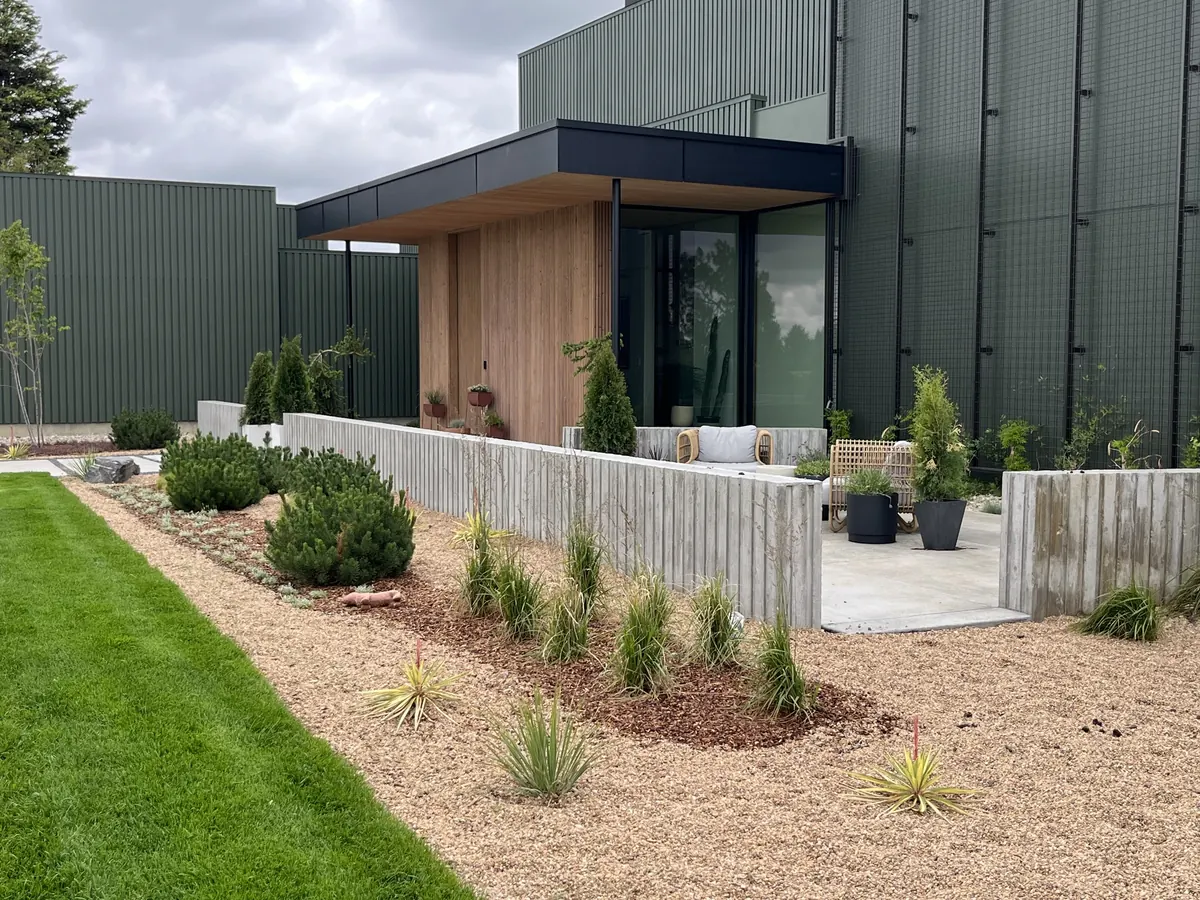
At 2026 prices, that 40 by 3 foot wall costs about $3,600 to $6,600 in concrete block, $4,800 to $8,400 in moss rock and $6,000 to $10,800 in stacked natural stone. Per running foot, a 3-foot block wall is about $90 to $165, and a 3-foot moss rock wall about $120 to $210.
The price per foot climbs with height. A taller wall needs a wider base, more drain gravel, often layers of geogrid in the soil behind it, and an engineer's design. A 40-foot wall 5 feet tall, with 200 square feet of face, runs about $12,000 to $24,000 as an engineered wall, before design and permit fees.
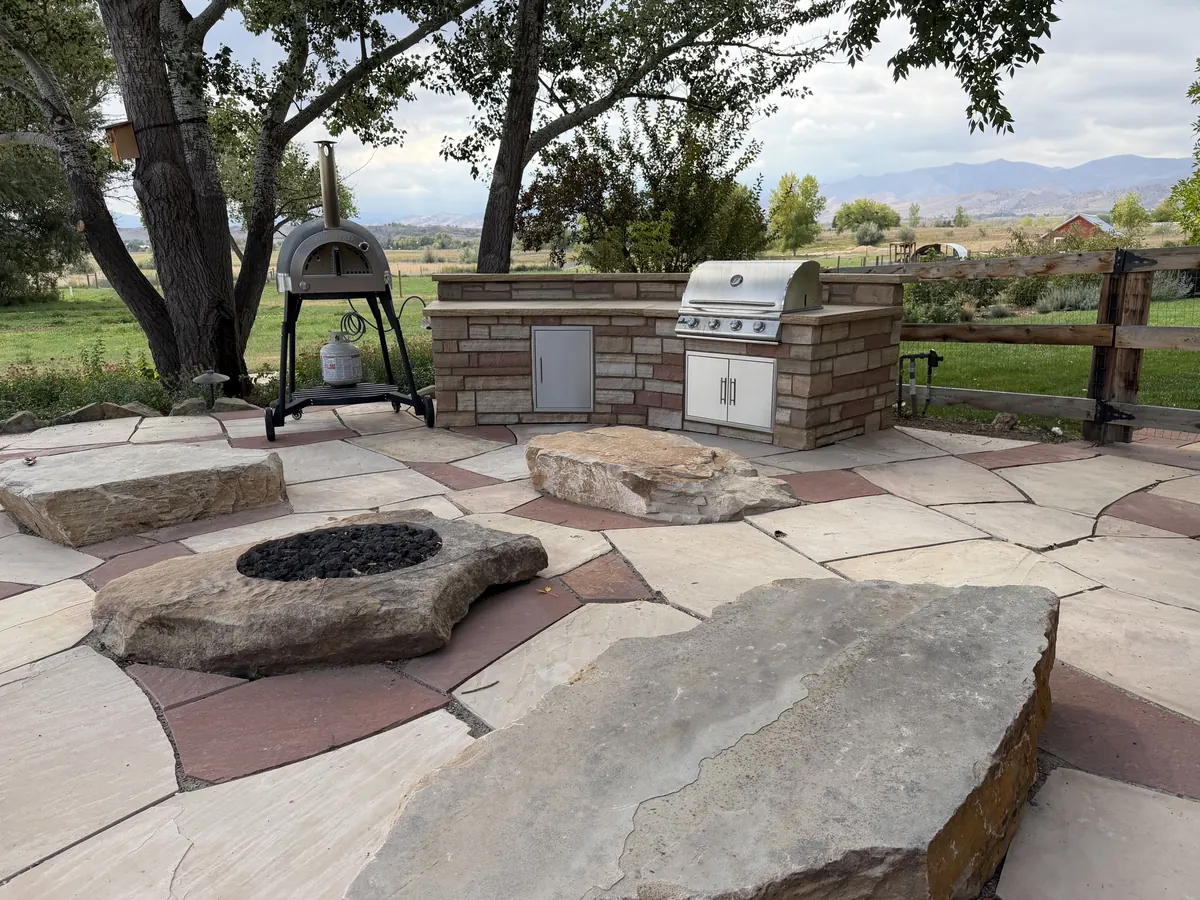
Front Range yards listed moss rock and wall stone at about $350 to $600 a ton in 2026. Most of the cost is setting the rock and building the drainage.
What changes the price of a retaining wall
Two walls of the same size can be priced thousands apart. Here is why.
- Height. Walls over your town's engineering limit add design and permit time.
- What sits above the wall. A driveway, building or rising slope adds load, called a surcharge. It takes a stronger wall.
- Access. Moss rock and boulders are set with a small excavator. If a machine can't reach, the work slows down a lot.
- Soil and rock. Wet clay needs more gravel, and buried rock slows digging.
- Curves, corners and steps. Each one takes cutting and fitting.
What goes behind a wall that a low bid skips
Most walls fail because of water and frost, not weak stone. Water soaks into the soil behind the wall, freezes, swells and pushes. Clay makes it worse. The Colorado Geological Survey calls swelling soil a common and sometimes serious problem in Colorado.
A sound wall has parts you never see. A low bid often skips one, so ask about each by name.
- A compacted base or footing under the first row, set below finished grade.
- Clean, angular gravel right behind the wall so water can drain down.
- A perforated drain pipe at the base that slopes to daylight or a storm drain.
- Backfill compacted in thin layers, not dumped in at once.
- Geogrid reinforcement on taller block walls.
- Grading or a swale above the wall to steer surface water around it.
Retaining wall permits in Boulder, Longmont, Louisville and Boulder County
Each place draws the line in a different spot. Most measure from the bottom of the footing, below ground, so a wall is taller on paper than it looks.
In the City of Boulder, walls over 3 feet, or of any height on slopes of 15 percent or more, must be designed by a Colorado licensed engineer. Only walls up to 3 feet are exempt from a building permit. Longmont lists a permit for walls over 48 inches. Louisville says a wall under 48 inches with no surcharge needs no building permit, but a taller wall, or any wall with a surcharge, needs stamped engineered plans. Unincorporated Boulder County exempts walls up to 4 feet unless they hold back a surcharge.
Permit fees are usually small. Under the City of Boulder's 2026 fee schedule, the building permit fee for a $20,000 wall is about $343. A plan-check fee of 25 percent brings it to about $430. An engineer's design often adds about $500 to $2,000 or more. Before digging, call Colorado 811 at least three business days ahead.
Ways to save on a retaining wall without regret
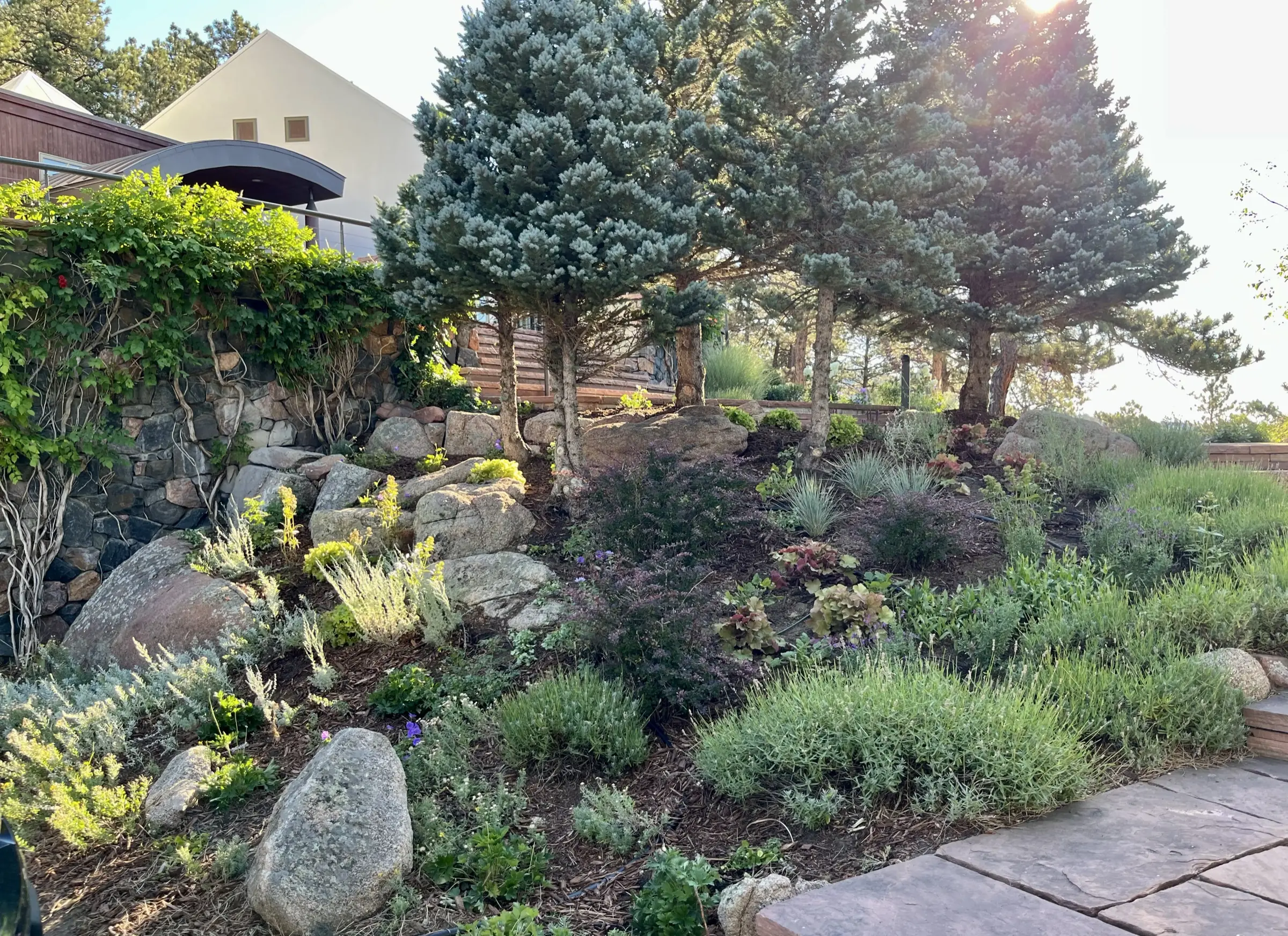
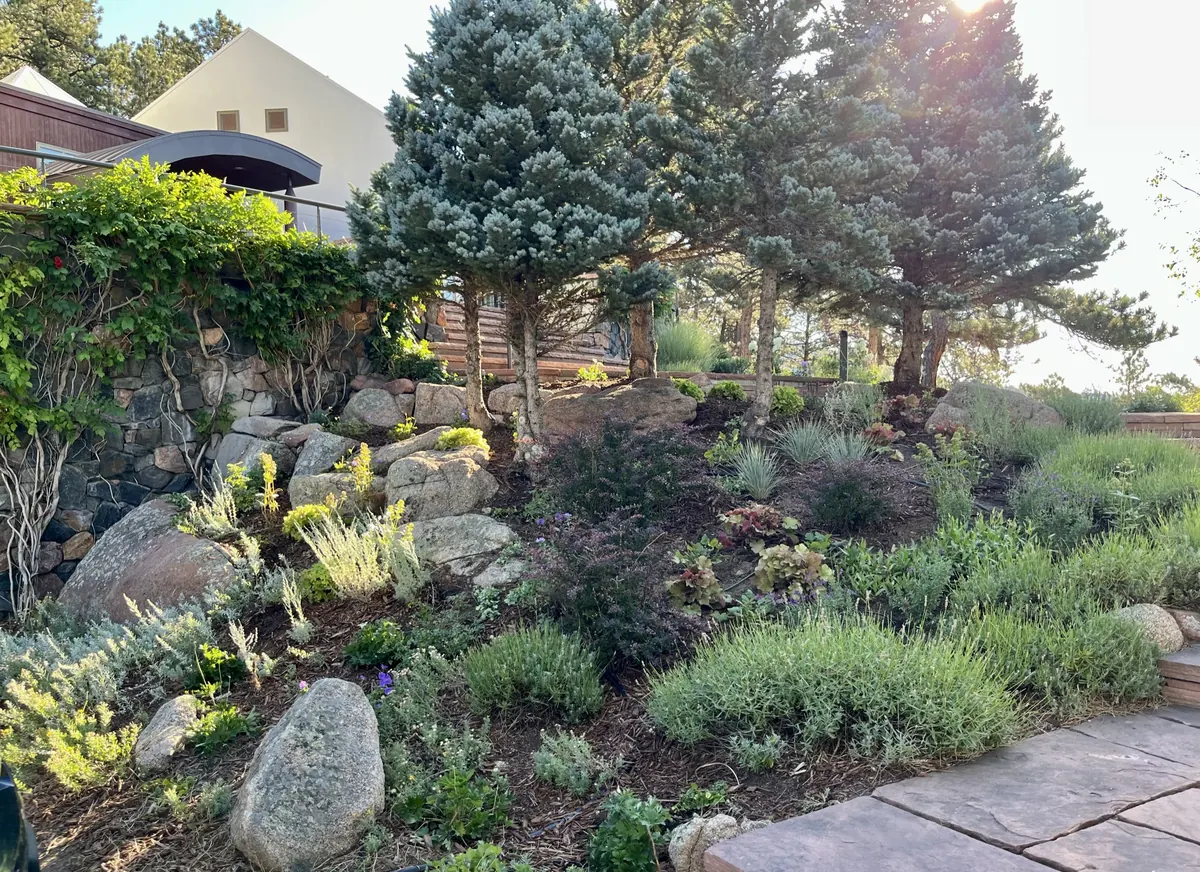
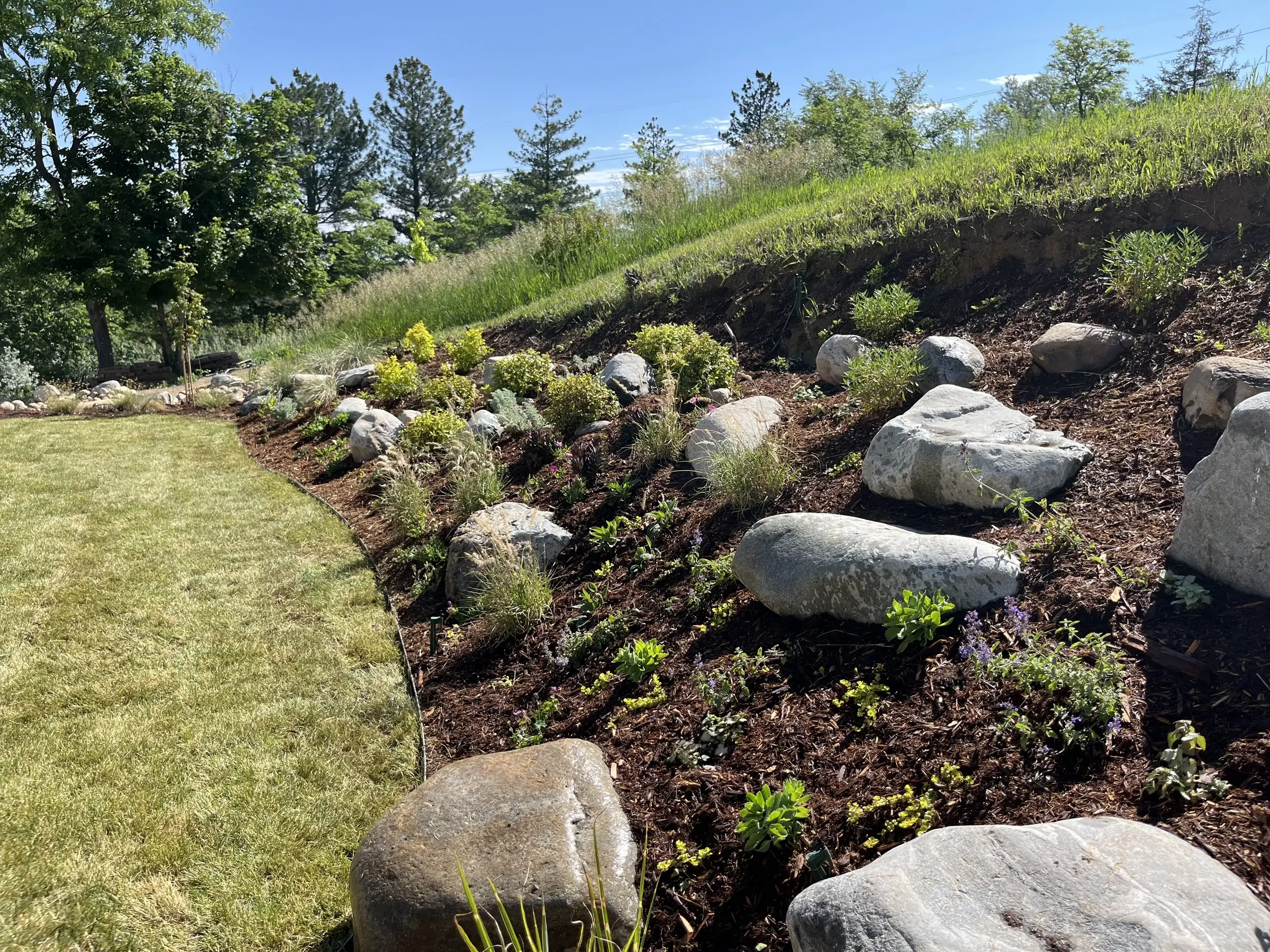
First ask whether you need a wall at all. A gentle slope with deep-rooted plants and a few set boulders can hold a bank for far less.
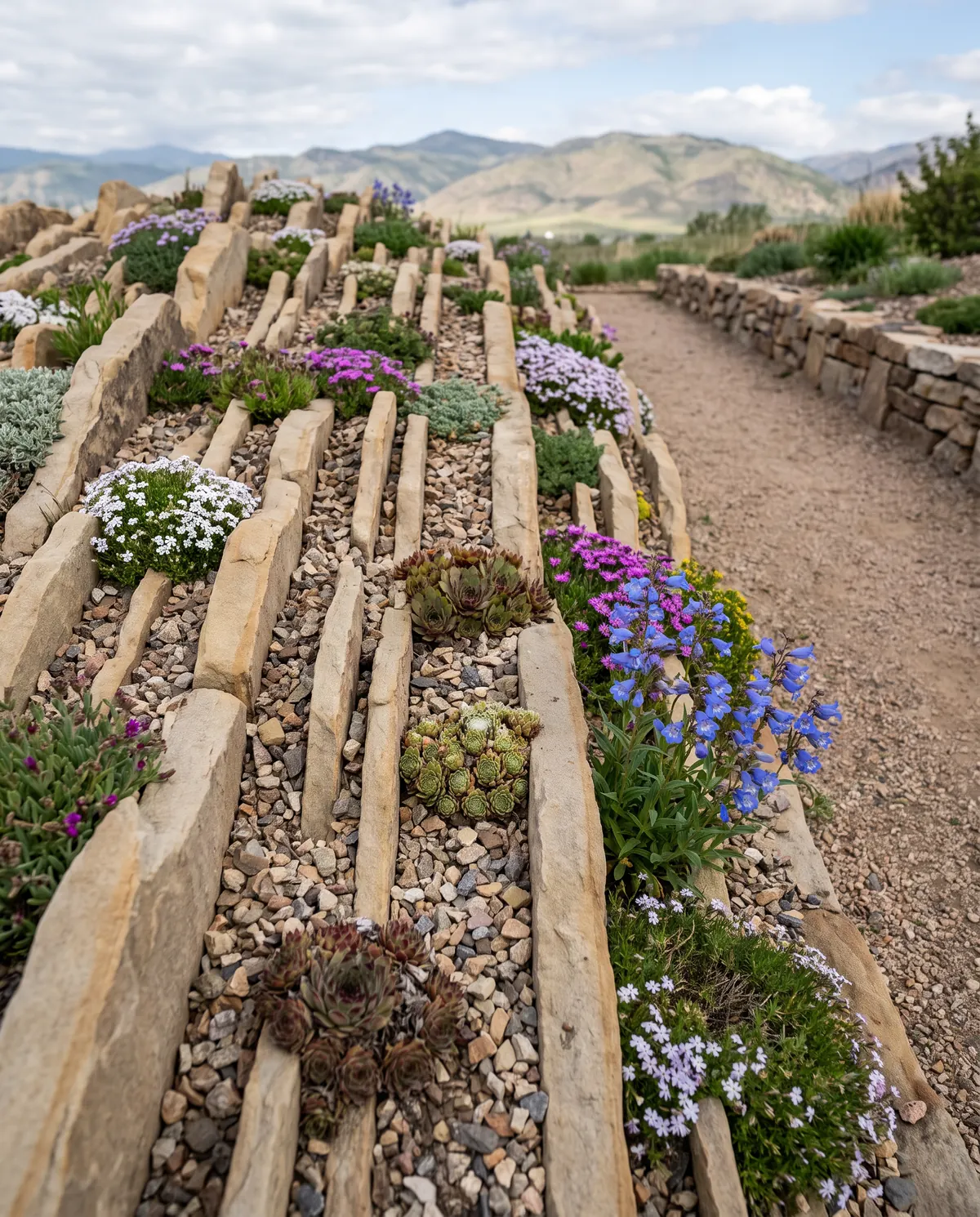
- Terrace instead of one tall wall. Two short walls can sometimes stay under the engineering line, but walls set close together act like one, so ask the building department first.
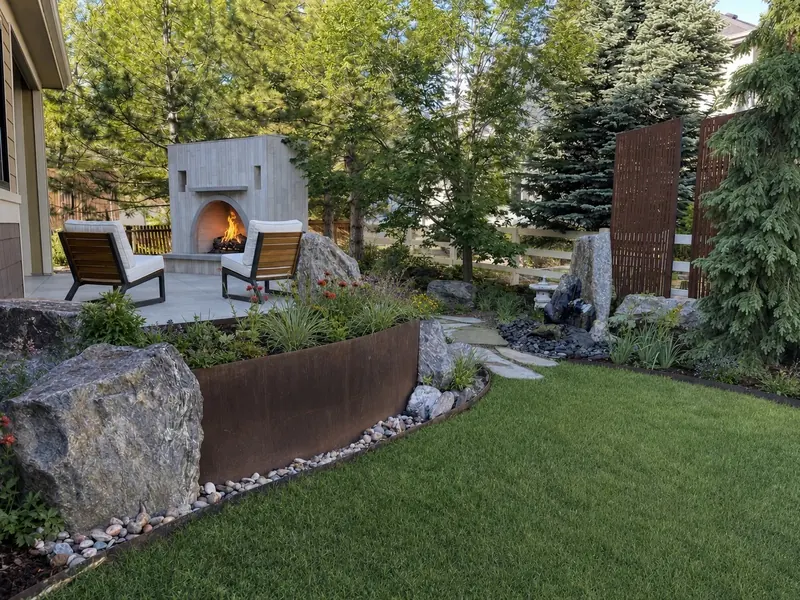
- Spend on what you see. Use block where plants hide the wall and stone where it faces the patio.
- Reuse rock from the site. Boulders dug up during grading can go into the wall or the planting.
- Build it once. A failed wall costs more to rebuild than to build right.
How to get an accurate retaining wall price
Walls are priced from the site: the grade, the soil, what sits above and how equipment gets in. Idlewild builds retaining walls as part of its hardscaping, plans them with the grading, drainage and planting around them, and prices each project after the design visit, in writing. See our guides to what happens at a design visit and to retaining walls and permits.
When you compare bids, line up height from the bottom of the footing, face square footage, wall type, drain gravel, drain pipe and where it exits, geogrid, haul-off, and who handles the engineer and permit.
Typical 2026 costs in Boulder County, installed with drainage, per square foot of wall face
| Typical 2026 range | 40 ft long, 3 ft tall (120 sq ft) | What to know | |
|---|---|---|---|
| Timber or landscape ties | $18 to $30 per sq ft | $2,200 to $3,600 | Lowest cost, but wood rots and burns. A poor choice near a house. |
| Concrete block (gravity wall) | $30 to $55 per sq ft | $3,600 to $6,600 | Stacked units on a compacted base with drain gravel and pipe. Most common under 3 to 4 feet. |
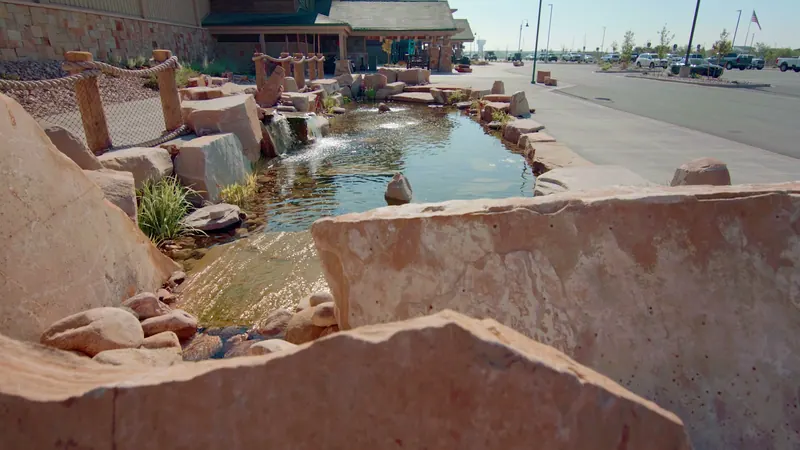
| Moss rock or boulder wall | $40 to $70 per sq ft | $4,800 to $8,400 | Large stones set by machine. Natural foothills look; needs more depth front to back. |
| Stacked natural stone | $50 to $90 per sq ft | $6,000 to $10,800 | Flat wall stone, dry-stacked or mortared. Most hand labor. |
| Engineered wall (geogrid block, poured concrete, stone veneer) | $60 to $120 or more per sq ft | Usually taller: a 40 by 5 ft wall runs $12,000 to $24,000 | Needed over each town's height limit or with a surcharge. Design and permit are extra. |
| Wall stone or moss rock, materials only | $350 to $600 per ton | Varies by stone | Front Range yard prices, before delivery. |
These ranges come from 2025 and 2026 prices published by Front Range landscape and hardscape contractors and stone yards, and from national cost surveys adjusted for Boulder County labor, clay soil and freeze-thaw, checked in November 2026. They include the base, drain gravel, drain pipe and backfill. They are a guide for planning, not a quote.
Questions
How much does a 3-foot retaining wall cost per foot?
In 2026, a 3-foot block wall runs about $90 to $165 per running foot in Boulder County, and a 3-foot moss rock wall about $120 to $210. Natural stone runs about $150 to $270.
Is a moss rock wall cheaper than a block wall?
Usually not. Moss rock and boulder walls run about $40 to $70 per square foot of face, and block about $30 to $55. Moss rock also needs a machine and more room behind the wall.
When does a retaining wall need an engineer?
In Boulder, over 3 feet or on slopes of 15 percent or more. In Louisville, over 48 inches or with a surcharge. Longmont needs a permit over 48 inches, and unincorporated Boulder County exempts walls up to 4 feet without a surcharge.
How much does a wall permit cost?
Often a few hundred dollars. Under the City of Boulder's 2026 fee schedule, permit and plan-check fees for a $20,000 wall come to about $430. An engineer's design usually costs more than the permit.
Why are walls here priced above national averages?
National surveys put block walls at about $35 to $49 per square foot in 2026. Boulder-area landscaping wages run about 21 percent above the national median, and clay and frost call for more gravel and a deeper base.
Sources 9
- Fence and Retaining Wall Permit Guide (City of Boulder)
- Building Permits and Inspections: when a permit is needed (City of Boulder)
- Planning and Development Services 2026 Schedule of Fees (City of Boulder)
- Permits (City of Longmont)
- Design Criteria, 2024 Codes (City of Louisville)
- Building Permit Requirements B05 (Boulder County)
- Swelling Soils (Colorado Geological Survey)
- Colorado 811
- Occupational Employment and Wages, Boulder, CO, May 2025 (U.S. Bureau of Labor Statistics)