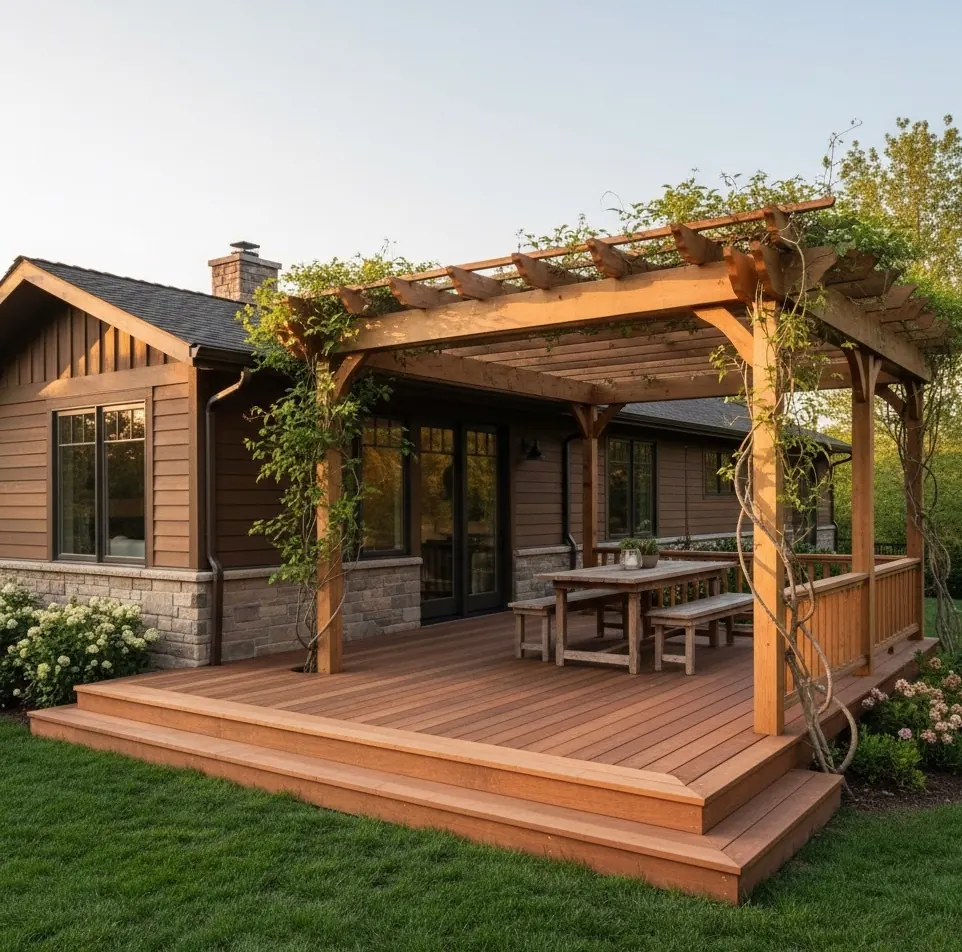
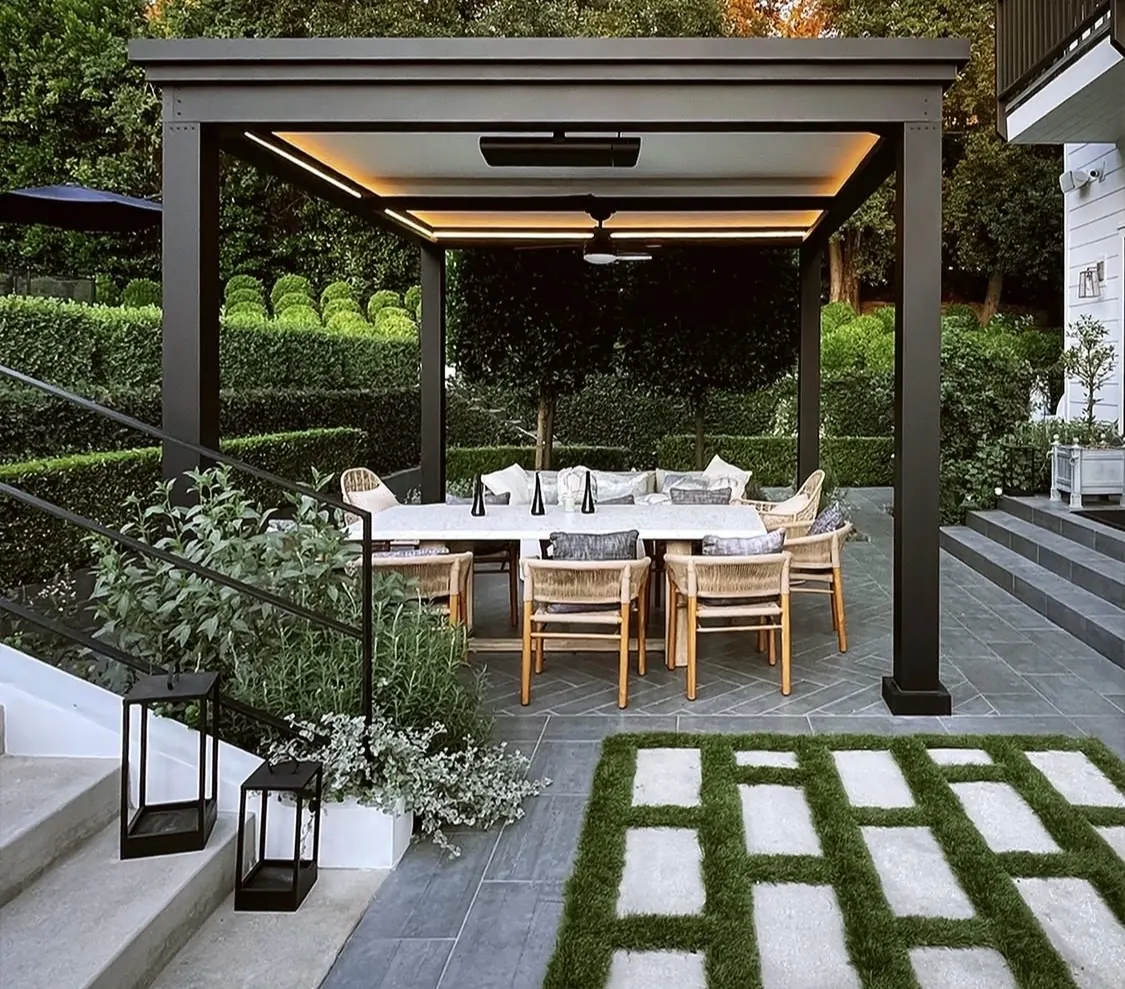
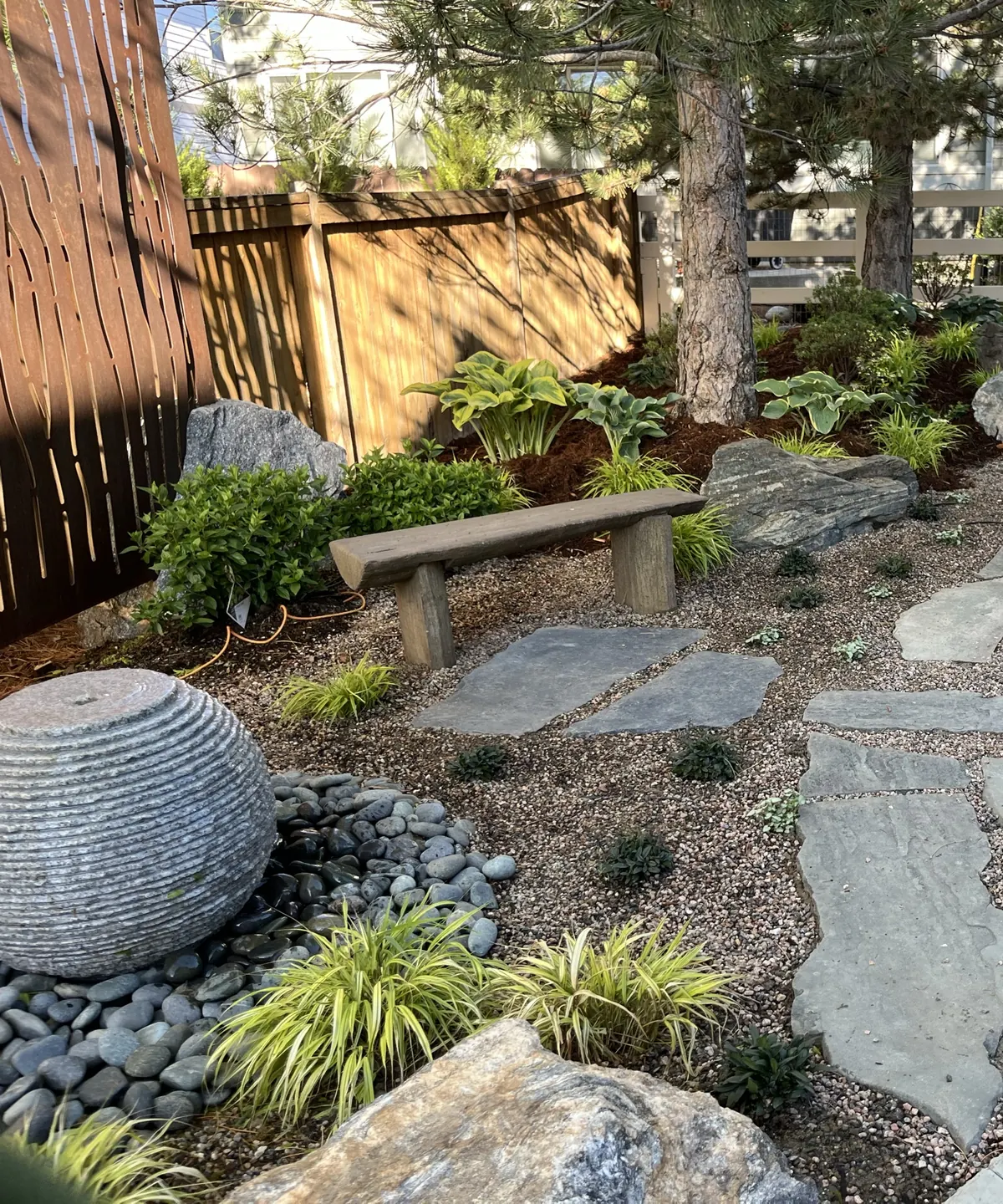
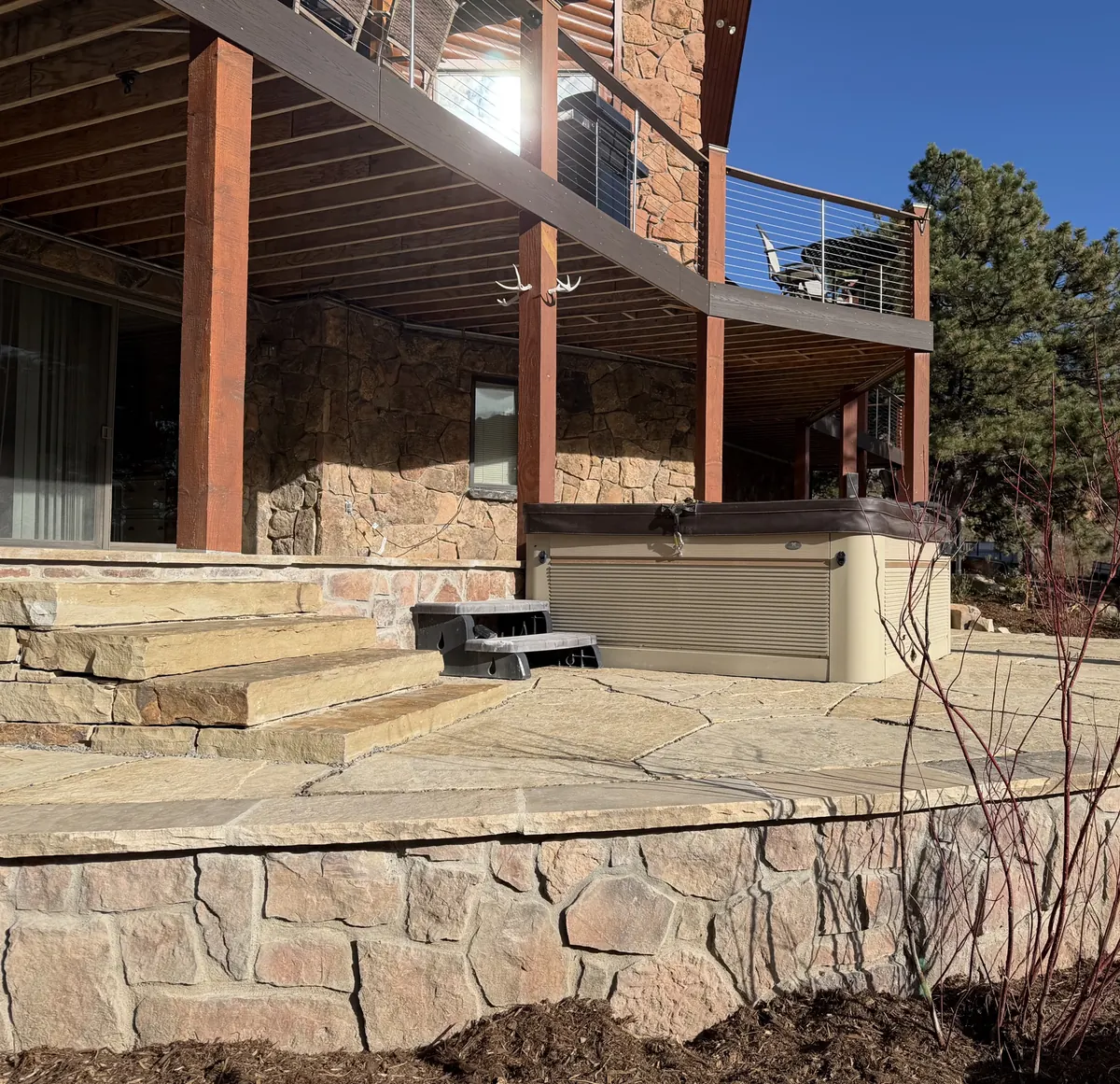




Starting a Lafayette landscape design
A Lafayette project starts with a visit. We walk the lot with you and talk about how you use the yard, your goals, your timeline and your investment range. We also note any big trees, where roof water lands and where the yard meets the sidewalk, since all three shape the plan.
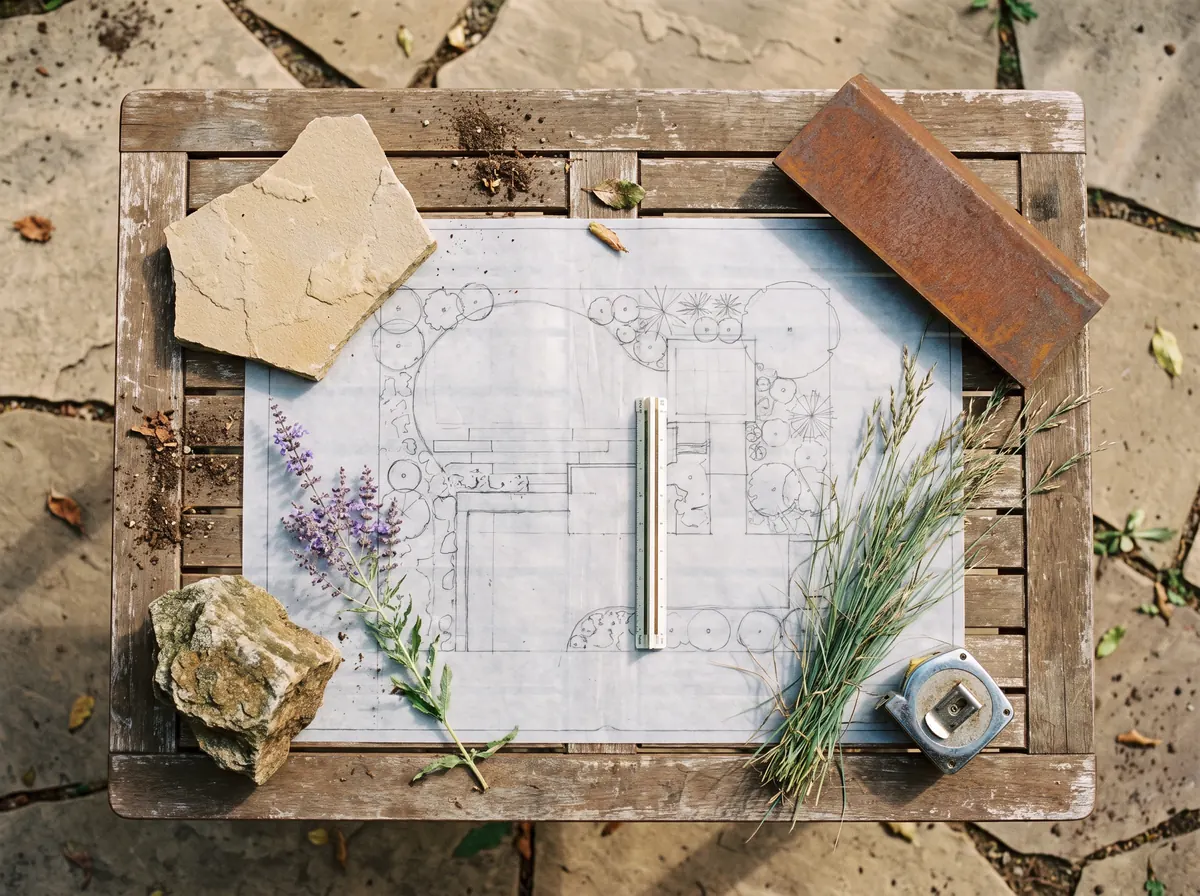
Then the designer draws one plan for the whole property. You go through it together and change what needs changing. The same company builds it, and the designer stays involved until the final walkthrough.
Designing around Lafayette's watering limits
Lafayette's sprinkler limits hold in every season, not only in a drought. That changes the math of a design. Lawn on spray heads gets three days a week. Beds on low-volume drip don't count against that limit, so they can be watered when the plants need it.
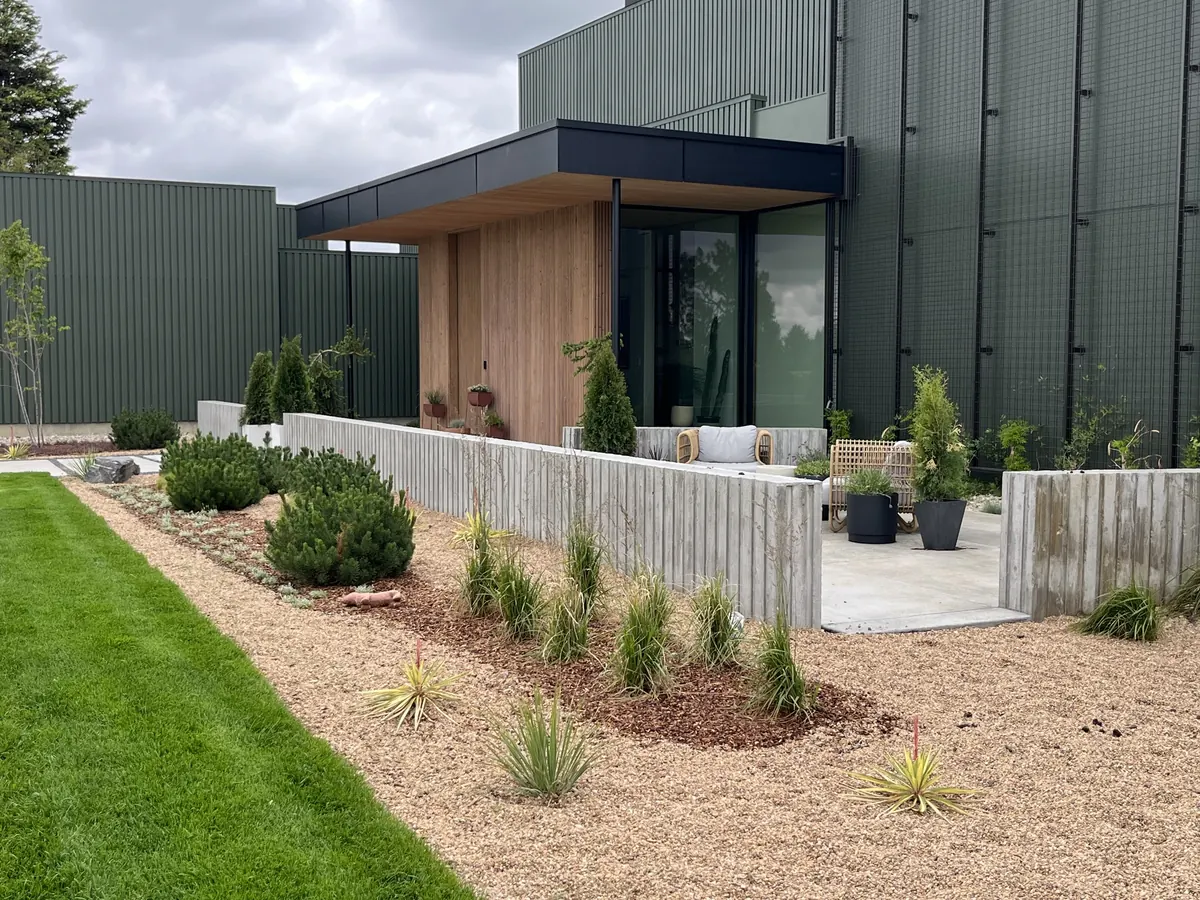
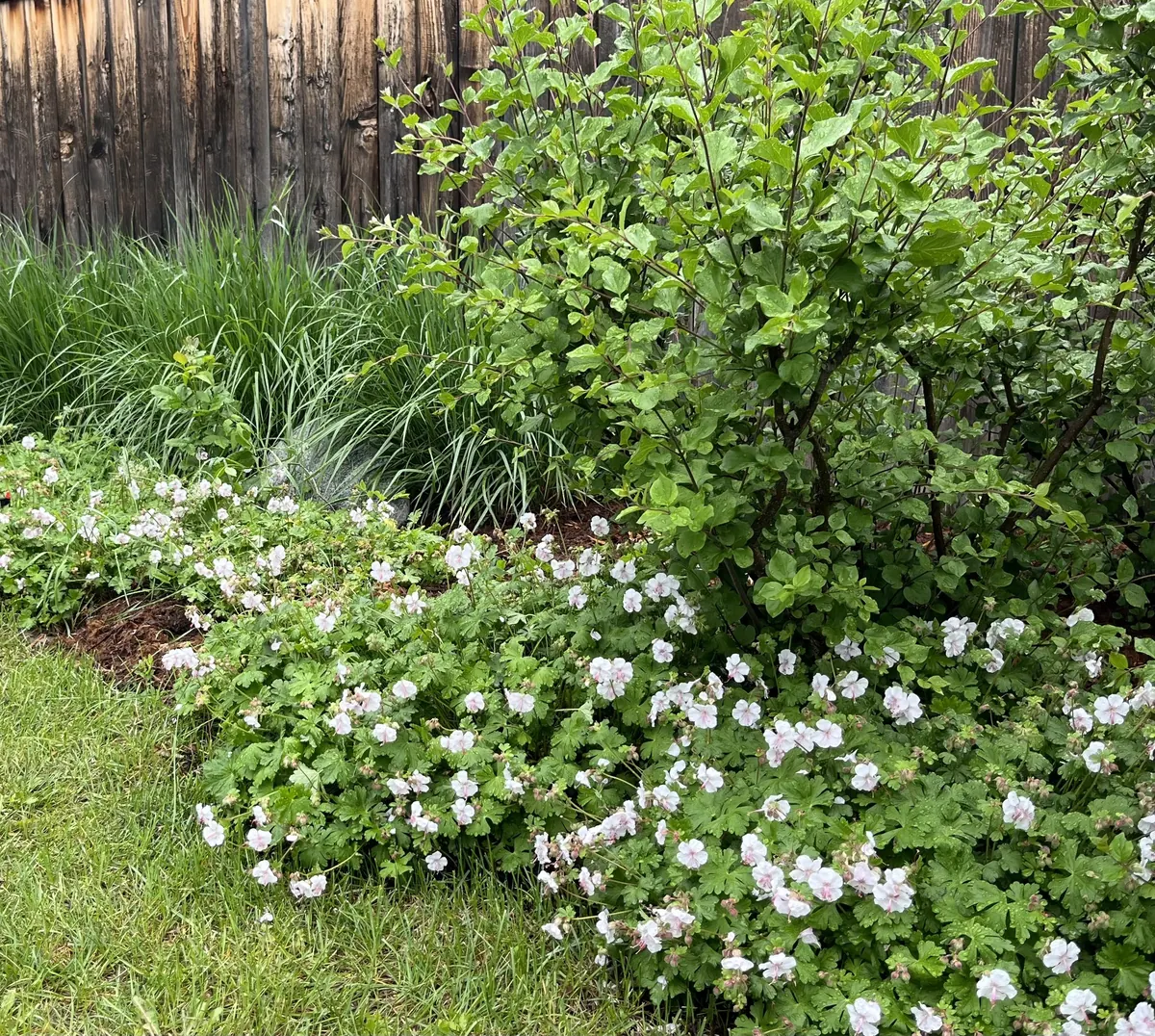
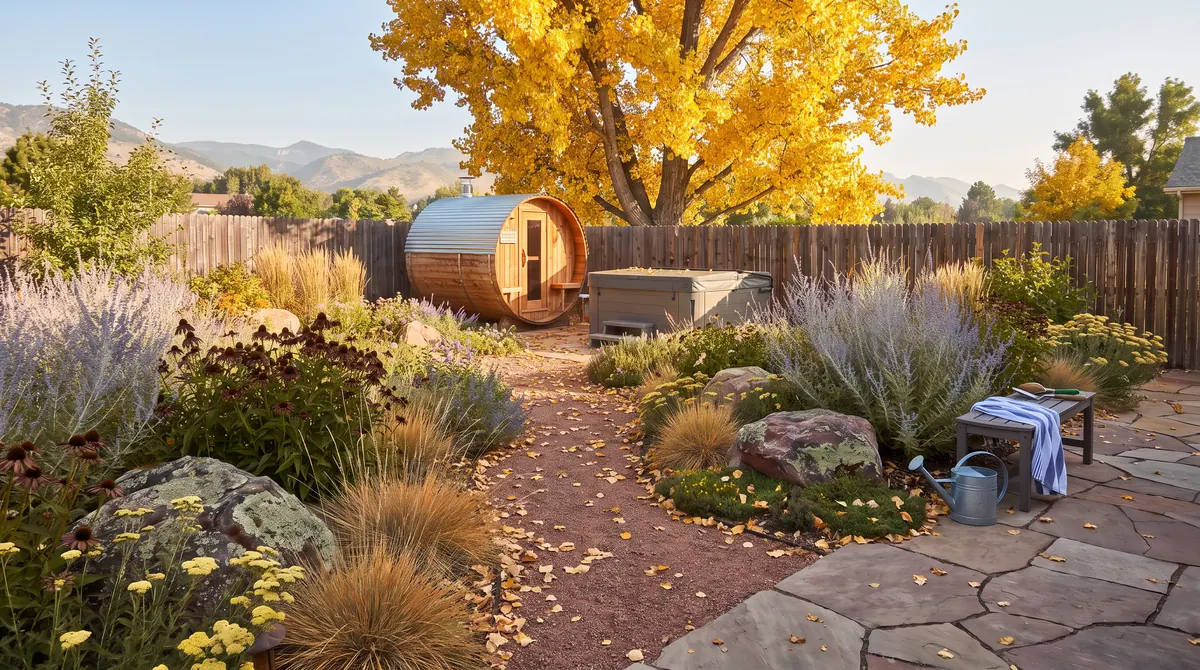
So a Lafayette plan keeps lawn for the places people play or sit, and puts shrubs, perennials and trees on drip. New xeric or city-approved planting can be watered on any day for up to 30 days in a row. That gives the roots a start. Firm bed edges and careful grades keep water off the walks, since runoff onto sidewalks and streets is not allowed.
The city helps with the hardware too. Eligible water customers can get a smart controller and rain sensor after a sprinkler evaluation, and rebates cover some other water-saving products. Resource Central's Lawn Replacement program, with a removal service or a do-it-yourself option, is open to Lafayette residents.
Designing under Lafayette's older trees
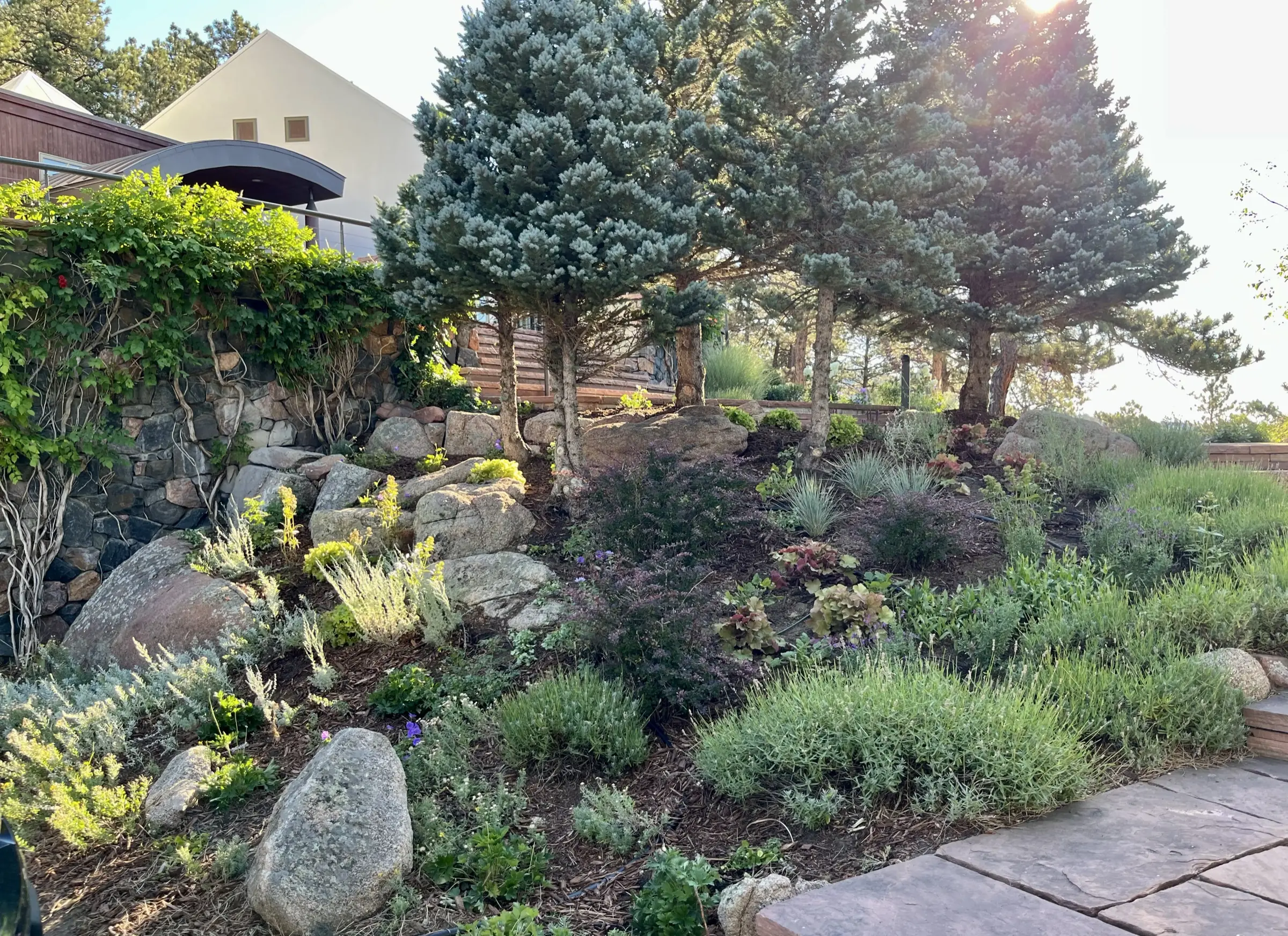
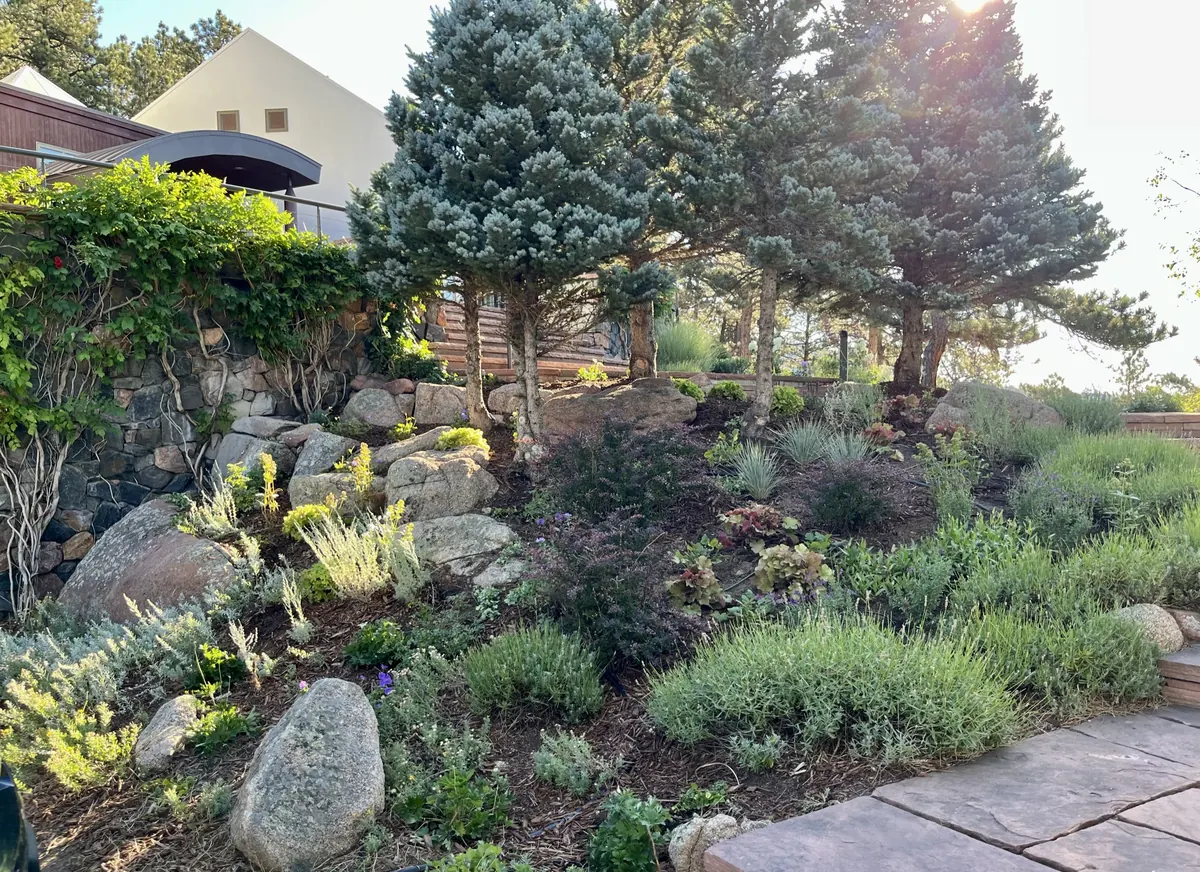
If your Lafayette yard has a big old tree, it is worth more than almost anything a new design can add, and its roots are easy to hurt. CSU Extension says a tree's roots spread out at least as far as the tree is tall. The big woody roots sit mostly in the top 6 to 24 inches of soil.
That shapes the plan. CSU suggests keeping at least half of a tree's roots, and keeping trenches at least 8 feet from the trunk or boring under the roots instead. Less than 3 inches of added topsoil is usually fine for most trees, but lowering the grade can cut major roots. Where a slope has to change, a terrace or low wall that reaches the dripline protects them.
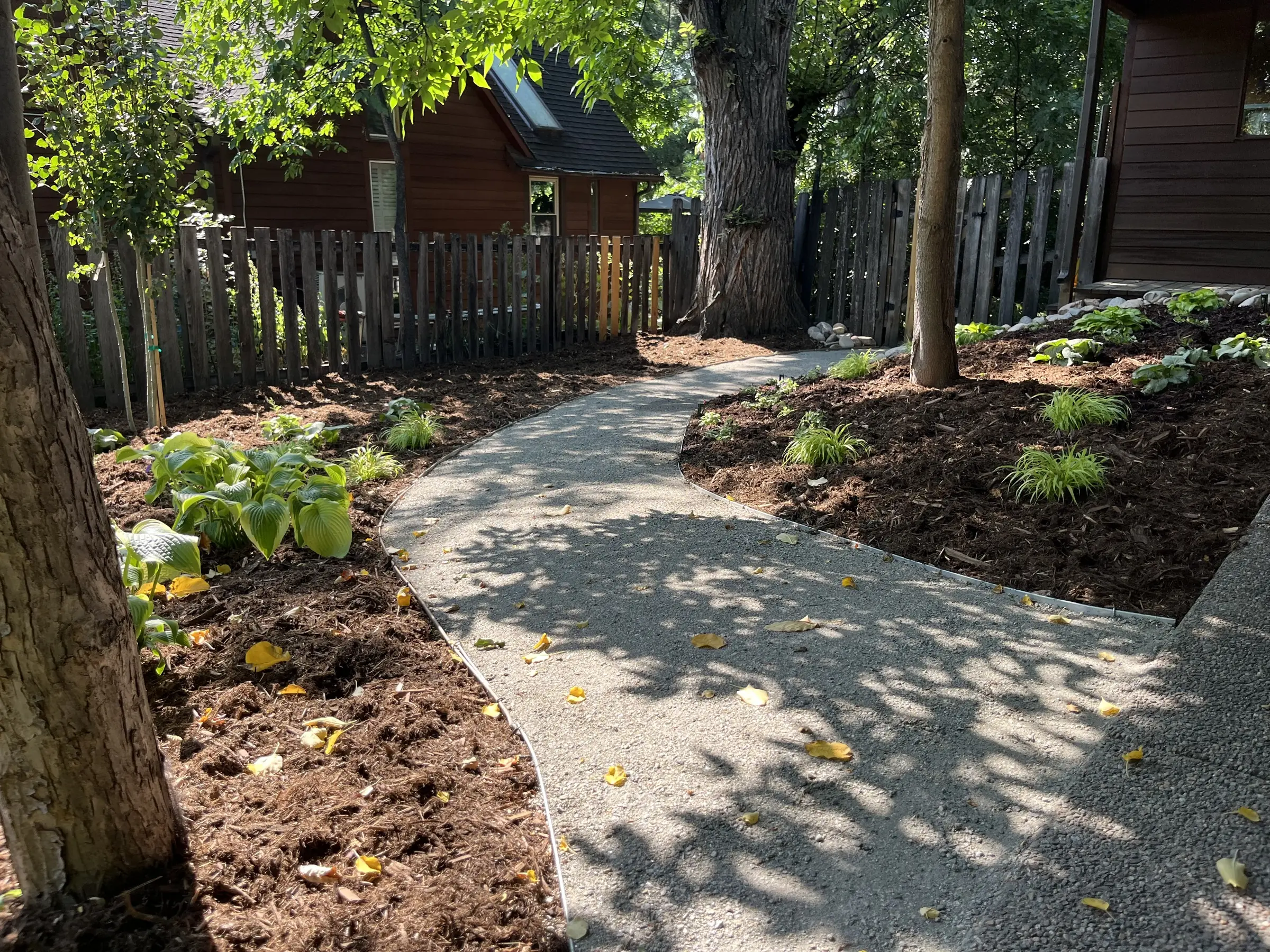
During the build, CSU's advice is to fence off the ground around each tree. The fence goes past the dripline by one foot for each inch of trunk width, and trucks and stone piles stay outside it. A path near an old tree can sit on the grade instead of being dug in.
Checking for ash in a Lafayette yard
Emerald ash borer was confirmed in Lafayette in August 2017, in an ash on private land near Arapahoe Road and North 95th Street. The Colorado State Forest Service says to find out whether you have ash. Look for leaves made of 5 to 9 leaflets, leaves and branches set opposite each other, and diamond-shaped ridges on older bark.
If you do, decide whether to treat it or replace it, and a certified arborist can help. A design shouldn't count on an untreated ash for shade. If the tree comes down, the plan already shows what fills the space, using a different kind of tree.
Lafayette's street edge and its demonstration garden
Work in Lafayette's right-of-way, or even storing materials or a dumpster there, needs a city permit under Chapter 105 of the city code. That covers new work on, or repairs to, sidewalk, curb and gutter. Every contractor on the permit needs a City of Lafayette contractor license and a street-cut bond.
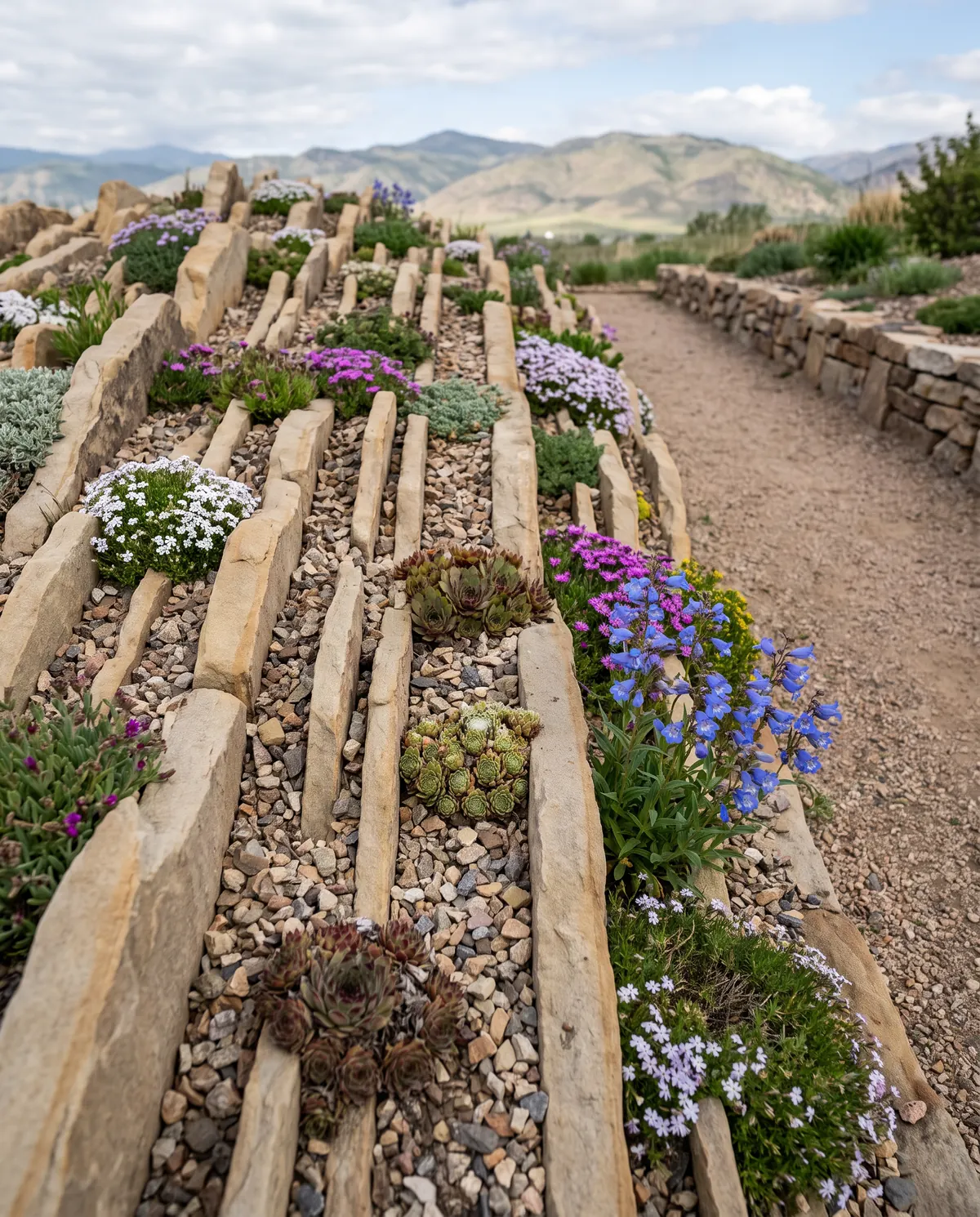
For ideas, visit the city's Waterwise Demonstration Garden at Fire Station #1. The city calls it one of Colorado's most extensive waterwise and firescape demonstration gardens, with xeric plants, fire-resistant design, pollinator plants and native grasses.
Old tree roots and a Lafayette landscape design
| CSU Extension guidance | What the design does | |
|---|---|---|
| Root spread | At least as far as the tree is tall | Keeps digging and heavy loads out of that circle where it can |
| Trenches | At least 8 feet from the trunk, or bore under | Routes drip lines and wire around the tree |
| Adding soil | Under 3 inches is usually fine | Plants into the existing grade instead of building beds up |
| Lowering the grade | Can cut major roots | Uses a terrace or low wall at the dripline |
Questions
Can I water my new Lafayette garden every day?
For a while. New city-approved or xeric planting may be watered for up to 30 days in a row after planting. After that, drip beds stay exempt from Lafayette's three-day sprinkler limit.
Will a new path hurt the big tree in my Lafayette yard?
It can if it is dug deep across the roots. CSU Extension says most big roots sit in the top 6 to 24 inches of soil. A path near an old tree should sit on the grade and stay clear of trenches.
Do I need a permit to fix the sidewalk in front of my Lafayette house?
Yes. Lafayette requires a right-of-way permit for new work on, or repairs to, sidewalk, curb and gutter in the right-of-way.
Where can I see waterwise planting in Lafayette?
At the city's Waterwise Demonstration Garden at Fire Station #1. It shows xeric plants, fire-resistant design, pollinator plants and native grasses.
Sources 4
More on landscape design and on landscapes in Lafayette.